
If you have never been to East Durham, New York, in mid-July, you might not believe what you are about to read. A tiny hamlet in the northern Catskills — population barely registering on a census form — transforms for one week each summer into what can only be described as a living Irish village. Fiddle music spills out of doorways. Bodhrán rhythms echo across parking lots. Strangers link arms for ceili dances that run past midnight. And the whole thing operates with the kind of joyful intensity that makes you wonder whether you have accidentally crossed the Atlantic.
Welcome to Catskills Irish Arts Week, North America’s largest summer school for traditional Irish music, song, dance, and culture. Running continuously for more than three decades, this annual gathering at the Michael J. Quill Irish Cultural and Sports Centre draws hundreds of students, musicians, and enthusiasts from across the country and Ireland itself for a week of workshops, concerts, ceili dances, informal sessions, and the kind of cultural immersion that no classroom can replicate.
East Durham earned its nickname — the Emerald Isle of the Catskills — honestly. Hundreds of Irish families emigrated to this corner of Greene County in the early 1900s, establishing a network of Irish resorts, pubs, and cultural organizations that persists to this day. Catskills Irish Arts Week is both a product of that heritage and its most vibrant expression, a week when the old country and the new world meet on common ground and make music together.
The Music
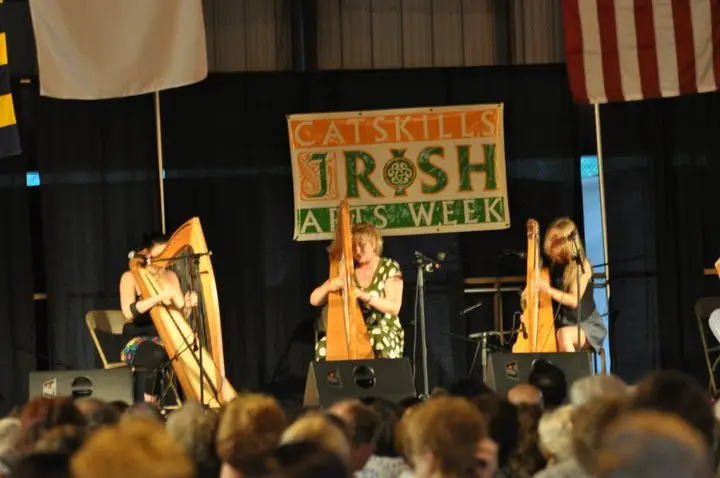
The musical heart of Catskills Irish Arts Week beats in the workshops. Monday through Friday, students of all levels — from absolute beginners to advanced players — choose morning and afternoon sessions in fiddle, tin whistle, Uilleann pipes, bodhrán, guitar, piano, and Irish song. The instruction is world-class: over 40 top-tier artists from Ireland and the United States teach during the week, and these are not casual clinicians. They are among the finest practitioners of traditional Irish music alive, musicians who have spent lifetimes mastering a tradition that stretches back centuries.
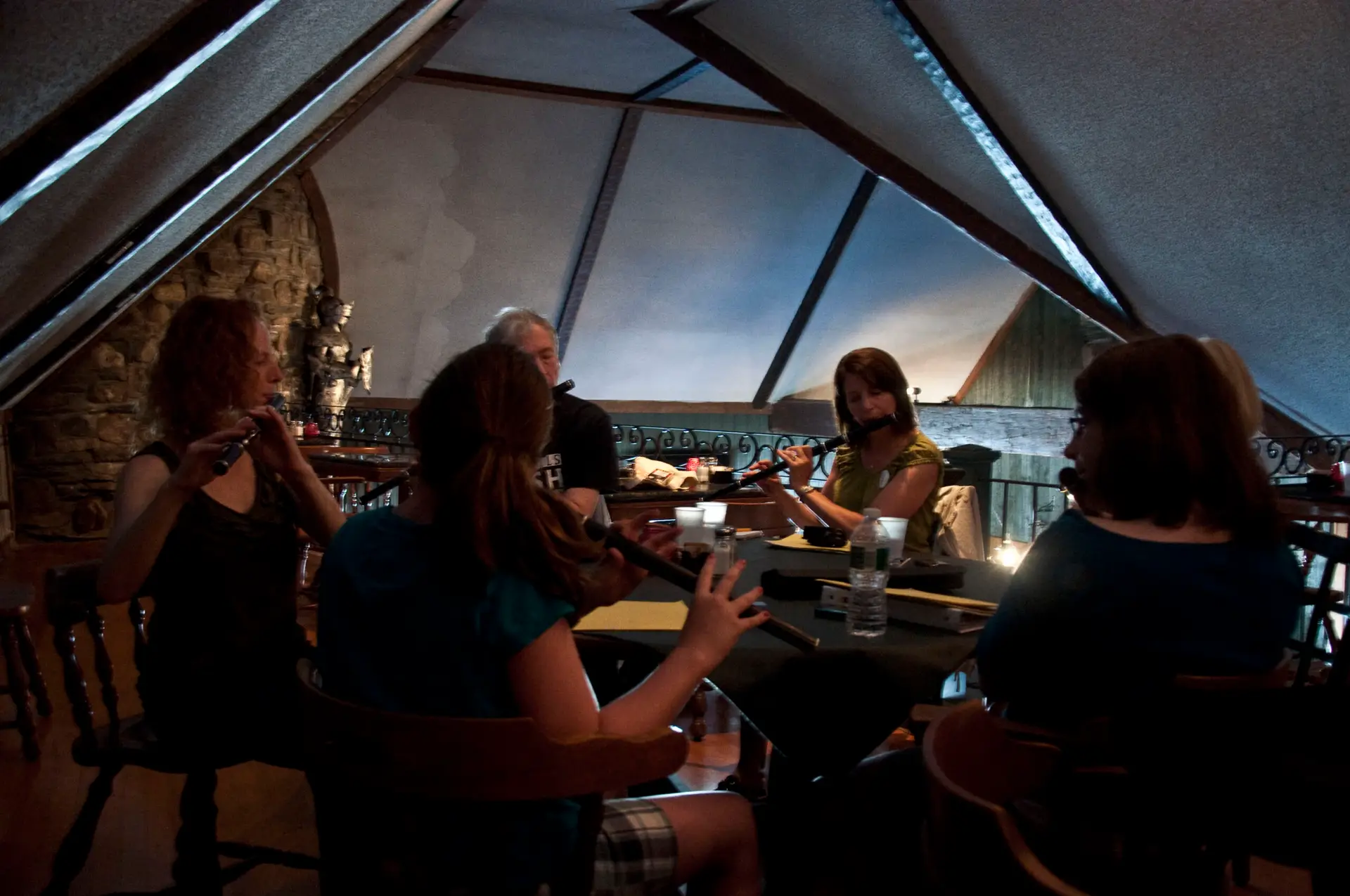
But Irish Arts Week is not just about formal instruction. The real education happens after hours, in the sessions that spring up every night at inns, roadhouses, and the Quill Centre itself. This is where traditional Irish music lives most authentically — in participatory, informal gatherings where musicians sit in a circle, take turns leading tunes, and build on each other’s energy in real time. If you play even a little, you are welcome to join. If you do not, pulling up a chair and listening is one of the great pleasures of the week.
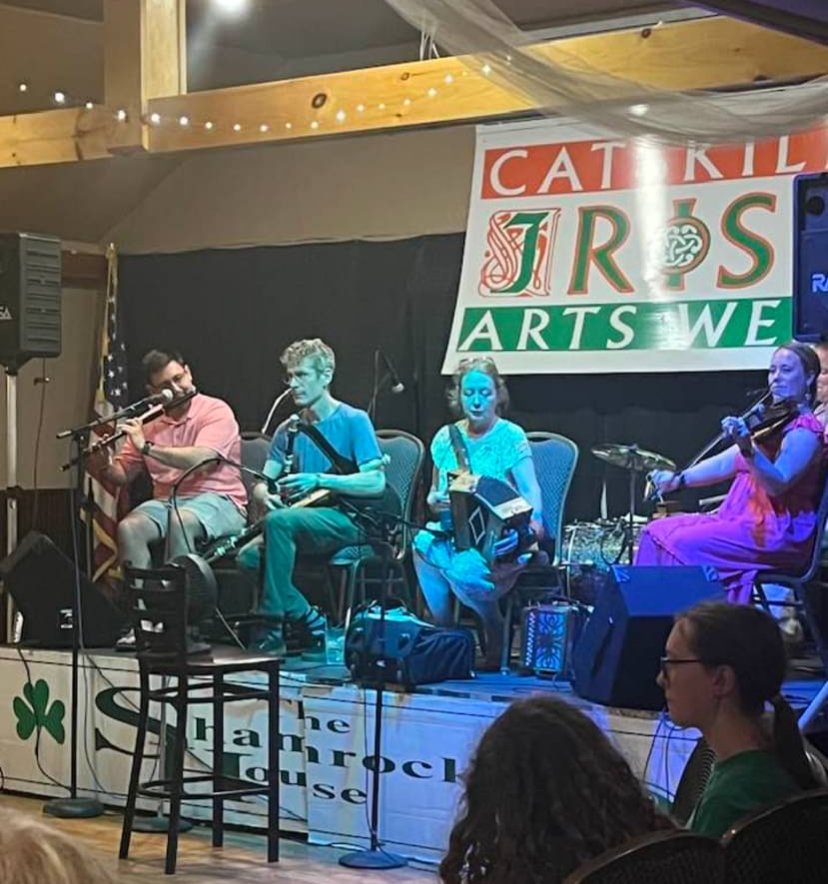
Evening concerts feature the same artists who teach during the day, performing in a more formal setting that showcases their full range. Ceili dances — traditional Irish social dances accompanied by a live ceili band — run multiple nights and are open to all regardless of experience. The Pride of Moyvane and other ceili bands keep the floor moving with jigs, reels, and sets that are equal parts athletic and joyous.
The week also includes Irish language workshops, storytelling sessions, lectures and presentations on Irish history and culture, and a children’s program for ages five to twelve that runs parallel to the adult schedule. The children’s program has been strengthened in recent years, with dedicated sessions in music, dance, and Gaelic football that culminate in a showcase performance.
The Experience
Catskills Irish Arts Week occupies a unique space in the festival world. It is not really a festival in the conventional sense — it is more like a cultural intensive, a week-long residency where the boundary between performer and audience dissolves almost completely. Everyone is learning, everyone is playing, everyone is dancing. The hierarchy that exists at most music events — artists on stage, fans in the crowd — simply does not apply here.
The Michael J. Quill Irish Cultural and Sports Centre serves as the hub, hosting workshops, concerts, ceilis, and the closing Saturday festival. The grounds include ample parking and enough space to accommodate the week’s full program of activities. East Durham’s Irish-themed resorts and inns provide accommodation for attendees, and the town’s handful of pubs and restaurants become de facto gathering spots where the music continues well into the night.
The social dimension cannot be overstated. Irish Arts Week attracts what one observer called “trad tribes” — communities of traditional music enthusiasts who reconvene here annually like a family reunion with better accompaniment. Friendships forged over a shared reel in a pub session last for years. The week has a warmth and intimacy that comes from shared passion, and newcomers are absorbed into the community with remarkable speed.
The closing Saturday features the East Durham Trad Fest, a daylong festival running from noon to 6 PM that serves as a celebratory capstone to the week. A final ceili closes it out. Non-students are welcome to attend concerts, sessions, and the Saturday festival, so even if you cannot commit to a full week of workshops, you can still experience the energy.
Getting There & Know Before You Go
East Durham is located in Greene County in the northern Catskills, about 30 miles southwest of Albany and roughly two and a half hours north of New York City. The Michael J. Quill Irish Cultural and Sports Centre is at 2267 Route 145. The area is rural, and a car is essentially required.
The 2026 edition runs from Monday evening, July 13, through Saturday, July 18, with classes held Monday through Friday. Full-time registration includes one morning and one afternoon workshop session daily, plus admission to all concerts, ceilis, presentations, and sessions. Part-time options are available for those who want a lighter schedule. Registration opens well in advance and fills — this is not the kind of event where you show up and decide on the spot.
Accommodation in East Durham is limited, and lodging at the town’s Irish-themed resorts and inns fills quickly during Arts Week. Book as soon as you register. Nearby towns in Greene County offer additional options, though being in East Durham itself is part of the experience — the after-hours sessions and ceilis are where the week comes alive, and you want to be within walking distance.
If you play an instrument, bring it. If you are thinking about learning, this is the week to start. The introductory program is designed for beginners, and the supportive environment makes it the least intimidating place imaginable to pick up a whistle or try your hand at a bodhrán for the first time.
Why This Festival Matters
Catskills Irish Arts Week matters because it preserves something that cannot be preserved in a museum. Traditional Irish music is a living tradition — it exists in the playing, in the sessions, in the transmission from teacher to student and from one generation to the next. What East Durham offers every July is a place where that transmission happens at an intensity and scale unmatched anywhere else in North America.
In the Upstate New York cultural landscape, Irish Arts Week is singular. There is nothing else like it — not just in terms of Irish music, but in terms of the depth of engagement it demands and rewards. This is not a weekend where you sit in a lawn chair and listen passively. It is a week where you roll up your sleeves, learn something new, dance until your legs ache, and leave with friendships and tunes that will stay with you for years. The Emerald Isle of the Catskills is not a marketing slogan. Spend a week in East Durham in July, and you will understand that it is a statement of fact.