
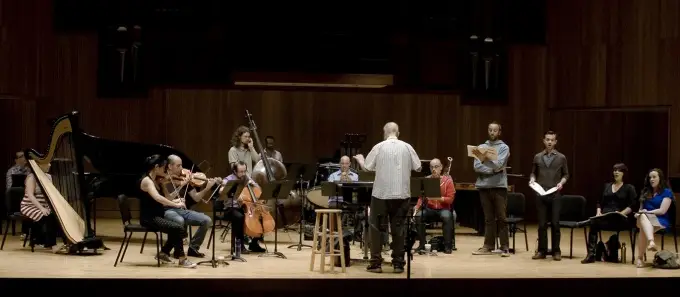
In 1975, the composer Morton Feldman did something audacious. At the University at Buffalo, he created a music festival unlike any other in America — one dedicated not to performing the classics, but to the composers who were actively reshaping what music could be. June in Buffalo became the first major American music festival to spotlight contemporary composers, and more than fifty years later, it remains one of the most important incubators for new music on the planet.
The 2026 edition runs June 1 through 7 on UB’s North Campus, continuing a tradition that has hosted an extraordinary roster of composers who have shaped the course of music in our time. John Cage, Luciano Berio, Elliott Carter, Gyorgy Ligeti, Steve Reich, Pauline Oliveros, Joan Tower, David Lang, Julia Wolfe, and Kaija Saariaho have all participated. That list reads like a syllabus for a graduate seminar on the most important music of the past century, and it is not an exaggeration to say that June in Buffalo has been central to the development of contemporary classical music in America.
This is not a festival for passive listeners looking for pleasant background music. It is a festival for people who believe that music is a living art form, that the most exciting sounds are the ones no one has heard before, and that the act of composition is as vital today as it was in the age of Beethoven.
The Music
June in Buffalo operates on a model that is fundamentally different from most music festivals. Rather than booking finished acts to perform polished sets, the festival brings together emerging and established composers with world-class performers and mentors to develop, rehearse, and premiere new works over the course of a week. The result is a festival where the music is literally being created in real time — you are not hearing a band play their album. You are hearing a piece of music that may have existed only on paper a few days earlier.
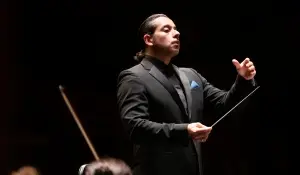
The 2026 festival puts the composer-conductor in the central role. Each participant composer — selected through a competitive application process — conducts their own work in rehearsal and performance with the festival’s resident ensemble, the Slee Sinfonietta. This professional chamber orchestra, founded by David Felder (who reimagined and directed June in Buffalo from 1986 to 2022), is one of the finest new-music ensembles in the country, capable of tackling the most demanding contemporary scores with precision and expression.
The programming includes seminars, lectures, and workshops led by world-renowned faculty composers and guest artists. Professional presentations explore current practices, technologies, and artistic trends shaping contemporary music. There are participant forums and open rehearsals where you can watch the collaborative process unfold in real time — a rare opportunity to see how new music moves from the page to the stage.
The genre labels that apply to most festivals do not really work here. This is contemporary classical music, but that term encompasses an enormous range of approaches — from richly textured orchestral works to electronic pieces, from minimalist compositions to complex, layered scores that challenge both performers and listeners. The common thread is that everything is new, everything is ambitious, and everything is performed with absolute commitment.
What makes June in Buffalo extraordinary is the intergenerational dialogue at its core. Established composers who have shaped the field work alongside young composers who are just beginning their careers. The mentorship is real and sustained — not a brief masterclass, but a week of intensive collaboration that has launched countless careers. Many of today’s most prominent contemporary composers cite June in Buffalo as a pivotal experience in their development.
The Experience
June in Buffalo takes place on UB’s North Campus in Amherst, a suburban setting northeast of downtown Buffalo. The concerts, rehearsals, and seminars are held in the university’s music facilities, which include excellent performance spaces designed for the kind of careful listening that contemporary music demands. The atmosphere is academic but not stuffy — there is a genuine excitement among participants and audience members alike, the energy of people who are deeply passionate about what they are hearing.
Concerts are open to the public and many are free, making June in Buffalo one of the most accessible new-music festivals in the country. You do not need to be a music student or a composer to attend — you just need to be curious. The audience typically includes music faculty from universities across the country, professional composers and performers, dedicated new-music fans, and local community members who have discovered that some of the most exciting music anywhere is happening in their own backyard.
The festival has a collegial, intimate feel. Between concerts, composers, performers, and audience members mingle in hallways and at post-concert receptions. Questions are welcomed, conversations are substantive, and there is none of the velvet-rope separation between artists and audience that characterizes many classical music events. If you want to ask the composer about the piece you just heard, you can probably find them in the lobby fifteen minutes later.
The surrounding area offers the amenities of a university campus — dining options, coffee shops, and the kind of quiet green spaces that are pleasant for walking between events. Downtown Buffalo, with its growing restaurant and cultural scene, is a short drive away for those looking for evening entertainment beyond the festival’s programming.
Getting There & Know Before You Go
UB’s North Campus is located at 645 Baldy Hall, Buffalo, NY — though specific concert venues vary, so check the festival schedule for exact locations. The campus is accessible from I-290 and is about 20 minutes from downtown Buffalo. Parking is generally available on campus, though specific lots may be designated during festival events.
The festival runs for a full week, but you do not need to attend every day to have a meaningful experience. Individual concerts are typically free or low-cost, making it easy to drop in for a single evening. If you are coming from out of town, plan to attend at least two or three concerts to get a sense of the festival’s range and depth. Evening concerts tend to feature the most polished performances, while afternoon open rehearsals offer a fascinating window into the creative process.
No special musical knowledge is required to attend. The festival welcomes curious listeners of all backgrounds. That said, reading the program notes before each concert will significantly enrich your experience — the composers often provide context for their works that opens up dimensions you might otherwise miss.
Why This Festival Matters
June in Buffalo matters because new music matters. In a cultural landscape dominated by nostalgia and revival, this festival insists that the most important music is the music being written right now. For over fifty years, it has provided a space where composers can take risks, where performers can push their abilities, and where audiences can hear the future of music before anyone else.
For Upstate New York, June in Buffalo is a reminder that the region’s cultural contributions extend far beyond the genres that typically get attention. Buffalo is home to one of the most important new-music institutions in the world, and that fact deserves wider recognition. If you care about where music is going — not where it has been — there is no better place to find out than June in Buffalo.