Every July, a city of seventeen thousand people on the shore of Lake Ontario becomes a city of a hundred thousand — and nobody has to pay a dime to get in. Oswego Harborfest has been pulling off this trick since 1989, when Mayor John T. Sullivan Jr. turned a waterfront idea into what has become one of the largest free music festivals in New York State.
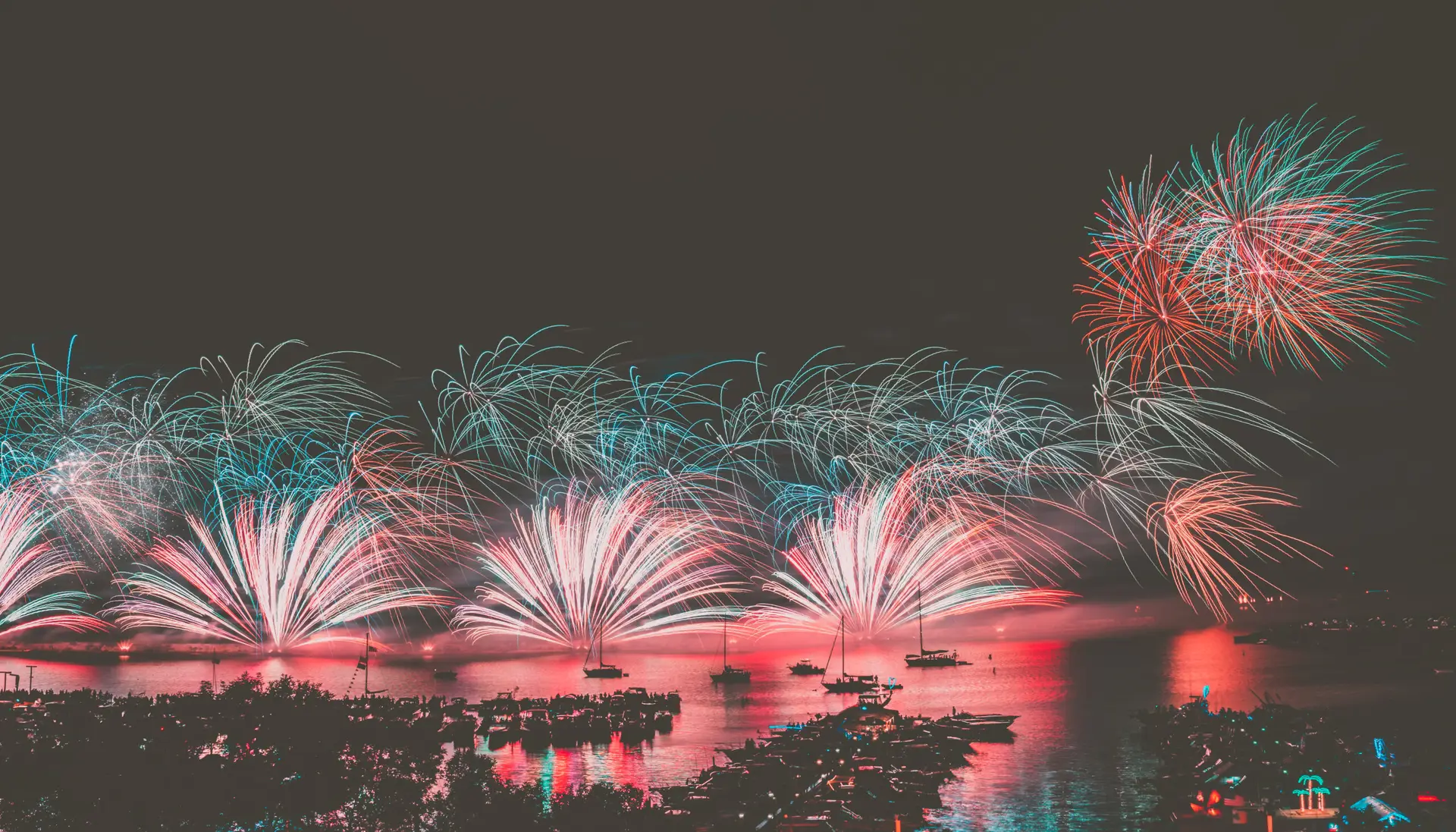
The math alone is staggering. Four days. Multiple stages. More than fifty acts. A fireworks display by Grucci — one of the most celebrated pyrotechnics firms in the world — launched over the open water of Lake Ontario on Saturday night. A midway carnival with a Ferris wheel. A children’s parade on Friday. Jazz and blues in East Park. Rock and country on the main stage at Breitbeck Park. And through it all, the fact that remains most remarkable: free admission, every stage, every day.
A Waterfront Built for This
Harborfest is spread across Oswego’s waterfront in a way that rewards wandering. Breitbeck Park anchors the main stage programming — rock, country, soul, and whatever else the booking committee decides belongs on a summer evening by the lake. The Cahill Pier stage sits out on the water, with the audience surrounded by Lake Ontario on three sides, a setting that makes even a mid-afternoon set feel like an event. East Park, dedicated to jazz and blues, offers a different energy entirely: smaller, more intimate, the kind of stage where a zydeco band can turn a Wednesday evening into something worth remembering.
Free trolley shuttles connect the venues, which is both a practical necessity and part of the experience — the ride between stages gives you time to process what you just heard and start anticipating what comes next. The food vendors are concentrated around Breitbeck Park but scattered enough throughout the waterfront that you will never be more than a few minutes from something grilled or fried or served on a stick.
Thirty-Seven Years of Free Music
The festival’s origins trace to 1988, when an event called OswegoFest — featuring Tall Ships in the harbor — proved that Oswego’s waterfront could handle a crowd. Sullivan saw the potential and launched Harborfest proper in 1989, drawing roughly 30,000 people in its first year. By the third year, attendance had exceeded 100,000.
The model has held: a nonprofit board, a volunteer-driven organization, and a commitment to free admission that has survived economic downturns, pandemic cancellations, and every other pressure that kills community festivals. The Saturday night Grucci fireworks show has been part of the DNA since year one, and it remains the kind of spectacle that draws families who stake out waterfront spots hours in advance.
Over the decades, Harborfest has hosted hundreds of acts across a genuine range of genres. The main stage books national touring acts alongside regional favorites. The jazz and blues programming at East Park has featured performers like Chris Beard Band, Jeffrey Broussard and the Creole Cowboys, and the Heather Pierson Trio. The Cahill Pier stage leans toward crowd-pleasers — cover bands, tribute acts, the kind of performances that keep a waterfront dancing on a Thursday night.
2026
Harborfest 2026 runs July 23 through 26. The lineup has not been announced as of this writing, but the festival held a Countdown to Harborfest party on March 27 at The Foundry in Oswego — a signal that the organizing committee is actively booking. When the acts are confirmed, expect the same multi-genre spread the festival has delivered for more than three decades.
What you should know before you go: this is a community festival in the truest sense. It is free because the people who run it believe it should be free. It is big because Oswego’s waterfront can hold it. And it is good because thirty-seven years of institutional knowledge means the logistics — the stages, the shuttles, the fireworks timing, the food placement — have been refined into something that feels effortless even when it is anything but.
If you have never been to Harborfest, the Saturday night fireworks over Lake Ontario are reason enough to make the drive. But stay for the music. The best sets often happen on the stages you weren’t planning to visit.