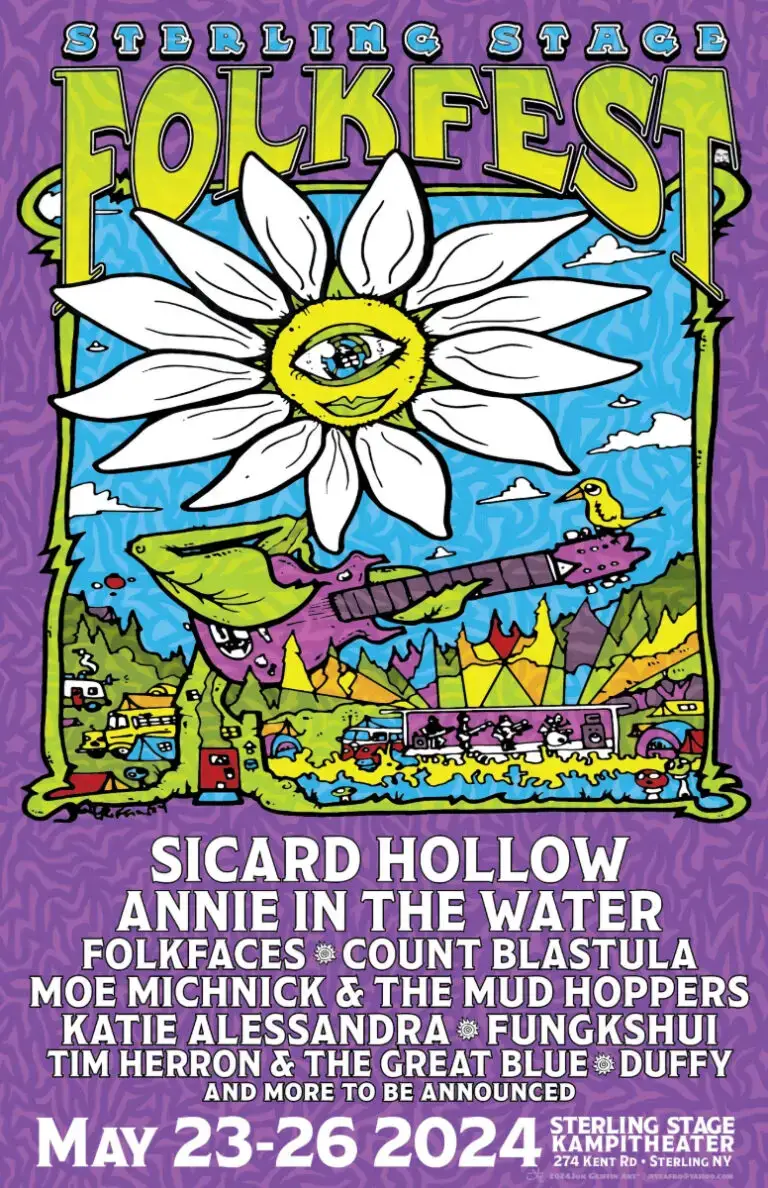
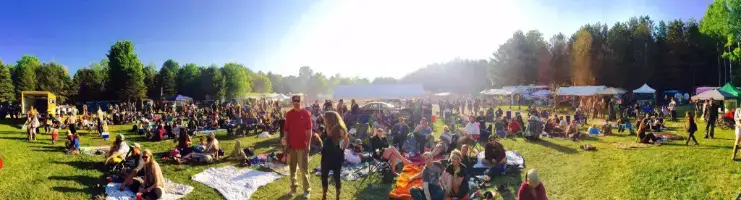
Memorial Day weekend in Upstate New York carries a particular energy. The lakes are still too cold for swimming, the trees have just finished leafing out, and the whole region feels like it is stretching awake after a long winter. For a dedicated community of folk and roots music fans in Central New York, that awakening has a soundtrack — and it has been coming from Sterling Stage for nearly three decades.
Sterling Stage Folkfest is the kind of festival that thrives on word of mouth rather than marketing budgets. Held over Memorial Day weekend at Sterling Stage Kampitheater — a dedicated outdoor music park on Kent Road in Sterling, about 40 miles north of Syracuse near the shores of Lake Ontario — the festival draws more than a thousand attendees for three days of folk, roots, and Americana music, camping, extended sets, and the kind of communal atmosphere that only develops when an event has been doing the same thing, in the same place, for a very long time.
The festival has been running since the mid-1990s, making it one of the longest-running folk events in Central New York. Its digital footprint is minimal — Facebook serves as the primary communication channel, and the organizers have shown zero interest in chasing social media trends or algorithmic relevance. In an era when most festivals treat their online presence as a second stage, Sterling Stage’s approach is almost defiantly analog. You find out about this festival because someone who has been tells you about it. That is how it has always worked, and that is part of its charm.
The Music
Sterling Stage Folkfest books with an ear toward artists who can hold a stage for extended periods — sets at Sterling often run two hours or more, giving performers room to stretch out, tell stories, and build the kind of rapport with an audience that a 45-minute festival slot never allows. This is not a festival built on quick hits and tight changeovers. It is a festival built on the belief that music needs time and space to breathe.
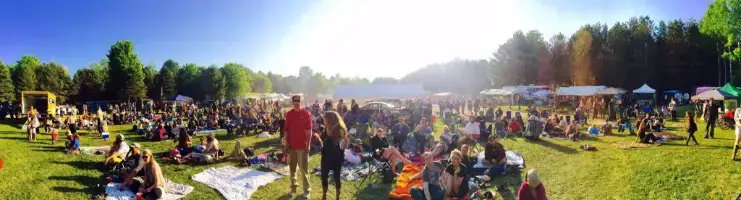
The lineup draws from both established regional touring acts and national folk and Americana artists. Past performers include Ryan Montbleau Band, who have become a regular fixture; Driftwood, the Ithaca-based folk-rock outfit whose raw energy translates perfectly to the outdoor setting; Giant Panda Guerilla Dub Squad, bringing reggae-inflected grooves; Hayley Jane and The Primates; Cornmeal; The Breakfast; The Buddhahood; and The Rounders. The programming leans toward artists with loyal followings built through relentless touring and genuine musical substance rather than viral moments.
The main stage features a “Groovin’ Lumens” light show that adds visual atmosphere to the evening performances without overwhelming the natural setting. Multiple performance areas across the grounds allow for a varied schedule, though the intimate scale means you can easily catch everything without the panicked stage-hopping that larger festivals require.
The musical identity of Sterling Stage sits at the crossroads of folk, jam, and Americana — a territory that reflects Central New York’s musical tastes and the broader independent touring circuit that feeds festivals like this one. If you follow the scene that orbits venues like the Westcott Theater in Syracuse or The Haunt in Ithaca, the Sterling Stage lineup will feel like a natural extension of those rooms, transplanted into an outdoor setting with room to camp and no curfew.
The Experience
Sterling Stage Kampitheater bills itself as Central New York’s premier outdoor music park, and while that claim might sound ambitious for a rural property in Oswego County, the venue earns it through years of refinement. The grounds are purpose-built for exactly this kind of event — an outdoor performance space surrounded by camping areas, set in a wooded rural landscape that feels removed from everything except the music and the people who came to hear it.
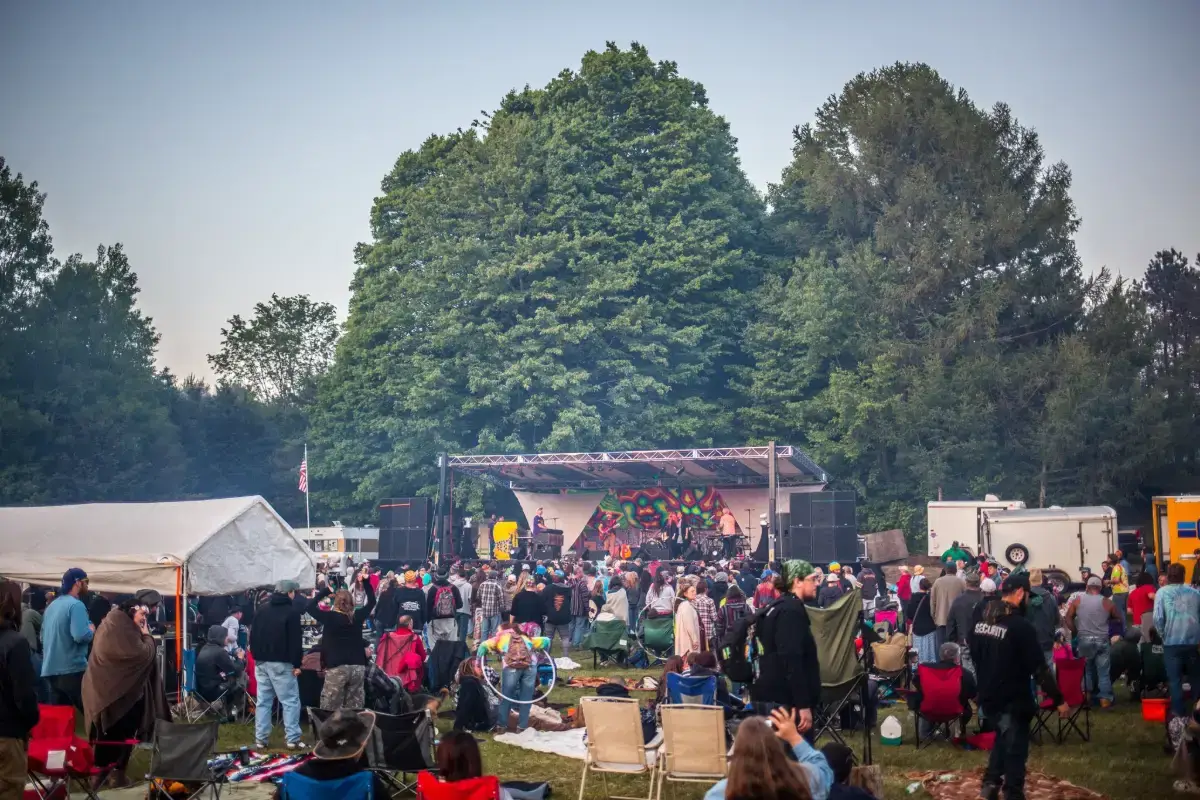
Camping is central to the Sterling Stage experience. This is a three-day event designed to be lived in, not visited. You pitch a tent, settle into a campsite, and the festival becomes your world from Friday through Sunday. The campground culture is relaxed and social — shared meals, late-night conversations, acoustic instruments appearing around campfires as the main stage winds down. The scale is small enough that the campground does not feel like a refugee camp, which is more than can be said for some larger festivals.
The Memorial Day weekend timing makes Sterling Stage the unofficial kickoff to summer festival season in Central New York. There is a particular anticipation that comes with the first camping festival of the year — the first night sleeping under the stars, the first open-air concert after months of indoor shows, the first time all year you can stay out past midnight without a coat. Sterling Stage captures that energy perfectly.
The location near Fair Haven and Lake Ontario places the festival in a part of the state that most downstate visitors have never explored. Oswego County is rural, agricultural, and quietly beautiful — rolling hills, small towns, and a lakeshore that stretches for miles. The area is not overrun with tourism infrastructure, which means the festival exists in a kind of isolation that enhances the escape-from-reality feeling.
Food vendors serve the festival grounds, and the camping setup allows attendees to bring their own provisions. The atmosphere is decidedly BYOB and potluck — the kind of festival where your neighbor offers you a plate of campfire-cooked food and you reciprocate with whatever you brought. Community is not a buzzword at Sterling Stage. It is the operating principle.
Getting There & Know Before You Go
Sterling Stage Kampitheater is located at 274 Kent Road in Sterling, New York, about 40 miles north of Syracuse via Route 370 or Route 104A. The drive from Syracuse takes roughly 45 minutes. From Rochester, it is about 90 minutes east. The venue is rural — GPS is your friend, and cell service may be limited once you arrive.
The 2026 festival runs May 21 through 24, covering the extended Memorial Day weekend from Thursday through Sunday. Ticket and camping pass information is available through the festival’s Facebook page, which serves as the primary source for lineup announcements, logistics, and updates. If you are not on Facebook, check with the venue directly or ask someone in the Central New York music community — word of mouth remains the most reliable channel.
Pack for variable weather. Late May in Central New York can deliver anything from warm sun to chilly rain, sometimes in the same day. Layers, rain gear, and a good tent are non-negotiable. Bring a cooler with food and drinks for the weekend. A headlamp or flashlight is essential for navigating the campground after dark.
The festival’s intimate scale and dedicated community make it exceptionally welcoming to newcomers, but arriving with a general understanding of the culture helps. This is a camping festival — leave the dress shoes at home. It is a music festival — leave the Bluetooth speaker at your campsite and listen to the stages. And it is a community festival — introduce yourself to your campsite neighbors. By Sunday, they will feel like old friends.
Why This Festival Matters
Sterling Stage Folkfest matters because it represents something increasingly rare in the festival landscape: an event that exists purely because a community of music lovers willed it into being and has sustained it through decades of dedication. There is no corporate sponsor underwriting the stage. There is no influencer partnership driving ticket sales. There is a field, a stage, a light show, and a few hundred people who show up every Memorial Day weekend because this is where they belong.
In an Upstate New York festival scene that ranges from mega-events at SPAC to boutique jazz weekends in Hudson, Sterling Stage occupies the grassroots end of the spectrum — and that is exactly where some of the best music experiences live. The acts are real. The community is real. The mud, if it rains, is definitely real. And the feeling you get on Sunday afternoon, breaking down your tent and already counting the days until next Memorial Day — that is the realest thing of all.