
The Festival That Cannot Charge Admission
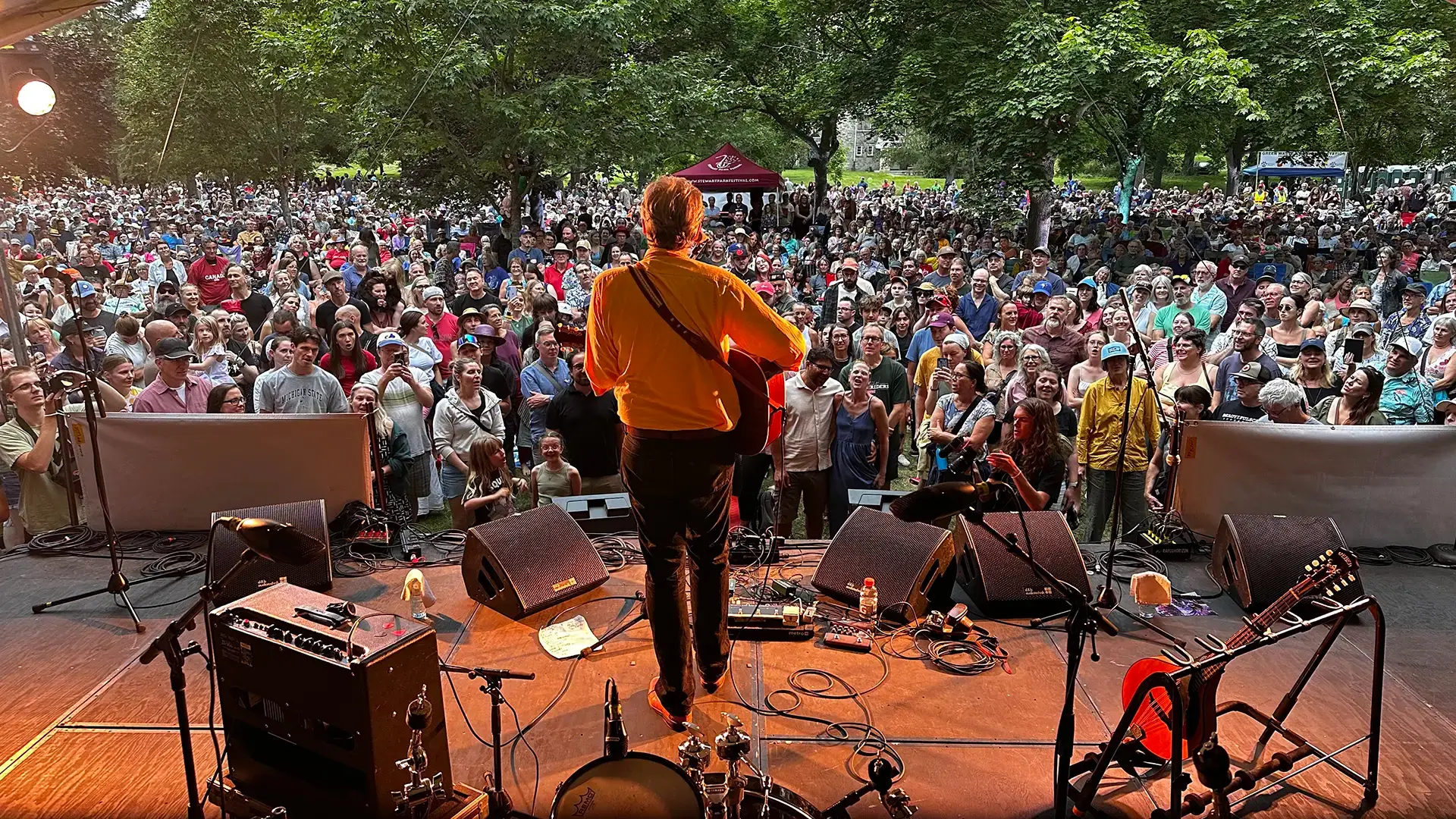
Stewart Park Festival operates under a constraint that most event organizers would consider impossible: the park’s deed prohibits charging admission. What began in 1992 as a modest community gathering in the riverside town of Perth, Ontario, has become one of Eastern Canada’s most distinctive folk festivals precisely because of that limitation. When you cannot sell tickets, you must earn your audience. Thirty-five years later, Stewart Park draws more than 10,000 visitors across three days on reputation alone.
The 35th annual edition runs July 17-19, 2026, in Stewart Park along the Tay River in downtown Perth. The festival operates on a donation model, with a suggested contribution of $25 or more qualifying for a tax receipt. Every dollar goes directly to sustaining the programming, and the results speak for themselves: international and Canadian folk artists performing on multiple stages in a heritage town that treats the festival as its cultural centerpiece.
Perth as the Stage
Perth is the kind of small Canadian town that travel writers struggle to describe without resorting to the word “charming,” so consider the facts instead. Heritage limestone buildings line the main street. The Tay River cuts through the center of town. Independent shops and restaurants operate without franchise competition. Stewart Park itself sits on the water, providing a natural amphitheater setting where the main stage performances unfold against a backdrop of river and treeline.
Beyond the main stage in the park, the festival extends to Perth Brewery and Crystal Palace for workshops and after-hours programming. The multi-venue format gives the weekend a texture that single-stage festivals cannot match, allowing attendees to move between intimate workshop settings and full-production mainstage sets within walking distance.
The Programming
Stewart Park Festival has always prioritized musical diversity within the folk and roots framework. The lineup typically blends Canadian singer-songwriters with international touring artists, creating bills where a Celtic fiddler might precede a West African guitarist, followed by an Appalachian string band. The festival accepts performer submissions for each edition, keeping the programming fresh and responsive to the broader folk music landscape rather than relying on the same rotation of regional acts.
Artist workshops offer direct interaction with performers in small-group settings, adding an educational dimension that distinguishes Stewart Park from purely performance-oriented festivals. Food vendors and artisan markets fill the park grounds, and family-friendly activities ensure the audience spans generations.
The Cross-Border Trip
Perth sits approximately three hours from Albany via the Thousand Islands crossing, making it the rare international festival that falls within comfortable weekend-trip range for Upstate New York travelers. The drive follows the St. Lawrence through some of the most scenic terrain in the Northeast before crossing into Ontario’s Lanark County.
The free admission model removes the financial risk that keeps many festivalgoers from committing to unfamiliar events. You can show up, listen, and decide what the experience was worth to you afterward. It is a radical act of trust in both the programming and the audience — and after 35 years, that trust has been repaid many times over. Stewart Park Festival proves that the best things in folk music have always been free.