
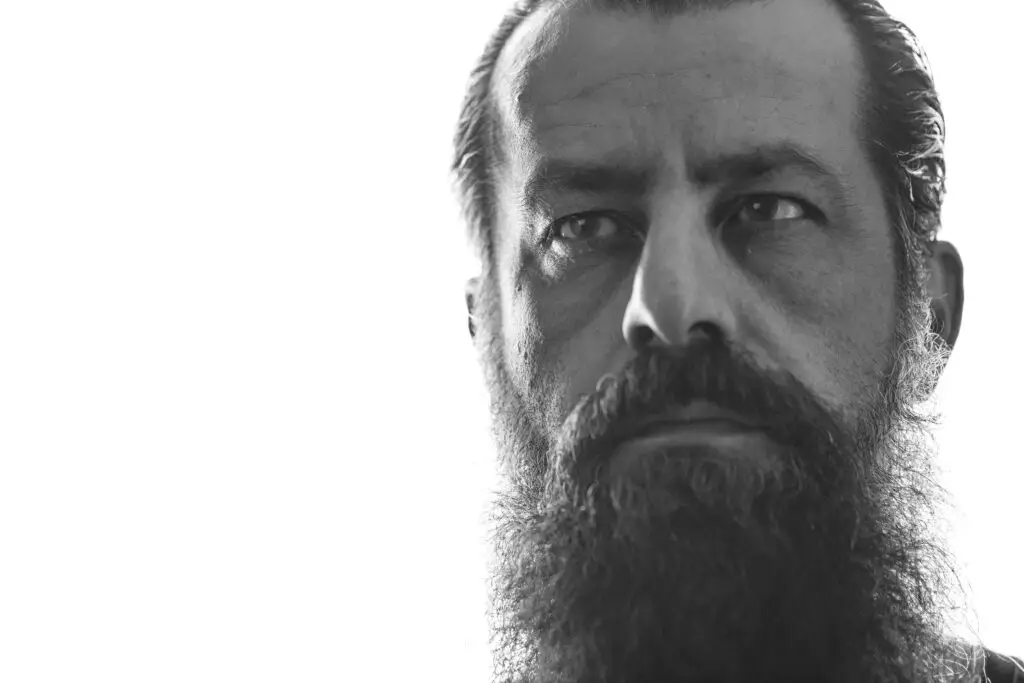
Sean Rowe is the kind of artist who makes you believe that a voice alone can fill a room, a canyon, or an entire concert hall. The Troy, New York, singer-songwriter possesses one of the most arresting baritones in American folk music — a deep, resonant instrument that NPR once noted could “crush granite” — and he has spent more than two decades using it to build a body of work that stands alongside the best of the Americana tradition.
A Troy Boy
Rowe grew up in Troy, in the heart of New York’s Capital Region, and has remained rooted there even as his career has taken him to national stages and international festivals. He describes Troy with the affection of a native who watched his hometown transform — from a struggling post-industrial city to what he calls an “upstate Williamsburg.” His local haunts include The Ale House, where he played early shows before graduating to larger rooms, and the historic steps at RPI, where he runs to clear his head between tours.
The Music
Rowe’s catalog spans multiple acclaimed albums, including New Lore and The Darkness Dressed in Colored Lights, the latter recorded at The Hive in Wisconsin by Grammy-winning engineer Brian Joseph. His songwriting draws comparisons to Tom Waits for its literary ambition and Leonard Cohen for its emotional weight, but Rowe’s sound is his own — percussive acoustic guitar, that cavernous voice, and lyrics that toggle between personal confession and natural-world metaphor. His song “To Leave Something Behind” was featured prominently in the 2016 film The Accountant, bringing his music to a wider audience.
Beyond the Stage
An avid naturalist and forager, Rowe hosts the YouTube series Can I Eat This?, blending music and wild-food exploration in a way that reflects his deep connection to the land. He has appeared on Jimmy Kimmel Live, performed at Mountain Jam and Wilco’s Solid Sound Festival, and opened for Robert Plant and Alabama Shakes. But he always comes back to Troy — to the Capital Region community that shaped him and the landscape that feeds his art.