
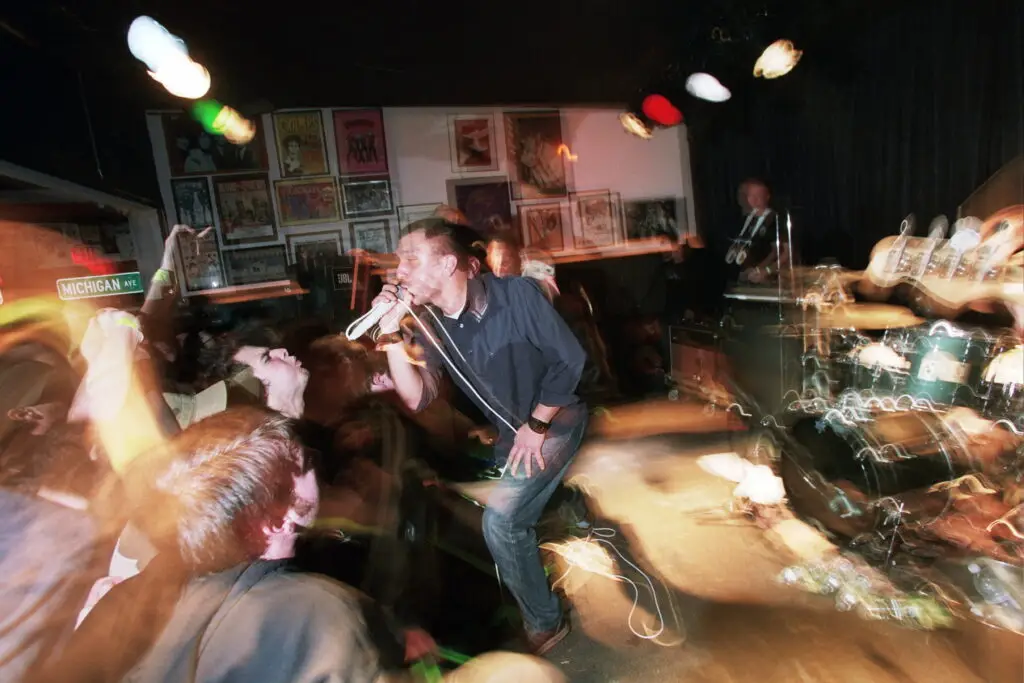
Before Buffalo was known for indie rock breakouts and jam bands, the city’s underground was seething with hardcore punk energy. Few bands channeled that fury more effectively than Snapcase, whose fusion of heavy rhythms, intricate guitar work, and politically charged lyrics made them cornerstones of the 1990s hardcore scene.
West Seneca Beginnings
The band originated in 1989 as Solid State, formed in a West Seneca basement by guitarist Scott Dressler, drummer Mike Kimaid, bassist Daryl Taberski, and vocalist Tiger Balduf. By spring 1991, after lineup shifts that brought in guitarist Joe Smith, they rechristened themselves Snapcase and began recording demos. Their 1992 debut 7-inch, Comatose, was released on Chicago’s Victory Records and produced by Robby Takac of the Goo Goo Dolls — a fitting Buffalo connection.
The Classic Lineup
The band’s definitive formation coalesced through the mid-1990s: Taberski moved from bass to lead vocals, Jon Salemi and Frank Vicario (from Buffalo band Fadeaway) handled guitars, Bob Whiteside took over bass, and Tim Redmond (from Buffalo’s Slugfest) locked in on drums. This lineup drove the band through their most celebrated era.
Key Albums
Their 1993 debut full-length Lookinglasself earned critical respect, but it was 1997’s Progression Through Unlearning that became their defining statement. Supported by a slot on the Vans Warped Tour, the album fused melodic sensibility with hardcore intensity in a way that influenced an entire generation of post-hardcore bands. Their final studio album, Designs for Automotion, arrived in 2000 on Victory Records.
Influence and Reunion
Snapcase disbanded in 2005 after 14 years, with members pursuing education and other interests. Their impact on Buffalo’s punk and hardcore community — and on the broader post-hardcore movement — endures. Reunion shows in subsequent years proved the demand for their blistering live performances never faded. Drawing from the same wells as Bad Brains, Minor Threat, and Fugazi, Snapcase forged something distinctly their own in the basements and clubs of Western New York.