
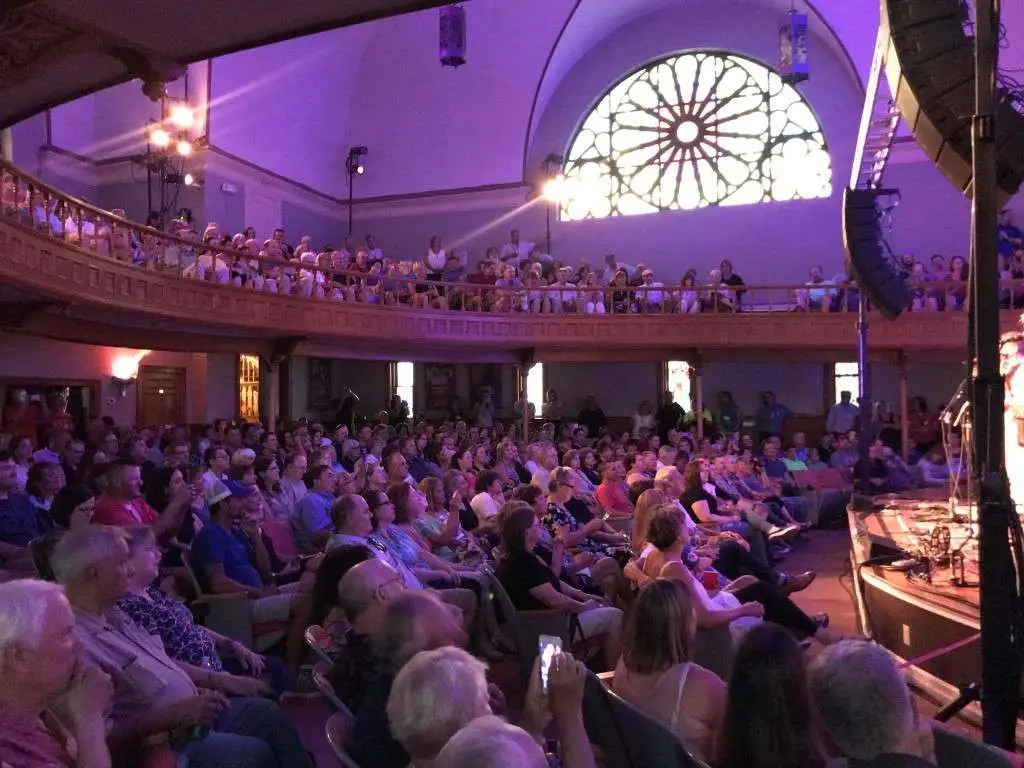
The stained glass windows still catch the light the way they did when this building was the First Baptist Church of Homer, a congregation that worshipped here for over 110 years. The original pews still face the stage. But the sermons stopped in 2001, and what fills this sanctuary now is something different — the sound of Hot Tuna tearing through a blues set, or Arlo Guthrie telling stories between songs, or a Friday night crowd leaning forward in those old wooden pews as a touring act discovers what every musician who plays here figures out fast: this room was built for sound.
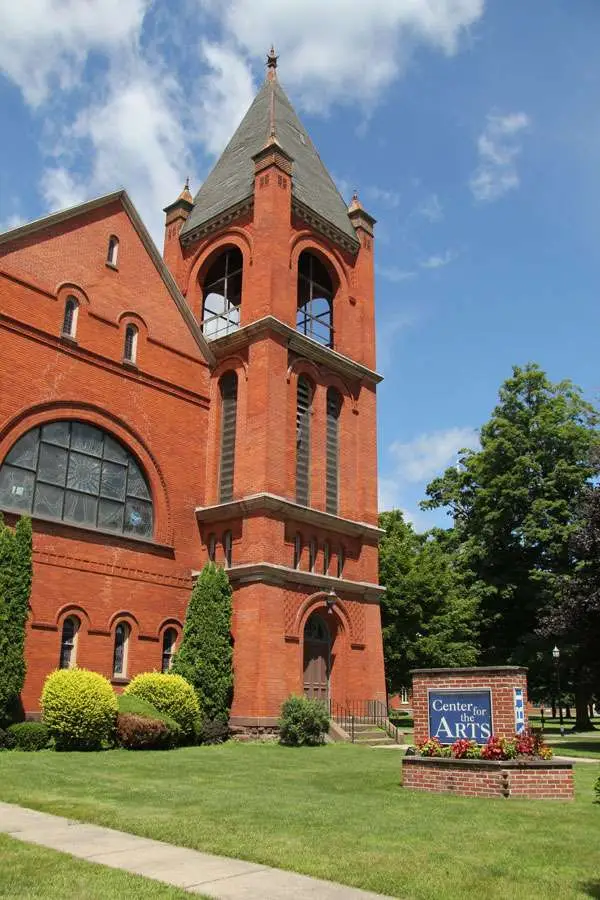
The Center for the Arts of Homer sits at 72 South Main Street in a village of about 3,300 people, roughly ten minutes south of Cortland in the rolling hills of Central New York. It is, by any reasonable measure, an unlikely place to find a 400-seat concert hall that regularly books national touring acts. And yet here it is — a converted church with acoustics that professionals rave about, a booking calendar that punches well above its weight class, and a community that has kept it alive for more than two decades through sheer determination.
Saved by the Neighbors
When the First Baptist Church outgrew its building and announced plans to relocate in 2001, a group of neighbors and community members saw an opportunity rather than a loss. They approached church leadership, held community meetings, and devised a plan to save the structure and repurpose it as a cultural center. The Center for the Arts was formally incorporated as a 501(c)(3) nonprofit in 2003, though the first public event was held as early as November 2001 — the community didn’t wait for the paperwork.
What they inherited was a building with bones that most purpose-built venues would envy. The vaulted ceilings and plaster walls of the old sanctuary create a natural reverb that flatters acoustic instruments and unamplified voices. The original wooden pews, while not exactly luxurious, contribute to the room’s warm resonance and give the space a visual character that no amount of renovation could replicate. The stained glass windows, still intact, cast colored light across the audience during afternoon and early evening shows.
National Acts in a Village Setting
The Center’s concert programming, managed in close partnership with DSP Shows, has brought an improbable roster of talent to Homer over the years. Richie Havens, Judy Collins, Leon Russell, Colin Hay, Rusted Root, Tim Reynolds & TR3, David Sedaris, Spyro Gyra, and Butch Trucks have all performed on the stage where a pulpit once stood. The venue has earned a New York State Senate Empire Award for its contributions to the community.
The booking philosophy leans toward artists who thrive in intimate rooms — singer-songwriters, acoustic acts, jam bands willing to strip down, comedians who work best when they can see every face. At 400 seats, the Center is small enough that every show feels like a private event, but large enough that the energy of a full house creates real electricity. It’s the sweet spot that many venues chase and few actually hit.
Beyond concerts, the Center hosts film screenings, a community theatre program called Center Stages, and rotating exhibitions in its art gallery featuring work by regional, national, and international visual artists. But music is the engine, and the concert calendar — typically running from fall through spring with summer dates scattered in — is what draws audiences from Cortland, Ithaca, Syracuse, and Binghamton.
Getting There and Making a Night of It
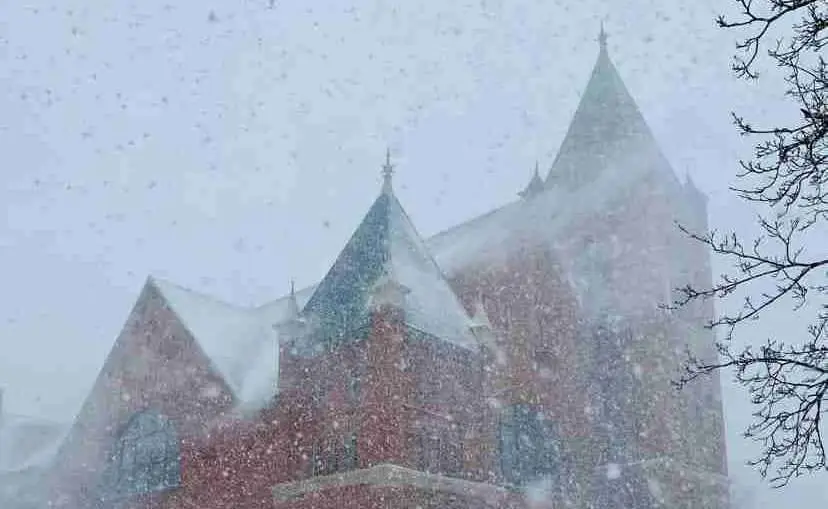
Homer is located on Route 11, about 10 minutes south of Cortland and roughly 35 minutes south of Syracuse. From I-81, take Exit 12 (Homer) and follow Route 281 into the village — the Center is right on Main Street, impossible to miss with its church steeple. Parking is available on Main Street and in nearby municipal lots, and walking distances in Homer are measured in seconds, not minutes.
The village’s Main Street offers a couple of strong pre-show dining options. Dasher’s Corner Pub at 2 North Main is a retro-style restaurant with an unexpectedly deep menu — whole lobsters, prime rib, design-your-own steaks, and an award-winning New England clam chowder. The Exchange Restaurant, also on Main Street, occupies a handsome building and offers a slightly upscale menu with a curated wine list. For quick and casual, Little Italy Pizzeria delivers exactly what the name promises.
Accessibility
The Center takes accessibility seriously. The orchestra (ground) floor is wheelchair accessible, with ADA-compliant restrooms and eight dedicated ADA seats — four in the fourth row center and four in the back row center — reserved for patrons with disabilities and their companions.
Insider Tips
- The pews are historic, not ergonomic. Bring a cushion or a jacket to sit on if you’re planning to be there for a two-hour show. Your back will thank you.
- Sight lines are excellent everywhere. The sloped floor of the old church means there’s not a bad seat in the house, but center pews in rows 4-10 are the sweet spot for both sound and view.
- Check DSP Shows for tickets. Many of the national touring concerts are promoted through DSP Shows, while community events and local performances are listed on the Center’s own site.
- Don’t skip the gallery. The rotating art exhibitions in the adjacent gallery space are free to browse and frequently feature genuinely surprising work.
For the full concert and event calendar, visit center4art.org.