
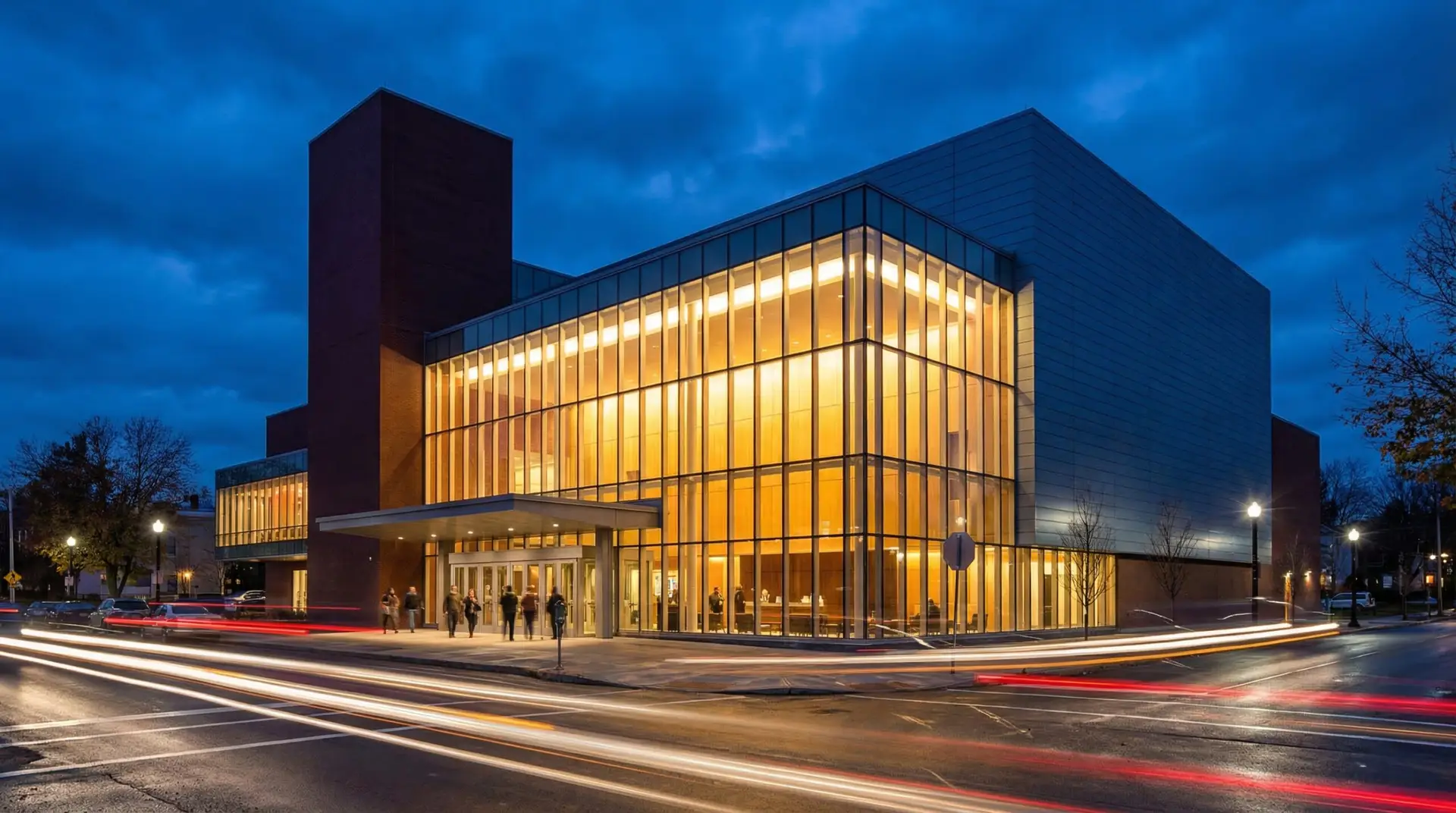
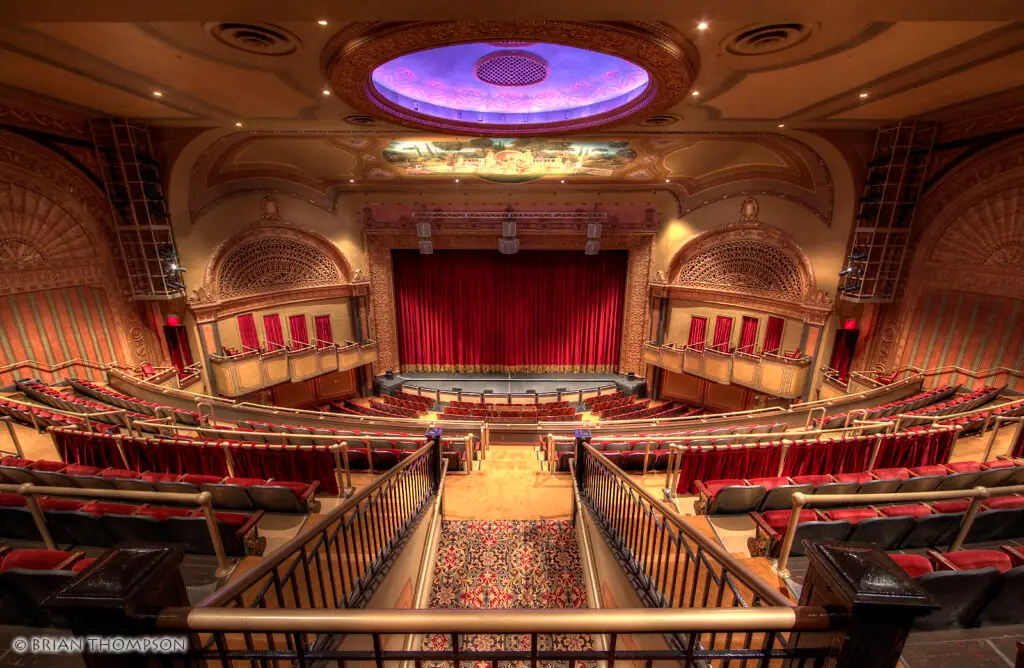
Walk into the Clemens Center on a show night and the first thing that hits you isn’t the stage — it’s the ceiling. The ornate plasterwork, the classical detailing, the sheer vertical ambition of the room. This is a theater that was built to make you look up, built in an era when entertainment was supposed to feel like an occasion. A century later, it still does.
A Theater Named for a Storyteller
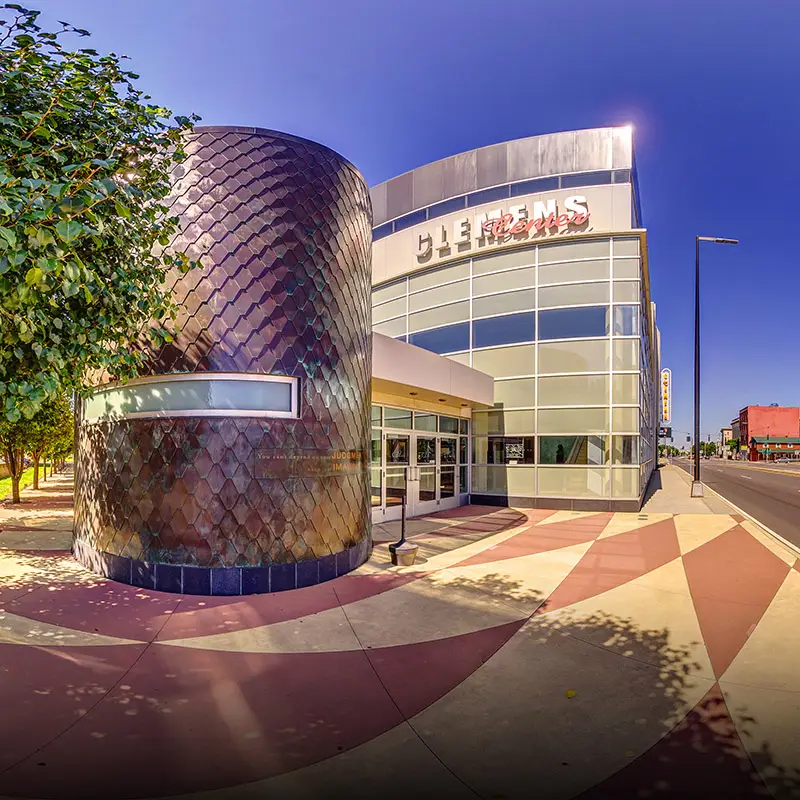
The building that would become the Clemens Center opened on December 21, 1925, as a vaudeville and silent film palace. At the time of its inauguration, it was celebrated as the largest and most magnificent theater between New York City and Buffalo — a 2,500-seat showpiece on the banks of the Chemung River in downtown Elmira. The name honors Samuel Clemens — Mark Twain — who spent decades writing in Elmira, married into a prominent local family, and is buried in the city’s Woodlawn Cemetery. It’s a fitting namesake for a venue that has always been about the art of performance.
The theater’s history reads like a survival story. The Chemung River flooded in 1946, causing significant damage. Then, in June 1972, Hurricane Agnes sent the river surging through downtown Elmira in one of the worst natural disasters in Southern Tier history, devastating the theater along with much of the city. The building sat dark and damaged until a citizens’ group raised $750,000 to save it — a remarkable act of community will. The theater reopened in the fall of 1977 with a reduced seating capacity of approximately 1,650 (the renovation removed nearly 600 seats to improve sightlines and acoustics) and a renewed purpose as a dedicated live performance venue.
Two Stages, Two Experiences
The Clemens Center operates two distinct performance spaces. The main house — the Powers Theater — is where the big shows happen. With its 1,650 seats arranged across orchestra and balcony levels, it’s large enough to attract national touring acts and Broadway productions but small enough that every seat feels connected to the stage. The acoustics, vastly improved during the 1970s restoration when sound-deadening drapes and treatments from a misguided 1950s “modernization” were stripped away, are warm and clear. It’s the kind of room where an unplugged guitar fills the space without strain.
The second space, Mandeville Hall, was added in 1987. It’s a 2,500-square-foot black box theater — intimate, flexible, and ideal for smaller productions, recitals, lectures, and community events. The contrast between the two rooms is part of what makes the Clemens Center work: the grandeur of the Powers Theater for touring shows, the scrappy closeness of Mandeville Hall for everything else.
Programming runs the full spectrum. The Broadway Series brings national touring productions — recent seasons have featured shows like “Dear Evan Hansen,” “Six,” and “Ain’t Too Proud.” The concert calendar pulls a mix of legacy artists, tribute acts, and regional performers. The Orchestra of the Southern Finger Lakes calls the Clemens Center home, performing the majority of its concert season here. Community theater, dance recitals, comedy shows, and holiday performances fill out a calendar that keeps the building active year-round with more than 100 performances annually drawing over 100,000 attendees.
The Room Itself
The Powers Theater is the star. The original 1925 design drew from classical and Baroque influences — the kind of theatrical architecture that was meant to transport audiences before the curtain ever went up. The restoration preserved and enhanced that character. The stage is deep and well-equipped for modern touring productions, while the house retains the visual warmth and intimacy of a pre-war movie palace. The balcony offers some of the best sightlines in the Southern Tier — elevated enough for perspective, close enough to read the performers’ expressions.
For concerts specifically, the Powers Theater’s mid-size capacity is a sweet spot. You get the production value and staging of a professional touring show without the distance and anonymity of an arena. Performers who play rooms this size often cite them as their favorites — close enough to feel the audience, large enough to justify a full production.
Getting There and What’s Nearby
The Clemens Center sits at 207 Clemens Center Parkway in downtown Elmira, easily accessible from Route 17 (the future I-86) and Route 14. The Centertown Garage, a covered parking structure, is adjacent to the theater between Clemens Center Parkway and Main Street — convenient and typically free for event attendees. Additional surface lots surround the building, and street parking is available in the immediate area.
For pre-show dining, downtown Elmira has a handful of solid options within a short drive. The Starlite Room is a local favorite for cocktails and a relaxed atmosphere. 1157 North serves elevated pub fare — steaks, chops, and their well-regarded prime rib tacos — with the kind of friendly service that makes it feel like a neighborhood spot even on a first visit. Legends Bar & Grille rounds out the options with a sports-bar vibe and a menu that covers the bases before a show.
Insider Tips
The Clemens Center is a nonprofit performing arts center, which means ticket prices tend to be reasonable compared to metro-area venues — a real advantage for catching touring Broadway shows that would cost two or three times as much in New York City. Keep an eye on the Broadway Series subscription packages for the best value.
If you’re making a trip of it, Elmira has genuine Mark Twain history worth exploring. His study — the octagonal room where he wrote portions of “Adventures of Huckleberry Finn” and other major works — was relocated to the Elmira College campus and is open for tours. Woodlawn Cemetery, where Twain is buried, is a few minutes from downtown.
One note on the venue: the Clemens Center underwent significant improvements over the years, but the bones are a century old. The charm is real, but so is the character — the seats are traditional theater width, and the lobby fills up fast at intermission. Arrive a few minutes early to settle in and take in the architecture before the lights go down.
For tickets and the full event calendar, visit clemenscenter.org.