
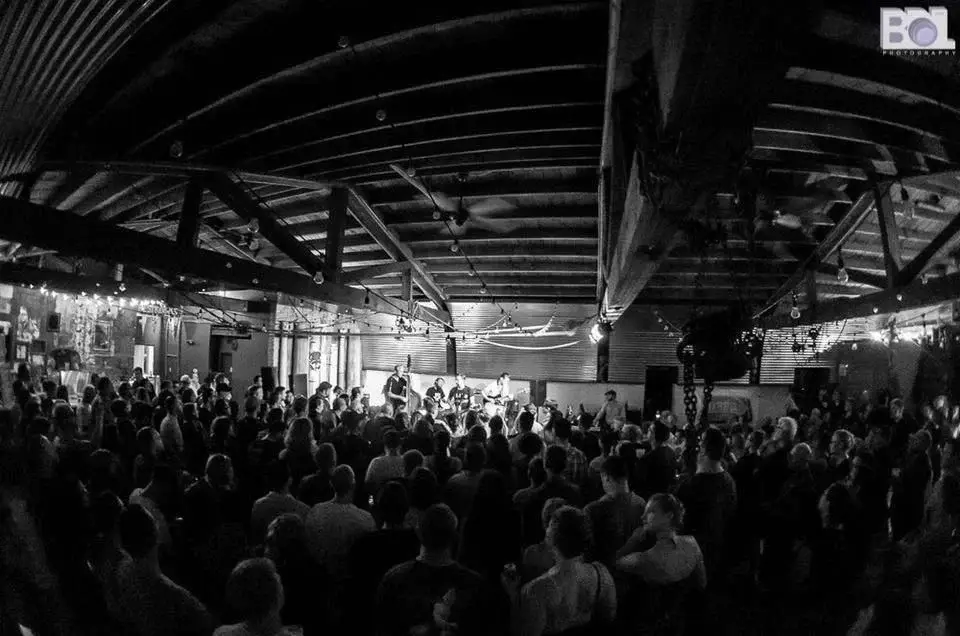
The first thing you notice about The Hangar on the Hudson is that it does not apologize for what it is. There is no velvet rope, no dress code, no pretension. At 675 River Street in Troy, tucked into a converted warehouse on the banks of the Hudson River, this 200-capacity room has spent nearly a decade proving that the best live music often happens in the smallest, scrappiest spaces.
Since opening in 2015, The Hangar has become one of the Capital Region’s most reliable rooms for catching touring indie acts, rising local bands, and the occasional name that makes you wonder how they ended up in a venue this small. The answer is simple: the room sounds good, the beer is cold, and the stage is close enough that you can see the guitarist’s fingers.
The Room
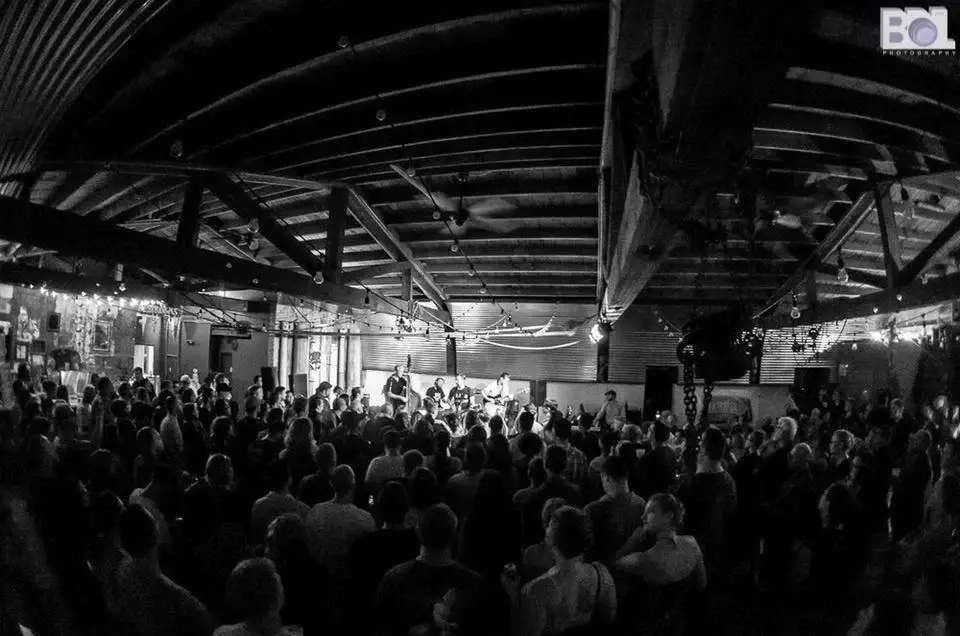
The Hangar holds roughly 175 to 200 people, and every one of them is close to the stage. The layout is general admission standing with limited perimeter seating, which means the energy in the room during a packed show is the kind of thing that larger venues spend millions trying to engineer. The warehouse bones are still visible in the heavy beams and industrial finishes, and the bar runs along one side with a well-curated selection of craft beers, wines, and cocktails.
The sound system is solid for the room’s size. The Hangar is not trying to fill an arena; it is trying to put you inside the music. On a good night, with the right band and a crowd that came to listen, it delivers on that promise completely.
What Plays Here
The booking at The Hangar leans indie, Americana, folk, and jam, though genre lines blur frequently. You might catch a touring singer-songwriter on a Thursday, a full-band rock show on a Friday, and a DJ night or special event on a Saturday. The calendar runs heaviest Friday through Sunday, with occasional midweek shows for artists passing through on tour.
What sets The Hangar apart from other small rooms in the region is its willingness to take chances. This is a venue that books artists on the way up, not just established draws. If you pay attention to who plays The Hangar, you get a preview of who will be selling out larger rooms in a year or two.
The River Street Scene
The Hangar sits on River Street in Troy’s North Central neighborhood, a stretch of the city that has seen steady creative revival over the past decade. Troy itself has become one of the Capital Region’s most interesting small cities, with a walkable downtown, a growing food scene, and a community of artists and musicians who chose it precisely because it is not Albany.
River Street runs along the Hudson, and on a warm evening before a show, there are few better places to be. The industrial waterfront has a roughness to it that gives Troy its particular character, and The Hangar fits that character perfectly.
Getting There and Parking
The Hangar is at 675 River Street, Troy, NY 12180. Street parking is available on River Street, and there is a parking lot behind the building. For popular shows, arriving 30 to 60 minutes early is a good idea, as parking can fill up. The venue is a straight shot across the river from Albany via Route 787 to the Green Island Bridge, or down from Saratoga via I-87 to Route 7.
Doors typically open well before showtime. Check the venue’s website or social media for specific times, as they vary by event.
Where to Eat Nearby
Troy’s food scene has come a long way, and River Street puts you in the middle of it. Dinosaur Bar-B-Que, also on River Street, serves pitmaster-level barbecue with Hudson River views from the dining room. Sunhee’s Farm and Kitchen in downtown Troy offers Korean cuisine made with produce from the owner’s family farm. And DeFazio’s Pizzeria on Remsen Street has been making some of the best thin-crust pizza in the Capital Region for over a decade.
If you are coming from out of town, Troy is worth arriving early for. Walk the farmers market on Saturday mornings, browse the antique shops on River Street, and get a sense of a city that is building something real.
Why It Matters
Every music scene needs rooms like The Hangar. Not the headliner venues, not the arenas, but the 200-capacity rooms where artists develop their live show, where audiences discover new music up close, and where the line between performer and crowd dissolves. The Hangar on the Hudson is that room for the Capital Region, and it has earned its place.
Visit The Hangar on the Hudson website