
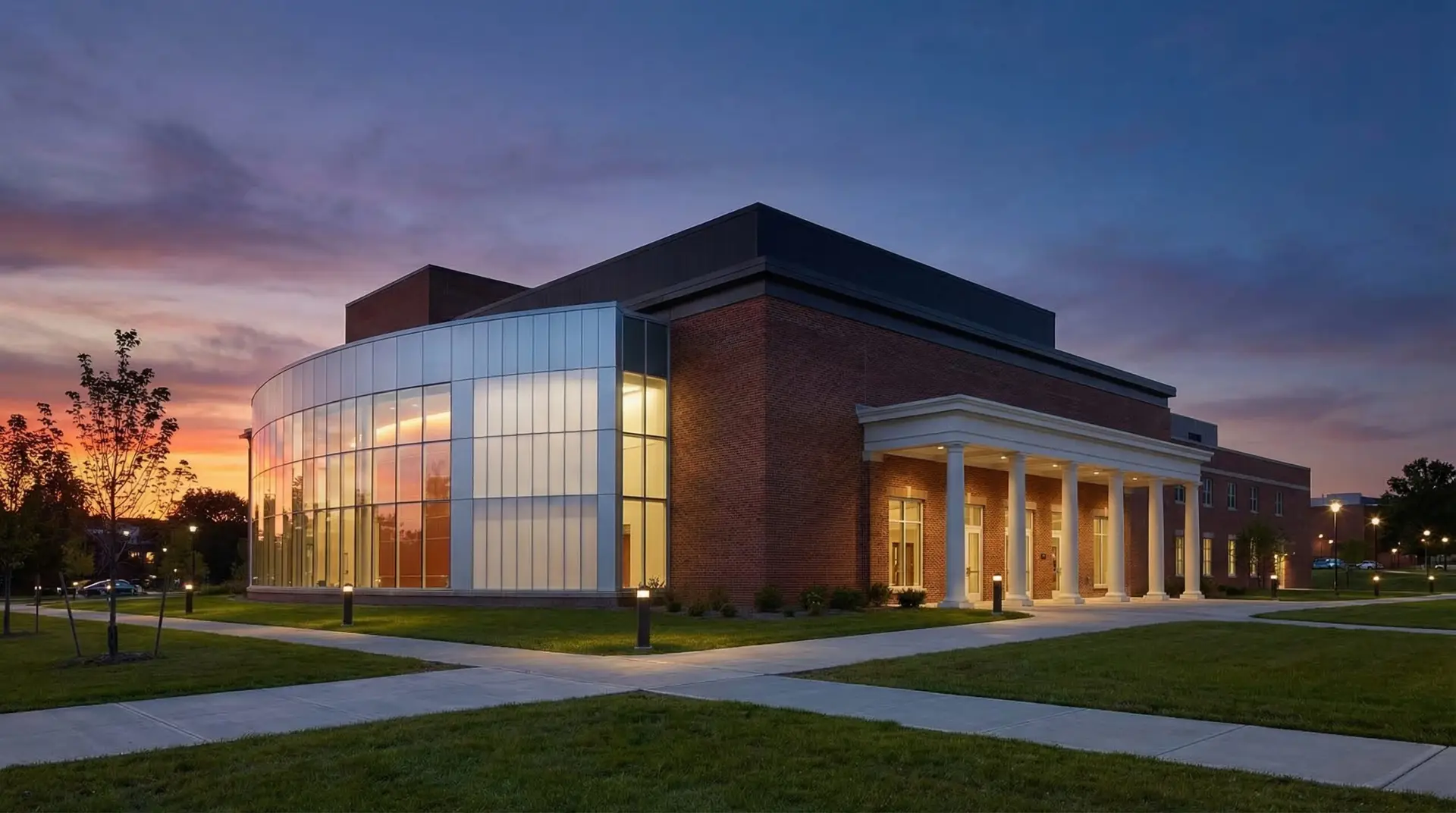
Most university performing arts centers exist to serve the campus. The Anderson Center for the Performing Arts at Binghamton University does that — and then it opens a wall, literally, and invites 1,500 more people to listen from a hillside amphitheater under the stars. That architectural trick, a retractable rear wall and sliding glass panels that transform the 1,170-seat Osterhout Concert Theater into an indoor-outdoor hybrid, tells you everything you need to know about this venue’s ambition. Since raising its curtain in 1985, the Anderson Center has welcomed nearly two million visitors and earned its reputation as the premier performing arts complex in the Southern Tier.
Set on the Binghamton University campus in Vestal, the Anderson Center houses three theaters under one roof, each designed for a different scale of performance. It’s the kind of facility that a city twice Binghamton’s size would be proud to claim — and the programming matches the architecture.
The Man Behind the Name
The center is named for Judge Floyd E. Anderson, a Bainbridge, New York native who served as a New York State Senator and Supreme Court Justice. Anderson’s most lasting contribution, though, was legislative: he authored the bill that enabled the state to acquire Triple Cities College and develop it into Harpur College — the liberal arts school that would eventually grow into Binghamton University. Anderson died in 1976, and in November 1984, the SUNY Council unanimously voted to name the new fine arts complex in his honor. The building opened the following year.
It’s fitting that a venue born from one man’s belief in public education has become a space where world-class performers share a calendar with student showcases and community recitals. Anderson’s legacy isn’t just a name on a building — it’s baked into the center’s mission.
Three Theaters, Three Personalities
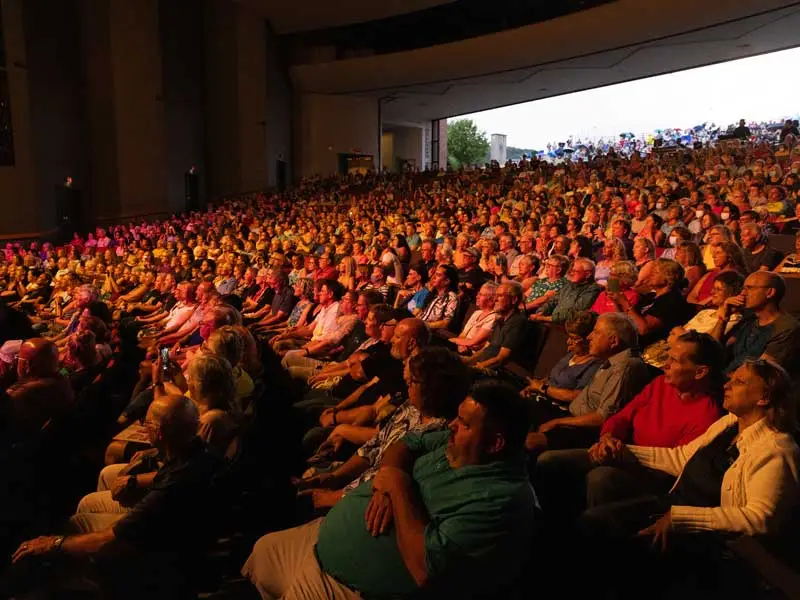
The Osterhout Concert Theater is the flagship — 1,170 seats arranged in a broad, fan-shaped configuration with continental seating (no center aisle, wider rows, easier access). The room’s signature feature is those retractable walls: during summer months, the rear of the auditorium opens onto a manmade amphitheater carved into the hillside, expanding capacity to roughly 2,670. Curved acoustical clouds mirror the curvature of the seating rows, tuning the room for everything from a solo piano recital to a full orchestra to an amplified rock show. Diana Ross has performed here. Tony Bennett brought his catalog to the Osterhout stage. Postmodern Jukebox and David Sedaris have drawn packed houses.
The Watters Theater seats 558 and handles theatrical productions, dance performances, and mid-scale concerts. It’s a proper proscenium house — the room where you’ll catch touring theater companies, opera, and ballet.
The Chamber Hall, at 408 seats, is the most intimate of the three — designed for recitals, chamber music, lectures, and solo performances. The acoustics here reward subtlety. A jazz trio in the Chamber Hall is a fundamentally different experience than the same trio in a bar, and that’s the point.
The Summer Amphitheater Effect
The Anderson Center’s outdoor expansion isn’t a gimmick — it’s one of the most distinctive concert experiences in Upstate New York. When the Osterhout Theater opens its rear wall on a warm evening, the sound carries out across the amphitheater lawn while the stage and lighting remain fully professional. You can sit inside in a theater seat or spread a blanket on the hill and catch the same show under the sky. It’s a design that very few venues in the Northeast can match, and it turns summer programming at the Anderson Center into something genuinely special.
What You’ll See Here
The Anderson Center’s programming spans an enormous range. On any given month, you might find a world-renowned symphony orchestra sharing the calendar with a student showcase, a touring pop act following a ballet company, or an international theater troupe performing the same week as an undergraduate recital. The center hosts upwards of 175 performances and draws over 100,000 guests annually — numbers that would be impressive for a standalone concert hall, let alone a university facility.
The mix of professional touring acts and academic programming creates an audience that’s unusually diverse. You’ll sit next to music professors, students catching their first symphony, families on a Saturday outing, and lifelong subscribers who haven’t missed a season in decades. That cross-pollination is part of what makes the Anderson Center feel like more than a venue — it’s a gathering place.
Getting There and Parking
The Anderson Center is located on the Binghamton University campus at 4400 Vestal Parkway East, Vestal, NY 13850. From I-81, take Exit 70-S to NY 201 South, stay in the left lane for 2.3 miles, and continue onto Vestal Parkway East toward the university. Take the first right onto Glenn G. Bartle Drive to enter the main campus.
Event parking is available in the campus Parking Garage — exit at ground level and cross Parking Lot D toward the west side of the building (look for the wall of windows). The main entrance is at the top of the exterior steps. Accessible parking is on the top level of the garage, a short walk to theater entrances, and disability pickup/dropoff uses Parking Lot C (first exit from the traffic circle, then first left). Parking for performances is typically free on evenings and weekends.
Where to Eat Nearby
The Anderson Center sits on the edge of the Vestal commercial corridor, so dining options are plentiful. CopperTop Tavern in Vestal is a local favorite — reliable American fare, good beer list, and the kind of atmosphere that works equally well before a symphony or after a rock show. Lost Dog Cafe and Lounge in downtown Binghamton (222 Water Street) is worth the 15-minute drive for creative New American cuisine in a space that started in an old garage in 1994 and has grown into one of the city’s best restaurants. For something closer to campus, Thai Time serves authentic Thai and sushi with views of the Chenango River.
Insider Tips
Summer amphitheater shows are the hidden gem — bring a blanket and claim a spot on the hill for a concert experience you won’t find at any other indoor venue in the region. The Chamber Hall is where you go when you want to hear every breath a performer takes; if a jazz or classical act is booked there, prioritize it. Student showcases are free or low-cost and occasionally feature performers who are genuinely stunning — Binghamton’s music program is strong, and the Anderson Center gives them a professional stage. Check the university’s academic calendar before buying tickets; campus events can affect parking availability during the school year.
For upcoming performances and tickets, visit binghamton.edu/anderson-center.