
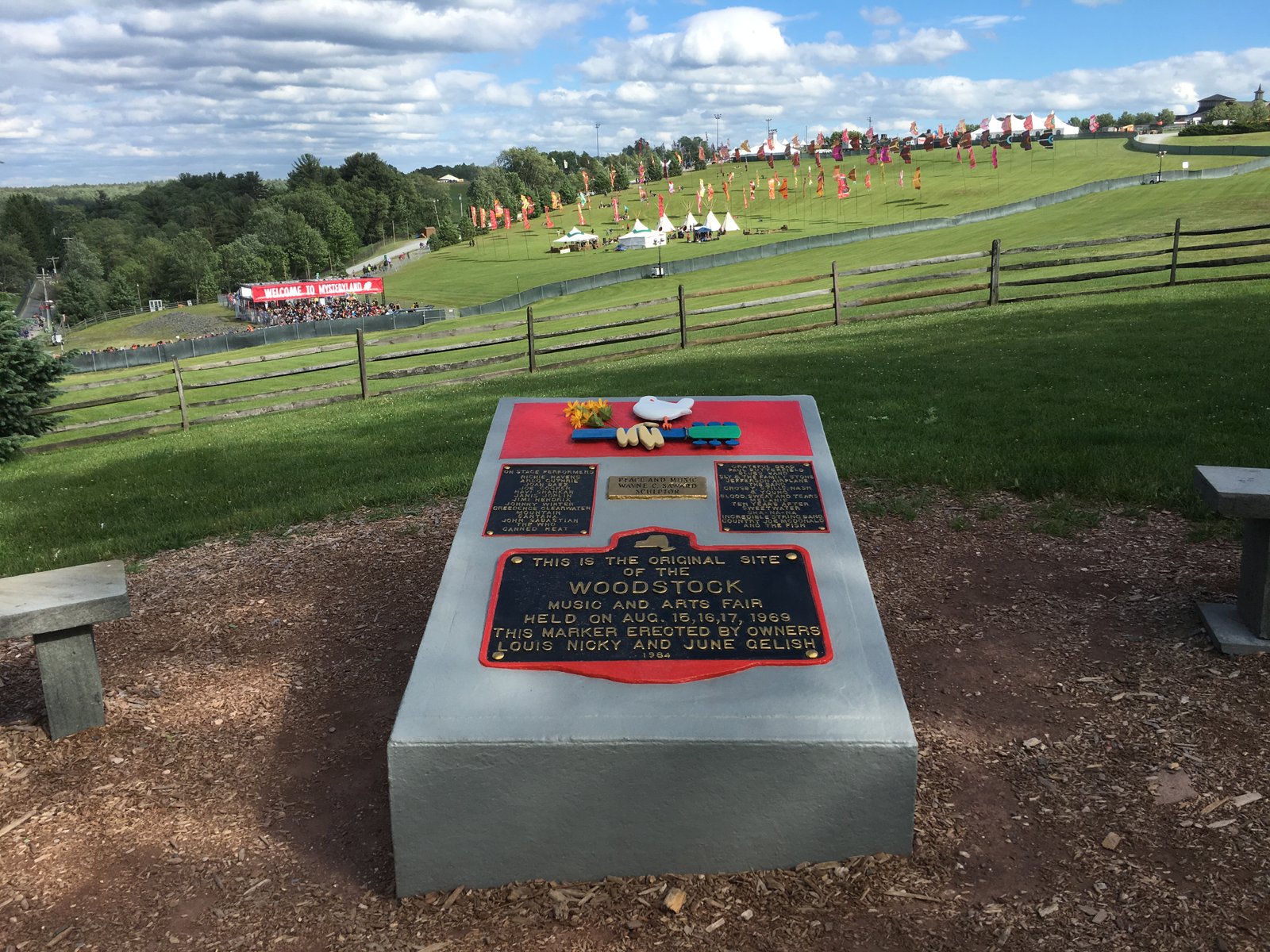
There is a hill in Sullivan County where, on a quiet afternoon, you can stand on manicured grass and feel the weight of a moment that changed American culture. On August 15, 1969, roughly 400,000 people descended on Max Yasgur’s dairy farm for three days of peace, music, and mud. The Woodstock Music and Art Fair was supposed to happen somewhere else entirely. But it happened here, on this slope, and the ground has never quite been the same.
Bethel Woods Center for the Arts opened in 2006 on that exact site — not as a replica or a tribute act, but as a modern performing arts center that happens to sit on hallowed ground. The pavilion’s 4,500 covered seats and a natural grass lawn holding another 10,500 give it a total capacity of roughly 15,000. Compared to the chaos of the original festival, it is practically intimate.

Built on Sacred Ground
The story of how this site became Bethel Woods is its own kind of unlikely. After Woodstock, the land changed hands several times and largely sat unused. In 1996, cable television pioneer Alan Gerry purchased the property with a vision to build a performing arts center and museum. A decade of planning, community negotiation, and construction later, Bethel Woods opened its doors with a concert by the New York Philharmonic — a deliberately classical christening for a site known for something far more unruly.
The venue was designed to honor the landscape rather than dominate it. The pavilion sits naturally in the hillside’s contour, and from the lawn, the Sullivan County countryside stretches out behind the stage in every direction. On a clear evening, the backdrop is green hills fading into a summer sky. It is one of the most beautiful concert settings in the Northeast, and it earns that distinction honestly — there is no architectural trick to it. The land itself does the work.
The Museum at Bethel Woods
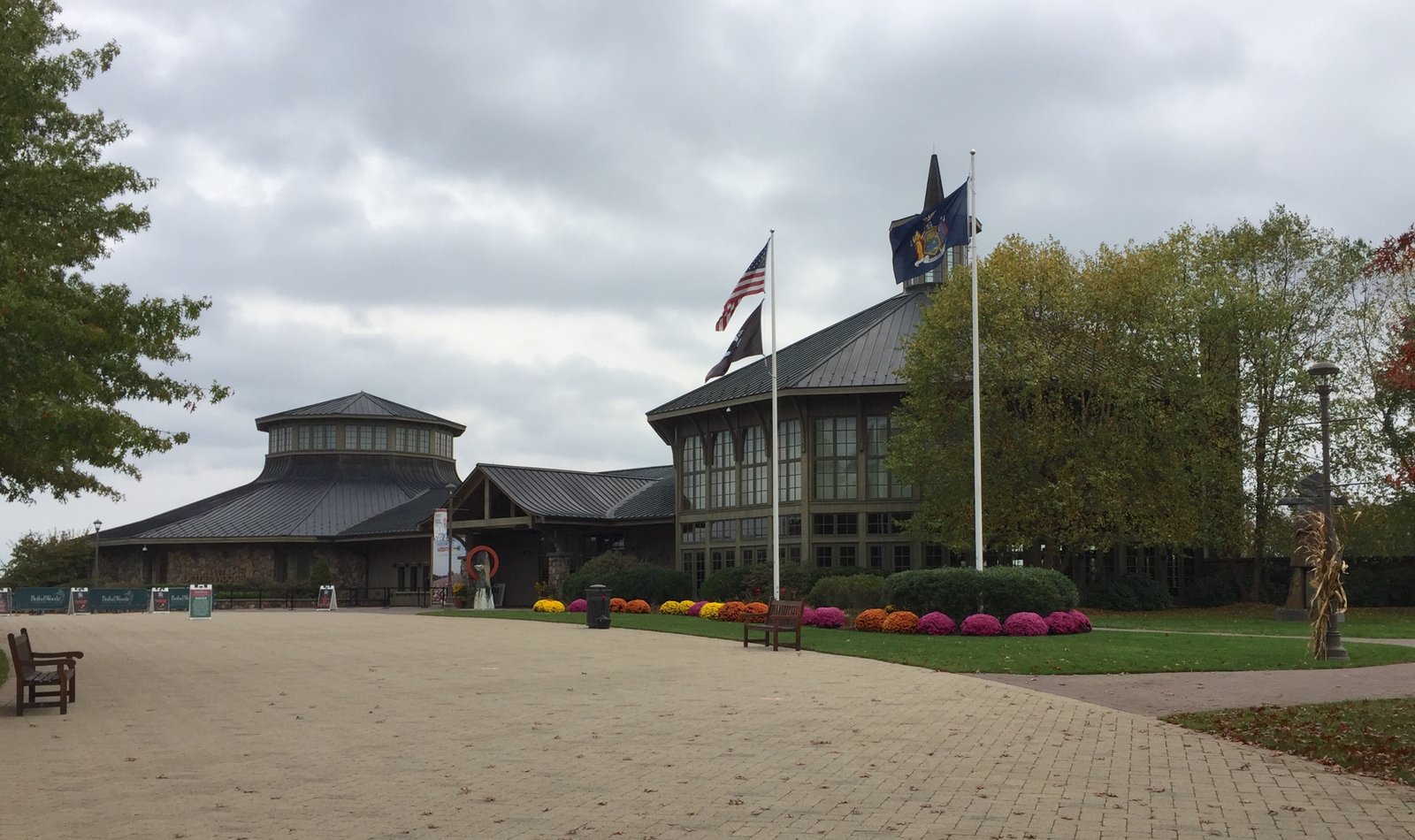
Before or after a show, the Museum at Bethel Woods is worth your time. The 7,000-square-foot facility houses a permanent exhibition on the 1960s and the cultural forces that led to Woodstock, along with rotating special exhibits. A 132-seat theater screens documentary footage, and the gallery walks visitors through the social, political, and musical currents of the era with artifacts, oral histories, and multimedia installations. It won a Thea Award in 2010 for themed entertainment excellence — the same award given to major Disney and Universal attractions.
The museum is not nostalgia for its own sake. It contextualizes the 1969 festival within the larger story of a country in upheaval, and it does so with a curatorial seriousness that elevates the whole experience. Even if you are at Bethel Woods purely for a Saturday night show, an hour in the museum reframes what it means to be standing on that particular hill.
The Concert Experience
The pavilion delivers strong acoustics and clean sightlines from every covered seat. Sections 6 through 11 and Section 100 are designated accessible seating. The covered roof handles weather without killing the outdoor atmosphere — open sides let the evening air and the surrounding landscape into the experience.
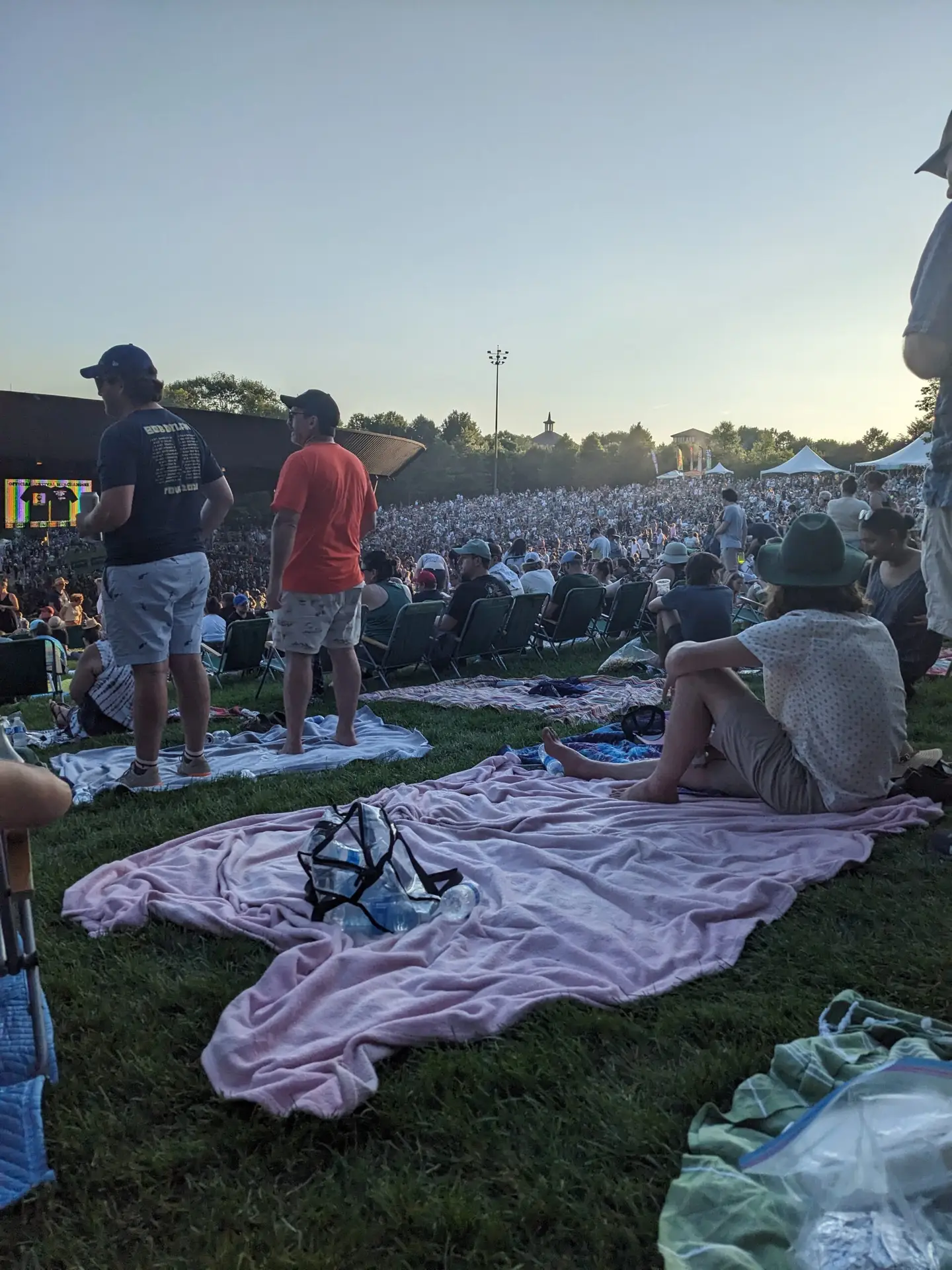
The lawn is general admission, first-come, first-served. Like most amphitheater lawns, the lower sections are prime territory, and they fill fast for major headliners. Personal lawn chairs are not allowed — you can rent chairs on-site or bring a blanket. Pillows are permitted up to 22 by 22 inches. The slope is gentle enough that blanket seating works well, and the screens ensure visibility even from the upper reaches.
Beyond the main pavilion, Bethel Woods programs shows on the 1,000-seat outdoor Terrace Stage and in the 440-seat indoor Event Gallery, which hosts more intimate performances. The Woodstock Festival Field — the actual field from 1969 — is used for large-scale outdoor events and can hold up to 30,000.
Walking the Grounds
Beyond the pavilion and museum, the 800-acre property rewards exploration. The Bindy Bazaar Trails wind through the woods that 1969 festival attendees used as the main entrance to the site, connecting to the locations of the original Free Kitchen, Art Fence, and Playground. The 1969 Woodstock Monument on West Shore Road marks the exact location of the original stage — a pile of rocks indicates the precise spot, surrounded by panels listing the complete original lineup. Self-guided golf cart tours of the grounds are available for $10 on non-show days, and augmented reality experiences recreate the 1969 festival through your phone.
Getting There: The Remote Factor
Let us be direct about this. Bethel Woods is remote. It sits in Sullivan County, roughly 90 miles northwest of New York City and a solid two-hour drive from the Capital Region. The nearest town of any size is Monticello, about 15 minutes away. There is no public transit option. You are driving, and the last stretch of the trip winds through rural roads that feel a world away from wherever you started.
That remoteness is part of the appeal. The drive itself becomes a transition — by the time you arrive, city stress has been replaced by rolling farmland and the particular quiet of the western Catskills. But plan accordingly. Fill your gas tank before you leave the highway. Do not count on reliable cell service for navigation on the final approach. And if you are coming from a distance, consider the camping option.
Camping at Bethel Woods
The campus includes a 528-site campground, which transforms Bethel Woods from a concert venue into a full weekend destination for select events. Camping packages are typically tied to specific shows and sell separately from concert tickets. The campground sits on the broader 800-acre property, and the experience leans more toward organized car camping than backcountry roughing it — expect designated sites, basic facilities, and a community atmosphere among fellow concertgoers.
For events that offer camping, it is genuinely the best way to experience Bethel Woods. You eliminate the long drive home after a show, you gain access to the campground’s pre-show and post-show social scene, and you wake up on a piece of land that changed music history. That is not nothing.
Food, Drink, and Practicalities
Concessions are available inside the venue, and the museum campus includes a cafe. Outside food policies vary by event, so check before you pack a picnic. Each ticket holder is allowed one empty reusable water bottle (32 ounces maximum, non-metal) to fill inside. Hand-held umbrellas are permitted; beach umbrellas and ground-mounted shade structures are not.
One important note: all events at Bethel Woods are rain or shine. There are no cancellations for weather. Dress in layers, bring rain gear if the forecast is uncertain, and accept that an upstate summer evening can swing from warm to cool in the span of a single set.
The Season
Bethel Woods runs a concentrated summer season from June through September. The programming philosophy is broad — a given month might include classic rock legacy acts, contemporary country headliners, jam bands, folk artists, and orchestral performances. The venue books with an awareness of its history, which means the lineup tends to skew toward artists who understand what it means to play this particular stage. You will not find a lot of cookie-cutter package tours here. The curation has intention behind it.
Landmark Shows
Bethel Woods opened on July 1, 2006, with a performance by the New York Philharmonic — a deliberately classical christening for a site known for something far more unruly. Six weeks later, Crosby, Stills, Nash & Young drew 16,000 people on August 13, symbolically returning to the Woodstock site 37 years after their original set. They closed with an encore of “Woodstock.” It was, by most accounts, the moment the venue announced what it intended to be.
Since then, 20 of the original 32 Woodstock acts have performed at Bethel Woods, including Carlos Santana, Richie Havens, Joe Cocker, and Mountain’s Leslie West. The venue has also become a major stop for jam band pilgrimages — Dead & Company and Phish have both played multi-night runs here, drawing camping crowds that evoke the spirit of the original festival in a more organized setting.
Why Bethel Woods Matters
Every venue tells a story about the place it occupies. Bethel Woods tells one of the biggest stories in American music. Standing on that lawn during a show, you are physically connected to a moment that defined a generation — and the venue honors that connection without being imprisoned by it. The museum looks backward with intelligence. The concert season looks forward with ambition. The result is a place that earns its significance every summer, not just by what happened here in 1969, but by what keeps happening now.
Insider Tips
- Plan for the drive. Two hours from NYC, two hours from Albany. Rural roads on the approach. Fill your tank and download your maps before you lose signal.
- Camping upgrades everything. If it is available for your show, take it. Eliminates the late-night drive and turns a concert into a weekend.
- Lower lawn fills fast for headliners. If you want a good blanket spot, arrive when gates open. Upper lawn is fine for the atmosphere, but you are watching screens.
- Bring layers. Sullivan County evenings cool down fast. A flannel or light jacket is essential even in July.
- Visit the museum before your show. It reframes the whole experience. Budget an hour minimum; it is worth more.
Parking
- Cost: One parking space per vehicle; check specific event pricing
- ADA: Dedicated accessible parking with cart service to the venue
- Tailgating: Chairs, cookers, canopies, and coolers are permitted in parking areas (no ground staking)
- Groups: No reserving spaces; arrive together if you want to park together
- Pro tip: Arrive early — the parking lots are large but the access roads are two-lane rural routes that bottleneck on big show nights
Nearby
- Big Kev’s BBQ (White Lake, 5 minutes) — Ribs, brisket, and mac and cheese in a roadside setting that feels right for a concert night. Consistently the highest-rated restaurant near the venue.
- The Local Table & Tap (Kauneonga Lake, 5 minutes) — Craft beer and locally sourced pub food with lakeside dining. The closest thing to a proper pre-show dinner spot near Bethel Woods.
- Sorella (White Lake, 5 minutes) — Italian restaurant offering everything from pizza slices to full entrees. A solid option for groups who cannot agree on one thing.
- Ciao Bella Restaurant (Monticello, 15 minutes) — Italian classics in the nearest town of any size. A good pre-show sit-down dinner option if you are arriving from the south.
- The Eldred Preserve (Eldred, 25 minutes) — Farm-to-table American dining with exceptional views. Worth the extra drive for a special-occasion dinner before a big show.