
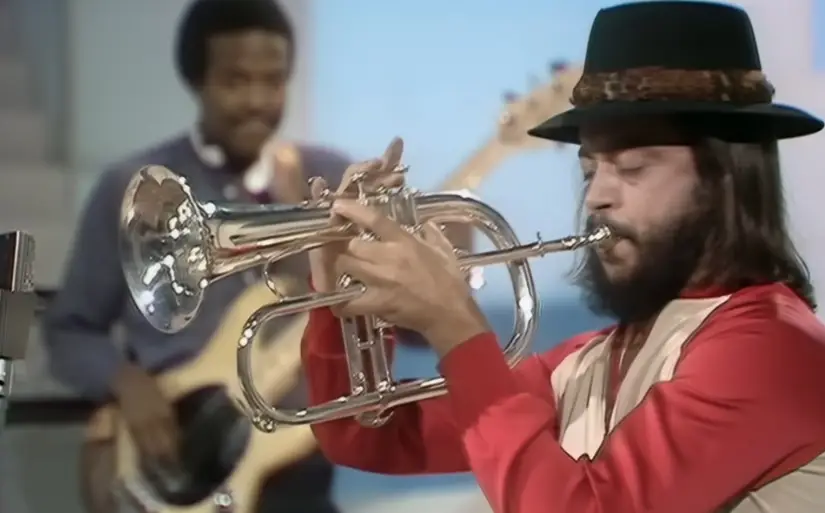
Chuck Mangione made the flugelhorn famous, and he did it from Rochester, New York. Born on November 29, 1940, to Italian-American parents who owned Mangione Grocery, he grew up in a household where jazz was the family language. His father’s enthusiasm for the music meant that the Mangione home was a gathering place for musicians, and the young Chuck soaked it all in.
Eastman and the Jazz Brothers
Mangione began piano lessons at age eight, then switched to trumpet after watching the film Young Man with a Horn. He enrolled at the Eastman School of Music in Rochester in 1958, studying there until 1963 and making the pivotal switch to flugelhorn during his student years. While still in high school, he and his pianist brother Gap co-led a quintet called the Jazz Brothers, formed in 1958, that brought a youthful energy to Rochester’s already vibrant jazz scene.
Art Blakey and Beyond
In 1965, Mangione joined Art Blakey’s Jazz Messengers, filling a trumpet chair that had been occupied by some of the greatest players in jazz history. The Messengers apprenticeship — alongside work with big bands led by Maynard Ferguson and Kai Winding — gave Mangione the credentials and the confidence to pursue his own vision. He returned to Rochester to serve as director of the Eastman jazz ensemble from 1968 to 1972, mentoring the next generation while building his own recording career.
Feels So Good
Mangione’s first A&M album, Chase the Clouds Away (1975), earned two Grammy nominations and gained national exposure when it was used as background music during the 1976 Olympic Games telecasts. His composition “Bellavia” won his first Grammy Award for Best Instrumental Composition in 1977. His quartet, featuring saxophonist Gerry Niewood, became one of the most popular concert acts of the late 1970s.
Then came “Feels So Good.” Released in 1978, the single became one of the most recognizable instrumental melodies in popular music — a warm, soaring flugelhorn theme that crossed from jazz to pop radio and embedded itself in the national consciousness. By 1980, Current Biography had declared it the most recognized tune since the Beatles’ “Michelle.” He won a second Grammy — Best Pop Instrumental Performance — for the Children of Sanchez soundtrack in 1979.
Rochester’s Ambassador
Over a career spanning more than thirty albums since 1960, Mangione never abandoned Rochester. His 60th-birthday concert at the Eastman Theatre in 2000 raised over $50,000 for St. John’s Nursing Home. He remained a fixture in the city’s cultural life, a living connection to the tradition of Eastman-trained musicians who proved that world-class jazz could thrive far from New York City. Chuck Mangione died on July 22, 2025, at age 84, but his flugelhorn melody — warm, unhurried, and unmistakably Upstate — endures.