
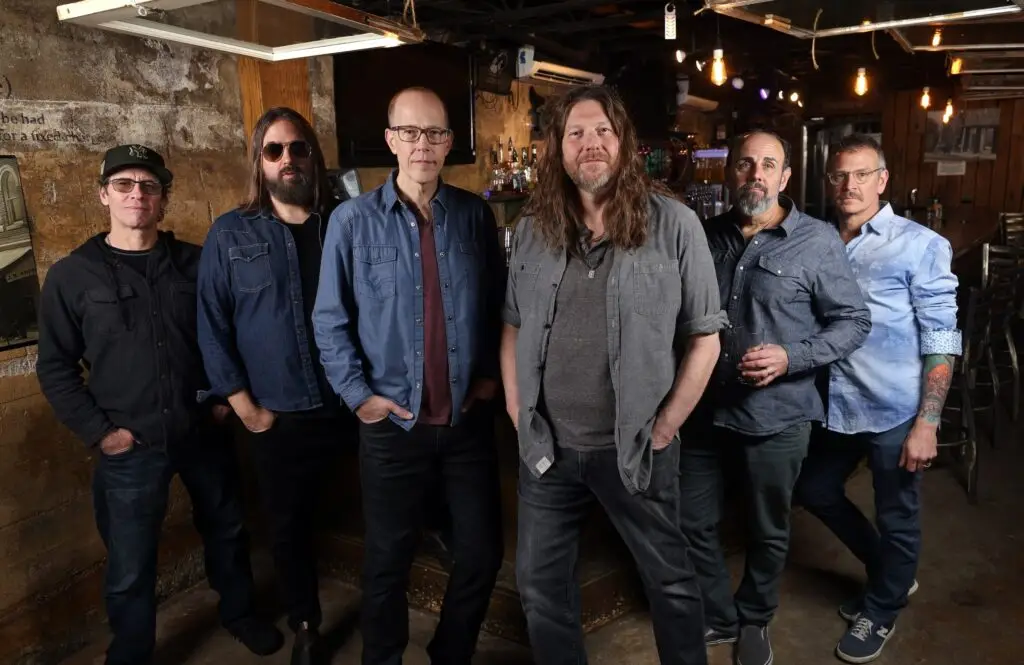
moe. was born in 1989 at the University at Buffalo when Chuck Garvey and Rob Derhak were asked to play a friends’ Halloween party. That first gig — loose, improvised, fueled by the anything-goes energy of a college house show — set the template for one of America’s most enduring jam bands, a group that has been touring without interruption for more than three decades.
Buffalo Formation
The early lineup evolved through typical college-band turnover before solidifying with guitarists Al Schnier and Chuck Garvey, bassist Rob Derhak, drummer Vinnie Amico, and percussionist Jim Loughlin. Their sound — a fluid blend of rock, jazz, funk, and psychedelia — was forged in the bars and house parties of Buffalo’s university district, where marathon sets and spontaneous improvisation were the norm.
Building the Brand
Their 1992 debut album Fatboy established moe. in the nascent 1990s jam scene alongside Phish, Widespread Panic, and the Dave Matthews Band. The band founded their own label, Fatboy Records, and built a devoted fanbase — the self-styled “moe.rons” — through relentless touring and an open taping policy. Over 30 years, they have released more than 15 studio albums and built a catalog of live recordings that dwarfs many bands’ entire discographies.
moe.down and Beyond
In 2000, moe. launched the moe.down festival, which grew from 3,000 attendees to nearly 7,000 by its sixth year, featuring artists from Les Claypool to Mike Gordon of Phish. They also have been fixtures at the Summer Camp Music Festival, which expanded from 1,000 attendees to over 20,000. Their touring resume includes opening for The Who and the Allman Brothers, a set at Woodstock ’99, Radio City Music Hall New Year’s Eve, multiple Bonnaroo appearances, and Lollapalooza 2007.
Legacy
moe. proved that a jam band born in a Buffalo dorm room could build an empire on live performance, community, and the simple principle that no two shows should ever sound the same.