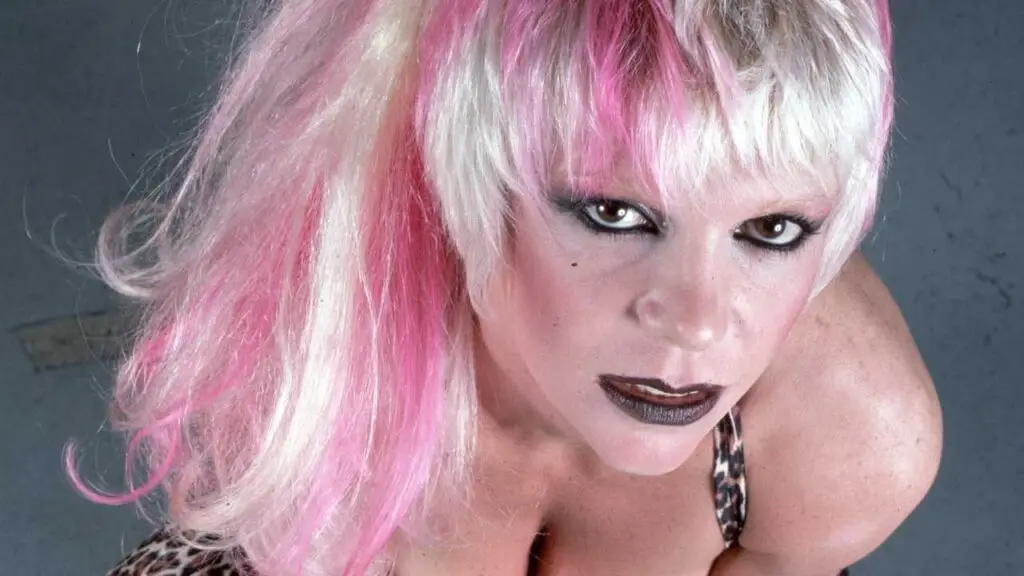
Wendy Orlean Williams was born on May 28, 1949, in Webster, a suburb of Rochester, New York. The daughter of a chemist at Eastman Kodak, Williams grew up in the kind of quiet Rochester suburb that could not have been further from the explosive, confrontational career that awaited her.
Rochester Roots
At age six, Williams appeared on the Howdy Doody show as part of the Peanut Gallery. She studied clarinet through the Eastman School of Music’s community program and played in her high school concert band at R.L. Thomas High School in Webster. But conventional paths held no appeal — she dropped out before finishing, was arrested at 15 for nude sunbathing, and left home at 16 to hitchhike to Colorado. She worked as a lifeguard in Florida, a macrobiotic cook in London, and a dancer across Europe before arriving in New York City in 1976.
The Plasmatics
In 1977, manager and partner Rod Swenson recruited Williams to front the Plasmatics, who debuted at CBGB in July 1978. What followed was unlike anything rock had seen: Williams chainsawed guitars in half, blew up cars onstage, fired shotguns, and performed in a mohawk and little else. The Plasmatics were banned from venues across the world. Albums New Hope for the Wretched (1980) and Coup d’Etat (1982) captured the chaos, but the live shows were the real product.
Solo Career
Williams launched a solo career in 1984 with WOW, produced by Gene Simmons of Kiss and featuring contributions from Paul Stanley, Ace Frehley, and Eric Carr. She earned a Grammy nomination for Best Female Rock Vocal Performance in 1985. She also dueted “Stand by Your Man” with Lemmy of Motorhead and starred in the cult film Reform School Girls (1986). By 1991, she had retired from music.
Legacy
Williams died on April 6, 1998, at age 48 in Storrs, Connecticut. She was a pioneer of theatrical, transgressive punk — a performer who obliterated every boundary of gender expectation and stage convention. Rochester raised her; the world never quite knew what to make of her.