

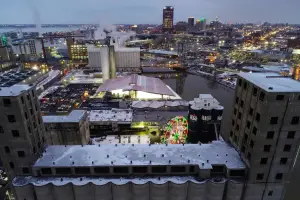
You hear Buffalo RiverWorks before you see it. On a summer concert night, the bass bleeds out across the Buffalo River and bounces off 208-foot grain silos that have been standing on this stretch of Ganson Street since the early 1900s. The old GLF elevators — 36 concrete cylinders that once processed grain for the Cooperative Grange League Federation — are now painted Labatt Blue and nicknamed “the six-pack.” It’s the kind of repurposing that could only happen in Buffalo: take the bones of an industrial giant, add a brewery and a couple of ice rinks, and build a 60,000-square-foot entertainment complex that somehow makes perfect sense.
Industrial Resurrection
The GLF grain elevator complex was designed by AE Baxter Engineering starting in 1909, though the full build wasn’t completed until 1941. For decades, it was a working hub for the Cooperative Grange League Federation, processing and storing grain as part of the massive agricultural supply chain that made Buffalo one of the most important ports in America. The cooperative merged with Eastern States League Cooperative in 1964, and the operation finally shut down in 1974, cutting 260 jobs and leaving another set of silent silos on the Buffalo waterfront.
The silos sat dormant for decades. Then Earl Ketry and partner Doug Swift paid $2.15 million for the former GLF and Buffalo Malting elevator complexes and started building what would become RiverWorks. The vision was audacious — turn rusting industrial infrastructure into a year-round entertainment destination anchored by live music, craft beer, and hockey. The fact that it worked is a testament to both the stubborn optimism of Buffalo’s revitalization movement and the sheer physical drama of the space itself.

The Space
RiverWorks operates on a scale that defies easy categorization. The indoor event center spans 60,000 square feet and can hold up to 3,500 people for concerts, with multiple bars and a full restaurant spread throughout the complex. The outdoor footprint is even bigger — the concrete slabs that serve as ice rinks in winter convert to open-air event space in summer, accommodating 4,000-plus for outdoor shows. When the weather cooperates — and Buffalo summers are better than their reputation — an outdoor concert at RiverWorks with the grain elevators looming overhead is one of the most visually striking live music settings in the state.
The sound setup matches the ambition. The indoor room handles everything from metal to EDM to country, and the outdoor stage benefits from the natural amphitheater effect of the surrounding industrial architecture. Acts like Trivium, In This Moment, Hot Mulligan, and Dayseeker have all come through, and the 2026 calendar includes names like bbno$ and Thievery Corporation. The booking leans toward rock, metal, and alternative, but the room is versatile enough to handle almost anything.
Beyond the Stage
What makes RiverWorks genuinely unusual — and what separates it from every other concert venue in Western New York — is everything that surrounds the music. The complex includes an on-site brewery producing craft beer that you can drink while watching hockey on one of the covered outdoor ice rinks. In winter, those rinks host league hockey, curling, and the annual Labatt Blue Pond Hockey Tournament, which has been running since 2014. The Queen City Roller Derby has called RiverWorks home since 2016. In summer, the rinks become space for roller hockey, box lacrosse, and additional event programming.
There’s also a full restaurant operation — The Ward at Buffalo Riverworks serves contemporary American food in an industrial-rustic setting that leans into the venue’s grain elevator heritage. The brewery turns out a rotating tap list, and the waterfront views from the complex add something that no amount of interior design can replicate. You can eat, drink, watch hockey, catch a concert, and never leave the property. It’s a full evening — or a full weekend, as founder Ketry has been known to pitch it.
First Ward Location
RiverWorks sits in Buffalo’s historic First Ward, the old Irish-American neighborhood that grew up around the waterfront grain trade. The area has been undergoing steady revitalization, and the venue is part of a broader entertainment corridor that includes the Buffalo Brewery District. If you want to make a night of it beyond the venue walls, Southern Tier Brewery Buffalo is half a mile away on Scott Street with a full taproom and kitchen. Pizza Plant Italian Pub on Main Street is a Buffalo institution doing creative pizza in a pub setting. And for something more upscale before a show, the Canalside district is a short drive north with waterfront dining options.
Getting There
RiverWorks is at 359 Ganson Street, tucked into the waterfront south of downtown Buffalo. GPS will get you there, but the first time you drive down Ganson Street past the towering silos, you’ll wonder if you’ve taken a wrong turn into an abandoned industrial zone — you haven’t. Parking is available on-site and in surrounding lots. The venue is about 10 minutes from downtown Buffalo and easily accessible from the I-190.
For outdoor summer shows, bring layers. The waterfront breeze off the Buffalo River can drop the temperature noticeably after sunset, even in July. For indoor shows, the industrial space doesn’t always have the tightest climate control — dress for a room that runs warm when it’s packed.
Insider tip: If you’re coming for a summer outdoor show, arrive early enough to walk the waterfront and take in the grain elevator architecture. The silos are a genuine piece of American industrial history, and seeing them up close — especially at golden hour — is worth the early arrival. The venue’s position on the river also means sunset views that rival anything in Buffalo.
For upcoming shows and tickets, visit buffaloriverworks.com.