
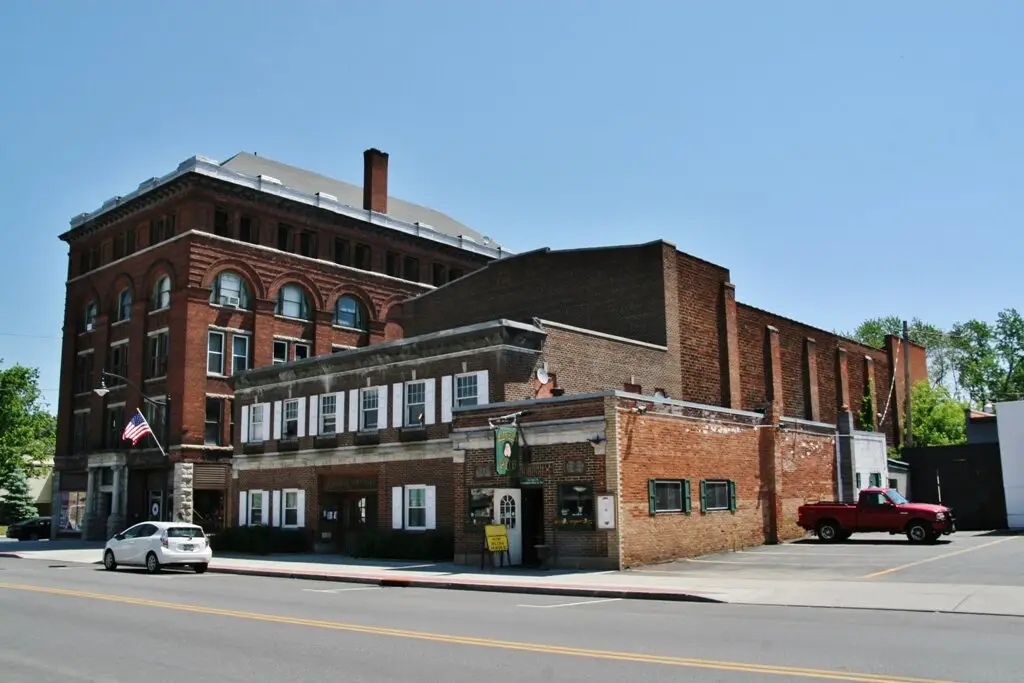
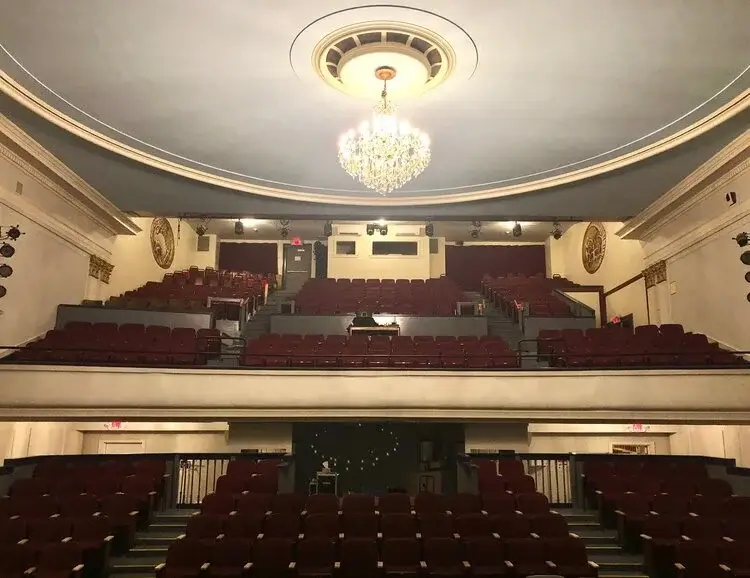
Walk into the Strand Centre Theatre on a Friday night and the first thing that hits you isn’t the music. It’s the chandelier — a Swarovski crystal replica of the original 1924 fixture, throwing warm light across ornamental plasterwork that was buried under drywall for forty years. Then you notice the Wurlitzer organ flanking the stage, a 1924 Opus 970 instrument that still works, restored by volunteers and donated by a couple from Massachusetts who simply believed it belonged here. And then you hear the band, and you understand why people drive an hour south from Montreal or two hours north from Albany to catch a show in a 950-seat theater on Brinkerhoff Street in Plattsburgh.
The Strand is the cultural anchor of the North Country, and it earned that title the hard way.
A Century of Reinvention
The Strand opened on December 29, 1924, as a vaudeville house — the pride of northern New York. Silent films ran at ten cents a ticket while the house orchestra played beneath that crystal chandelier. For decades it was the place to be in Plattsburgh, hosting traveling acts, feature films, and community events with the kind of architectural grandeur that small cities rarely got to claim as their own.
Then the 1970s happened. The single grand auditorium was carved into a multi-screen cinema, original details covered or stripped. By the early 2000s, the Strand had deteriorated into a second-run movie house limping toward irrelevance. When the North Country Cultural Center for the Arts purchased the building in 2004, they found decades of neglect — but also the bones of something extraordinary hiding behind the renovations.
What followed was a ten-year, $4-million resurrection. Workers peeled back layers of drywall and dropped ceilings to reveal original ornamental features that nobody had seen since Nixon was in office. A new roof went on. The electrical, HVAC, and sprinkler systems were rebuilt from scratch. HD cinema equipment was installed. Dressing rooms were carved out of the basement. And that Wurlitzer — shipped up from a private collection — was installed in 2013, giving the theater a voice it hadn’t had in generations.
Funding came from everywhere: Empire State Development grants, Downtown Revitalization Initiative money, and the kind of community fundraising that only happens when a town genuinely wants something back. In 2014, the organization changed its name to The Strand Center for the Arts, reflecting a mission that now extends beyond the theater walls to a neighboring Federal Building housing gallery space and arts education programs.
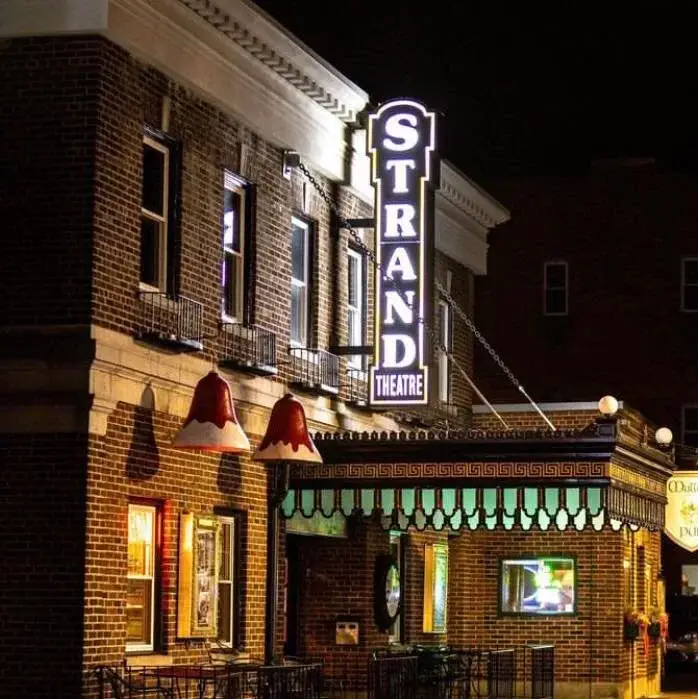
The Sound and the Stage
At 950 seats, the Strand hits a sweet spot that most touring musicians love — big enough to feel like an event, intimate enough that the back row still catches the sweat on the drummer’s forehead. The proscenium stage is equipped with modern lighting, sound, and rigging, but the room’s natural acoustics do a lot of the heavy lifting. This was built as a performance space in 1924, and no amount of renovation changed the fundamental physics of the room.
The programming reflects a venue that knows its audience. Traffic co-founder Dave Mason played what the venue called one of its best shows to date. Ronnie Earl & The Broadcasters have brought serious blues to the North Country. The Allman Betts Band carried southern rock through the Adirondack foothills. National touring acts share the calendar with independent films, comedy nights, dance recitals, and community events — the kind of programming mix that keeps a theater alive year-round in a market this size.
Bob Garcia, the venue’s executive director, brought serious credentials from New York City — he held finance positions at Radio City Music Hall and Madison Square Garden before relocating north. That institutional knowledge shows in the booking and the operations, even if the scale is intentionally different.
The Plattsburgh Factor
Plattsburgh occupies a unique geographic position for live music. Sitting on the western shore of Lake Champlain, twenty miles south of the Canadian border, the city draws audiences from Vermont and Quebec alongside the local North Country crowd. On any given show night, you’ll hear French in the lobby. That cross-border pull gives the Strand a reach that venues twice its size in more isolated markets would envy.
The theater is listed on the National Register of Historic Places — a designation that means something in a downtown that’s been working hard to reinvent itself. The Strand isn’t just a place to see a show. It’s proof that Plattsburgh’s downtown has a pulse.
Before and After the Show
Downtown Plattsburgh has more going on than most visitors expect. Within a short walk of the theater, Irises Cafe and Wine Bar serves contemporary American cuisine inside an 1867 building — a natural pre-show dinner spot with a wine list that punches above its weight. Twisted Carrot on Margaret Street partners with local farms for creative, seasonal dishes in a casual setting. And Aleka’s Restaurant brings Greek and Mediterranean flavors to downtown, a longtime local favorite that’s earned a loyal following for good reason.
Parking in downtown Plattsburgh is street-level and generally manageable — the Strand’s own lot between the theater and the Arts Center building is reserved for staff, but city parking is plentiful and typically free in the evenings. Arrive a half hour early, grab a spot on Brinkerhoff or Margaret Street, and take a walk through the galleries in the Strand’s adjacent Federal Building before the house opens.
Plan Your Visit
The Strand Centre Theatre is located at 23 Brinkerhoff Street, Plattsburgh, NY 12901. Tickets are available through the venue’s website and at the box office. For the full schedule and to purchase tickets, visit strandcenter.org.