
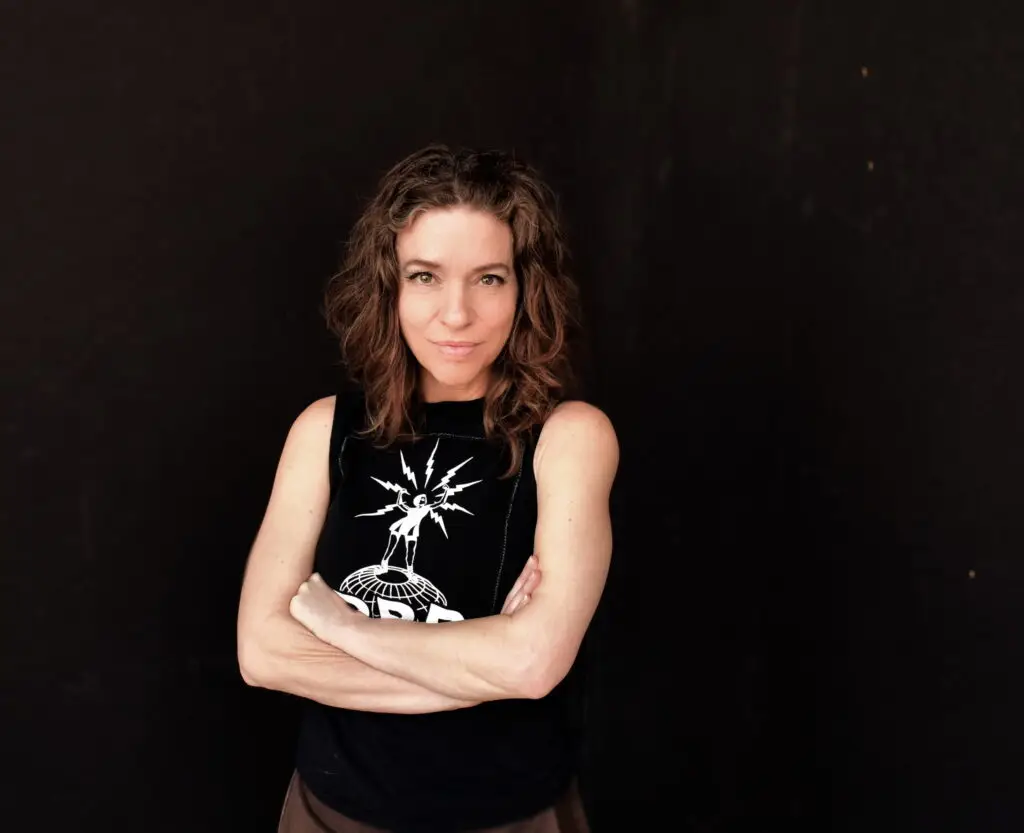
Before the term “independent music” became an industry buzzword, Ani DiFranco was living it. Born Angela Maria DiFranco on September 23, 1970, in Buffalo, New York, she built one of the most remarkable careers in modern music entirely on her own terms — without a major label, without radio play, and without compromise. In doing so, she turned Buffalo into a symbol of artistic self-determination.
Buffalo Beginnings
DiFranco was performing in public by age nine, playing Beatles covers at local bars alongside her guitar teacher Michael Meldrum. By fourteen, she was writing and performing original songs in Buffalo coffee houses and clubs. She graduated from the Buffalo Academy for Visual and Performing Arts at sixteen and briefly attended Buffalo State College before deciding that music demanded her full attention.
Righteous Babe Records
In 1990, at age nineteen, DiFranco founded Righteous Babe Records in Buffalo and released her self-titled debut album. It was a radical act: at a time when the major-label system was the only viable path for musicians, she chose to press her own CDs, book her own tours, and control every aspect of her career. Over the next three decades, Righteous Babe grew into a legitimate independent powerhouse, releasing more than twenty-three albums — all DiFranco’s own work, all on her own label.
Her output was prolific to the point of absurdity. From 1990 through the mid-2000s, she released nearly an album per year, each one a document of restless creative evolution. Living in Clip (1997), a sprawling double live album, became her only gold-certified release and captured the raw intensity of her legendary live performances. She earned nine Grammy nominations across her career, winning Best Recording Package for Evolve in 2004.
Voice of a Movement
DiFranco’s influence extends far beyond record sales. She became a defining figure of the 1990s feminist and DIY movements, channeling activism into art with an urgency that resonated with a generation. Through the Righteous Babe Foundation, she has supported grassroots organizations focused on reproductive rights, LGBTQ visibility, and social justice. Her spoken-word piece “Self Evident,” written in response to September 11, remains one of the most powerful artistic reactions to that day.
Buffalo’s Champion
Unlike many artists who leave their hometown at the first opportunity, DiFranco invested in Buffalo. Righteous Babe Records’ headquarters became an anchor in the city’s cultural landscape, and her commitment to the region helped redefine what was possible for independent artists working outside of New York City or Los Angeles. In the Upstate Music Hall of Fame, DiFranco stands as proof that the most revolutionary path in music sometimes starts in your own backyard.