
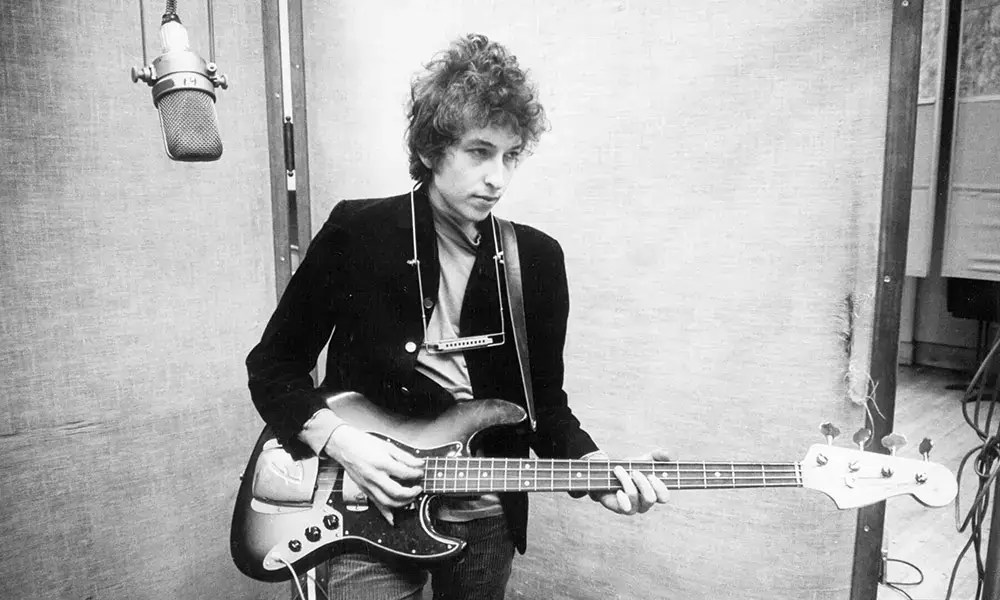
Bob Dylan did not create Woodstock’s music scene, but he made it mythic. The most influential songwriter of the twentieth century spent the better part of five years in the Catskill Mountains, and the work he produced there — during a period of intense privacy, recovery, and reinvention — reshaped the trajectory of American popular music.
Arrival in the Catskills
Dylan began spending significant time in Woodstock in late 1964, drawn by his manager Albert Grossman, who had established a home on a 72-acre Bearsville estate. Through early 1965, Dylan stayed extensively at Grossman’s property, writing and shaping songs for what would become his electric revolution. He also lived for a time on the second floor of a building in the town of Woodstock proper — now used by the Center for Photography at Woodstock — where he wrote songs including “It Ain’t Me Babe.”
The Woodstock period coincided with Dylan’s most creatively explosive years. The cover of Bringing It All Back Home (1965) was photographed in Grossman’s living room. By 1966, Dylan had settled into the area as a full-time resident, seeking refuge from the relentless touring schedule and public scrutiny that had accompanied his rise.
The Motorcycle Accident and Retreat
On July 29, 1966, Dylan was involved in a motorcycle accident near his Woodstock home. The details remain disputed, but the consequences were clear: Dylan withdrew almost entirely from public life. He canceled a world tour, stopped giving interviews, and retreated into the domestic rhythms of the Catskills. For nearly two years, the most famous musician in the world was essentially invisible.
The Basement Tapes
What Dylan did during his seclusion was far from idle. Beginning in mid-1967 and continuing through 1968, he gathered daily with The Band — Rick Danko, Richard Manuel, Garth Hudson, Robbie Robertson, and Levon Helm — in the basement of their rented house at 56 Parnassus Lane in West Saugerties. The recordings they made, known as the Basement Tapes, were never intended for release. They were loose, exploratory, and utterly unlike anything Dylan had produced before — folk ballads, gospel shouts, absurdist humor, and American roots music rendered with a warmth that stood in stark contrast to the electric fury of Highway 61 Revisited.
The tapes circulated as bootlegs for years, becoming the most legendary unreleased recordings in rock history before their partial official release in 1975 and comprehensive release in 2014.
John Wesley Harding and Nashville Skyline
Dylan’s first official post-accident album, John Wesley Harding, arrived in December 1967 — spare, acoustic, and biblical in its imagery. Nashville Skyline followed in April 1969, a country album that shocked fans with its gentle crooning. Both albums bore the imprint of Woodstock’s quiet influence: stripped-down, reflective, and profoundly American.
Dylan’s Woodstock years remind us that some of the most important art is made not on stage but in retreat — in basements and living rooms, in small towns far from the spotlight.