
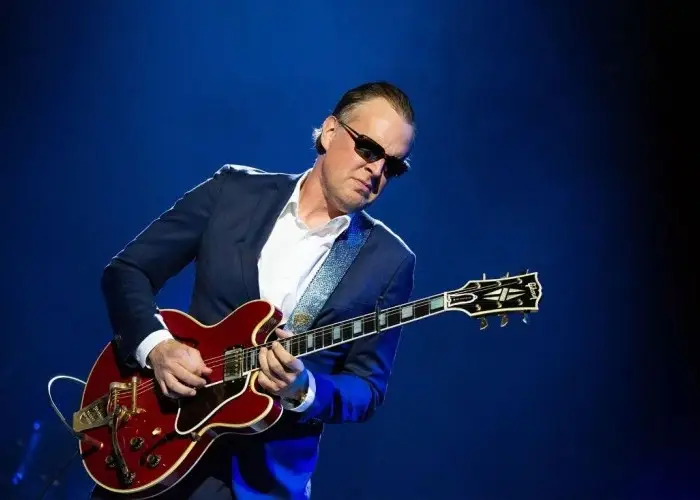
Joe Bonamassa picked up a guitar at age four in Utica, New York, and never looked back. By 12, he was opening for B.B. King. By his twenties, he was being called the best blues guitarist of his generation. Today, Bonamassa holds the record for the most No. 1 albums on the Billboard Blues chart — and counting — and has built one of the most successful independent music careers in modern history, all while carrying the blue-collar grit of his Mohawk Valley roots into every note he plays.
A Prodigy from New Hartford
Born May 8, 1977, in New Hartford and raised in Utica, Bonamassa was steeped in blues from birth. His father, an avid record collector and owner of a guitar shop, fed him a steady diet of Eric Clapton, Jeff Beck, and British blues-rock. The younger Bonamassa absorbed it all with preternatural speed. By age 11, he was studying under guitar legend Danny Gatton. His teenage band, Smokin’ Joe Bonamassa, gigged relentlessly across western New York and Pennsylvania, playing clubs and bars where most kids his age weren’t even allowed through the door. The story of his opening slot for B.B. King at age 12 became the stuff of blues legend — King himself reportedly marveled at the kid from Utica.
His first solo album, A New Day Yesterday (2000), launched a recording career of staggering output: 17 studio albums, 20-plus live albums, five collaboration records with vocalist Beth Hart, and over 80 singles. Albums like Blues Deluxe (2003), Sloe Gin (2007), The Ballad of John Henry (2009), and Redemption (2018) have consistently topped the blues charts. His live recordings at iconic venues — the Royal Albert Hall, the Greek Theatre, Radio City Music Hall, Red Rocks, and the Hollywood Bowl with a full orchestra — are considered definitive modern blues documents.
Three Grammy Nominations and a Blues Empire
Bonamassa earned Grammy nominations in 2013 (for Seesaw with Beth Hart), 2016 (Live at the Greek Theatre), and 2022 (Royal Tea). But his influence extends far beyond performance. Through his independent label J&R Adventures, he controls his entire catalog — a business model that has made him one of the wealthiest independent musicians in the world. He owns one of the largest private collections of vintage guitars and amplifiers on earth.
In 2011, he founded the Keeping the Blues Alive Foundation, a nonprofit dedicated to music education and supporting blues artists. The foundation has donated instruments and funded music programs in underserved schools across the country. From Utica’s working-class neighborhoods to sold-out shows at the world’s most prestigious concert halls, Bonamassa’s story is a testament to what happens when prodigious talent meets relentless discipline and an absolute refusal to compromise. The Mohawk Valley’s greatest blues export shows no signs of slowing down.