
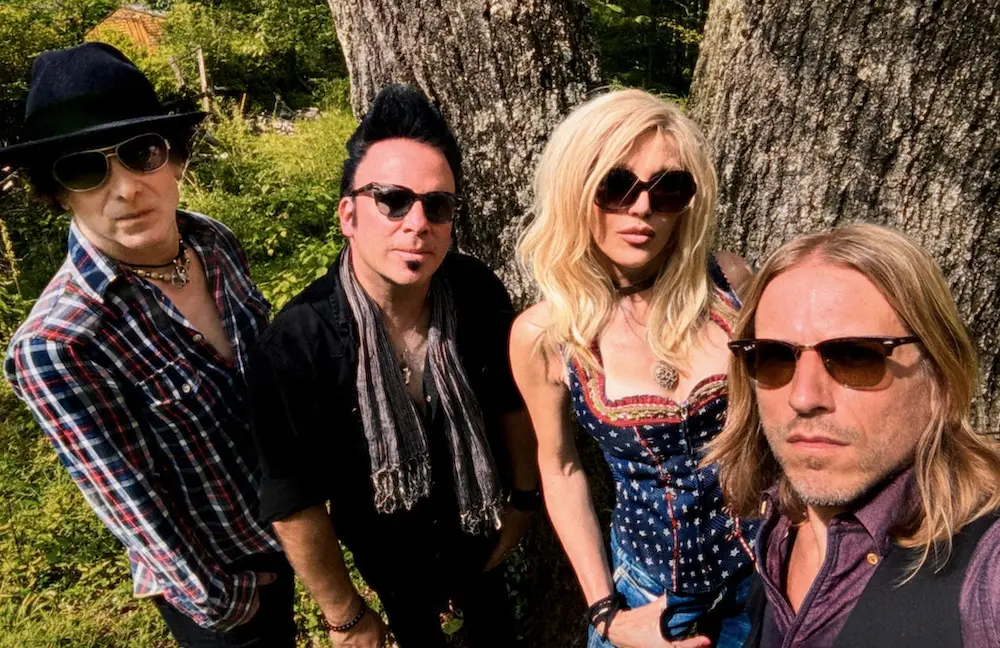
Mercury Rev emerged from the University at Buffalo in 1989 as something between a student film project and a sonic experiment. Co-founded by Jonathan Donahue, Sean “Grasshopper” Mackowiak, David Baker, Dave Fridmann, Suzanne Thorpe, and Jimy Chambers, the band drew inspiration from drone-music pioneer Tony Conrad, who was teaching at UB at the time. What began as soundtracks for student films became one of the most distinctive art-rock acts of the 1990s.
Chaos and Creation
Their 1991 debut Yerself Is Steam was a wall of psychedelic noise that earned a devoted UK underground following, while 1993’s Boces pushed further into confrontational territory. The band was notorious for never rehearsing and for explosive internal arguments — David Baker departed after Boces amid musical and personal disputes, leaving Donahue and Grasshopper as the band’s creative core.
The Reinvention
With 1998’s Deserter’s Songs, Mercury Rev reinvented themselves entirely. Trading noise for lush orchestration and fragile beauty, the album featured contributions from Garth Hudson and Levon Helm of The Band — a fitting collaboration for a band rooted in Upstate New York. NME named it Album of the Year, and tracks like “Goddess on a Hiway” cracked the UK Top 40. The 2001 follow-up All Is Dream continued the transformation, with “The Dark Is Rising” reaching No. 16 on the UK singles chart.
Buffalo Legacy
Buffalo News critic Jeff Miers called them the greatest indie band to come out of Buffalo. They were inducted into the Buffalo Music Hall of Fame in 2023. Dave Fridmann, the band’s original bassist, went on to become one of indie rock’s most sought-after producers, helming albums for the Flaming Lips (whose career arc mirrored Mercury Rev’s noise-to-beauty evolution), MGMT, and Sleater-Kinney.
Mercury Rev proved that a band born in a university town in Western New York could reshape the landscape of art-rock — twice.