
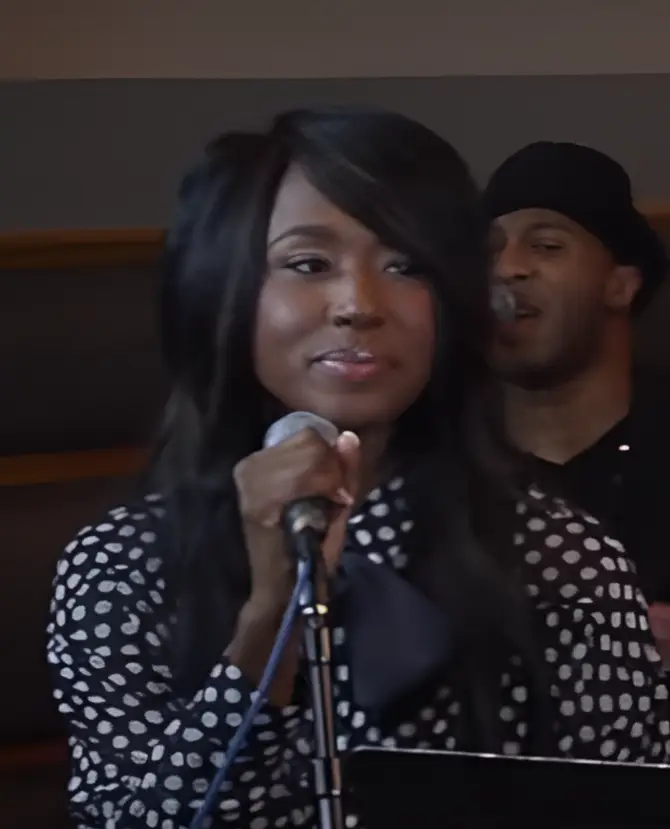
Born Charlene Keys in Rochester on July 21, 1971, Tweet was one of the defining voices of the early-2000s R&B renaissance — a singer whose warm tone, gospel-rooted phrasing, and modern minimalist production made her instantly distinguishable from her peers. Her debut album Southern Hummingbird (2002) remains a landmark of the era, and her voice — both featured and uncredited — runs through some of the most important pop and R&B records of her time.
From Sugah to Solo
Tweet’s professional career began in Rochester before she joined the R&B group Sugah in the late 1990s. Sugah never broke commercially, but the group’s connections turned out to be the most important thing about it: Missy Elliott and Timbaland — the architects of late-90s and early-2000s R&B — discovered Tweet through that work. The two of them recognized something in her voice that fit perfectly with the spare, sample-driven productions they were defining at the time.
Southern Hummingbird
Released on Elektra in 2002, Southern Hummingbird announced a major new voice. The album was understated where its peers were maximalist — built around Timbaland’s percussive minimalism and Tweet’s unforced delivery rather than vocal pyrotechnics. The lead single “Oops (Oh My),” featuring Missy Elliott, became one of the most iconic R&B records of the decade: a song about self-discovery wrapped in production so spare it sounded almost unfinished, in the best possible way. The album moved her from session work into the cultural foreground.
A Voice Behind the Voices
Even at the peak of her solo career, Tweet remained one of the most in-demand background vocalists in pop music. Her voice can be heard supporting Missy Elliott, Madonna, Whitney Houston, and others — a quiet credit list that, taken together, represents some of the biggest records of the 2000s. That dual identity (front-and-center artist and trusted support voice) is rarer than it sounds. Few singers have the technique and the temperament to do both at that level.
Tweet released a second album, It’s Me Again, in 2005, and continued recording and touring afterward at her own pace. Her commercial peak was brief, but her influence on contemporary R&B singing — the conversational intimacy, the gospel-pop blend, the trust in negative space — has only grown with time. Rochester gave American music a singer whose voice was always larger than her chart position.