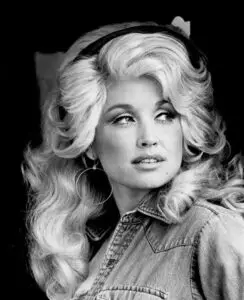
He’s from Massachusetts. He lives in the Berkshires. But the documented record of a half-century touring life shows a singer who has played Upstate New York more than almost anywhere — and on June 18, he returns to Bethel Woods, the literal Woodstock site he didn’t reach until he was 73.
The Basement at the Jabberwocky
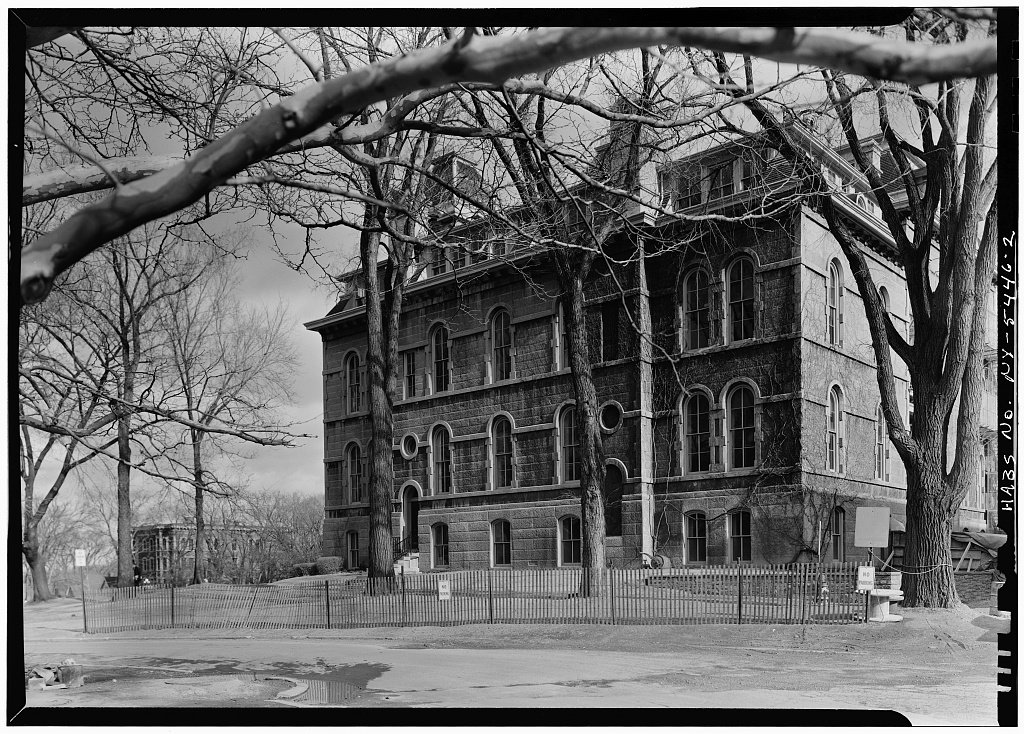
Picture a basement room on the Syracuse University campus on a Thursday night in February 1970. The Jabberwocky — a folk-club venue in the student union building, a couple hundred seats packed tight against a low stage, the kind of place where the back row is 12 feet from the microphone. A cable runs from the soundboard across the floor and up the wall: WAER-FM, the campus station, has gotten the artist’s permission to record the set. A WAER staffer watches the levels.
On stage, with an acoustic guitar and not much else, is a 21-year-old kid from Chapel Hill by way of London. He has just signed to Warner Bros. He has an album coming in three weeks — his second, the one that will change his life. The single from it, the one he wrote during his hospitalization at McLean Hospital, has not yet hit AM radio. By summer it will be on every car stereo in the country. Right now, in this basement room, in front of 200 Syracuse students who paid a couple of dollars at the door, he is still the kind of artist you have to bend close to hear.
He plays eight sets across three nights. Feb. 5, 6, and 7. Someone runs the WAER feed onto reel-to-reel. The tape gets archived, then duplicated, then duplicated again. Fifty-six years later, you can still find it — laundered onto Spotify under the title Audio Radiance, sourced from the original soundboard, in quiet circulation ever since. It is, as close as the documentary record gets, a before picture of the most famous singer-songwriter of his generation. And it happened in Upstate New York. The room itself is gone now — Syracuse tore Kimmel Hall down in 2025 — but the tape kept going.
The recording exists as artifact, not authorized release — the WAER-FM consent was for a one-time broadcast in 1970, not for a CD that would surface decades later via a gray-market distributor and end up catalogued on Discogs as Audio Radiance (Jabberwocky Club, Feb. 6, 1970, WAER-FM Broadcast). Don’t buy it. Don’t promote it. Just know that the tape is real, that it has been circulating among collectors for as long as there have been collectors, and that what you’re hearing — if you click the link before it disappears — is James Taylor three weeks before Sweet Baby James hit the racks, playing for the price of a sandwich, in a basement, in Syracuse.
That is the door this story walks through.
Working the Circuit
What’s striking about Taylor’s 1970 tour calendar isn’t that he played Upstate New York. It’s how systematically he played it. The college folk circuit was the American singer-songwriter’s apprenticeship in those years, and Taylor worked the SUNY system the way a regional rep works accounts. The Jabberwocky residency was Feb. 5-7. By March 21 he was at SUNY Stony Brook, playing the gymnasium with Pig Iron opening (Love had been on the bill originally, then canceled). May 2 brought him to Cornell. May 8 to SUNY Binghamton, where the Press and Sun-Bulletin previewed the show by calling him “James Taylor, country singer Sweet Baby James” — a description that aged about as well as you’d expect, but which captures something real about how unsettled his identity was that spring. He was a folk guy with a country record about to break wide.
Then came August. Pan Copeland’s Field in Saugerties, New York. The Woodstock Sound Festival — a one-off attempt to capitalize on the prior summer’s mythology by booking a second festival on a nearby field one year later. James Taylor was on the bill. The festival was canceled. Hold that thread.
By October he was back at the Jabberwocky for a return engagement. By March 1971 he was at the Rochester Community War Memorial as part of the 27-city Carole King-James Taylor-Jo Mama tour — the Tapestry tour, the one that put both of them at the center of American music for the rest of the decade. King opened; Taylor closed. By October ’71 he was at the Onondaga County War Memorial in Syracuse, the room where a year and a half earlier he’d been in the basement next door. The arc from coffeehouse to civic auditorium took him 18 months, and Upstate New York was where most of it happened.
He wasn’t visiting up here. He was working it.
The Berkshires Gateway
Then Taylor’s career broke open — Mud Slide Slim and the Blue Horizon in ’71, One Man Dog in ’72, Walking Man in ’74 — and the next time he showed up at a major Upstate stage, the geography of his life had quietly rearranged itself. He had moved to the Berkshires. He still lives there, with Kim, in Lenox.
That decision is the whole story of why his tour history looks the way it does.
On July 30, 1974, Taylor made his Tanglewood debut, opening for Linda Ronstadt. Tanglewood is 45 minutes from Albany and two hours from Saratoga Springs. He has played the Shed nearly every summer since — fifty-one total appearances through 2024 by the Boston Symphony Orchestra’s official count, with two more scheduled for July 3 and 4, 2026. No active touring musician has a longer relationship with a single major American venue.
SPAC entered Taylor’s touring orbit around the same stretch. The amphitheater had opened in 1966, and by the mid-seventies, Taylor was on its calendar — setlist.fm’s archive confirms a 1988 appearance, and SPAC has been a near-constant on his summer maps in the decades since. The pre-1988 record is thin in the public databases; what we know for certain is that by the time the modern setlist era began, the SPAC habit was already established.
The argument is geographic and it is simple. Lenox to Saratoga is a two-hour drive. Tanglewood to SPAC is the same two-hour drive. The I-90 corridor runs through both. When you live where Taylor and Kim live, Upstate New York is the New York side of your Massachusetts habit. That is why the map looks like this.
The SPAC Habit
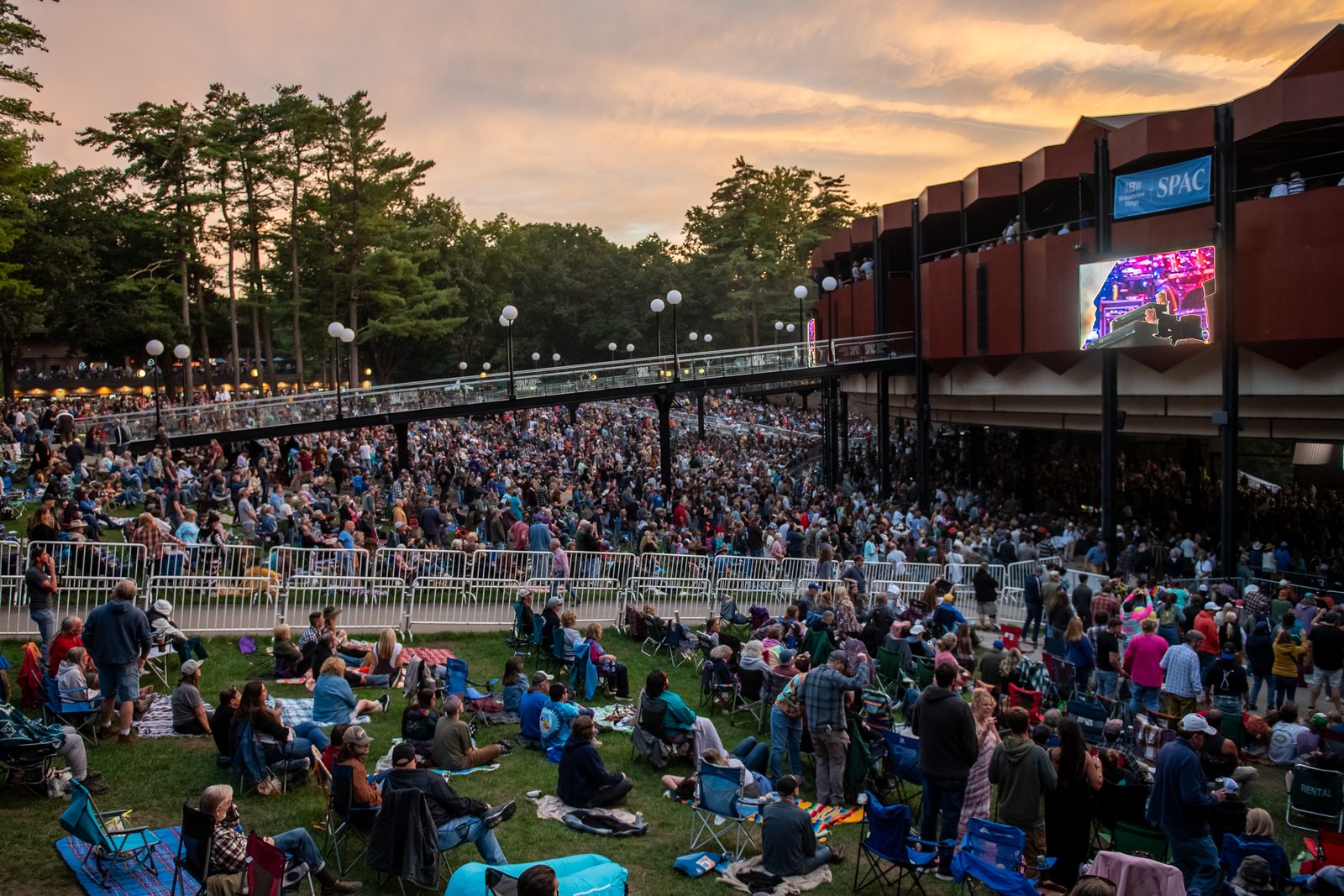
By the early nineties, setlist.fm had its data discipline together, and what the record shows from there is a singer whose summer calendar treats Saratoga the way a parishioner treats a pew. At least 20 documented SPAC appearances total, 19 with full setlists logged, plus at least one more recent gig the archive picks up in the press but not the setlist database.
Aug. 12, 1990: “Secret O’ Life,” “Carolina,” “Sweet Baby James,” “Shower the People,” and the rest of the songbook readers can recite from memory. Aug. 17, 1997: paired with a Finger Lakes Performing Arts Center date (now Constellation Brands) two nights earlier — the SPAC-Canandaigua double has become a Taylor summer signature, two amphitheaters at opposite ends of the state booked into the same swing. Late September 1999 brought a different kind of Upstate booking — three nights at the Eastman Theatre in Rochester with the Rochester Philharmonic. Open rehearsal one night, full performances after. The Eastman crowd is not the SPAC lawn crowd. Taylor has played to both for 40 years.
July 19, 2014: another SPAC summer. Aug. 24, 2021: SPAC paired with Jackson Browne, over 15,000 attendees. Labor Day 2024: another SPAC. April 2024 had brought the documented Albany arena debut at the MVP Arena — Taylor was 76 when he first played downtown Albany under that roof, which tells you something about how he chooses his venues, and how slowly. There’s also a 1987 St. Bonaventure date in Olean, outside the usual Capital Region circuit, and an August 2021 stop at the St. Joseph’s Health Amphitheater in Syracuse — a return to the city of the Jabberwocky residency, 51 years later.
And he is coming back this summer. June 29, 2026 — SPAC — “An Evening with James Taylor and His All-Star Band.” Eleven days after the show this article is leading you toward. The Upstate habit unbroken at 56 years.
The Woodstock That Wasn’t, Until It Was
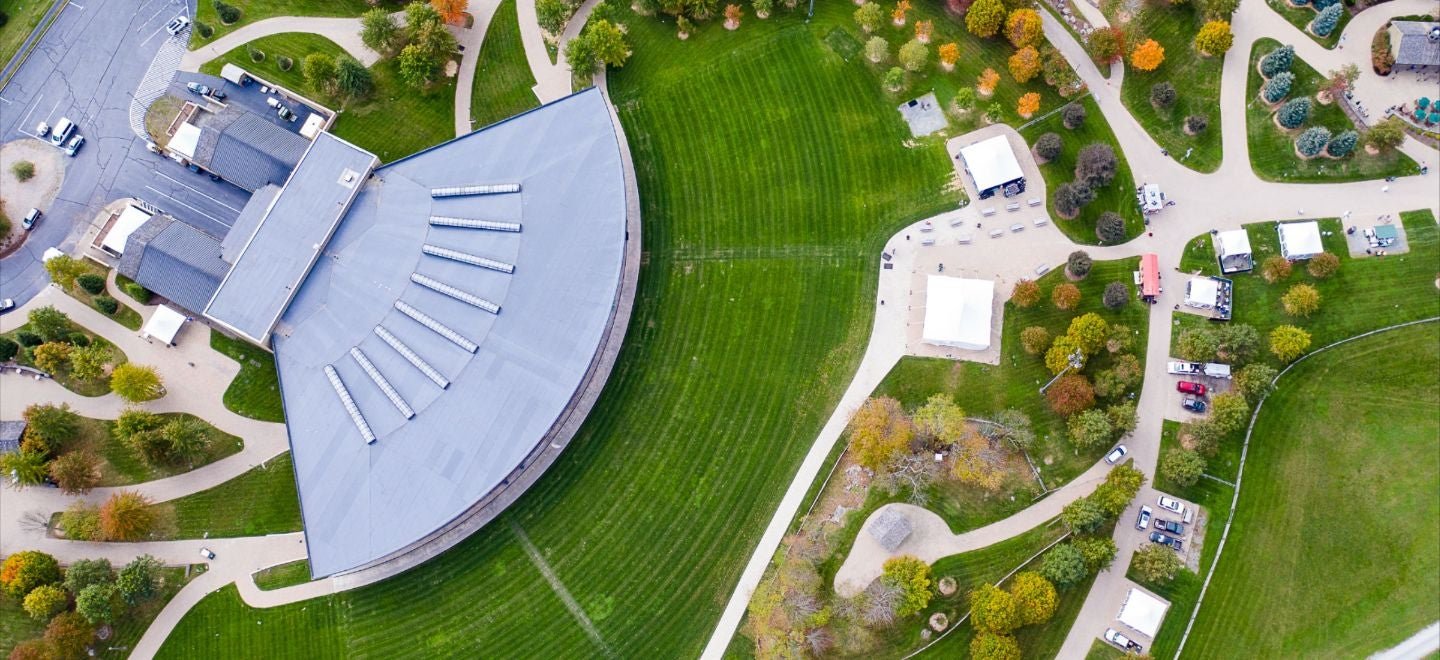
Now go back to August 1970. Pan Copeland’s Field, Saugerties. The Woodstock Sound Festival, the would-be sequel to the previous summer’s myth. Taylor was booked. The festival was canceled. No Taylor-Woodstock connection in 1970. None in ’71. None in the seventies. None in the eighties. None in the nineties. None at all, for 51 years, until —
August 21, 2021. Bethel Woods Center for the Arts, built on the original Yasgur’s Farm grounds where the festival happened in ’69. James Taylor, 73 years old, walked out onto the actual Woodstock ground for the first time in his life. Late in the set — setlist.fm logs it as a tour debut, his first live performance of the song since 2018 — he played Joni Mitchell’s “Woodstock,” the song the Canadian who wasn’t there wrote about the festival she’d missed, performed by the Massachusetts singer who was supposed to play the follow-up festival the next year and never made it.
There’s YouTube footage. It is what it is. Taylor doesn’t oversell the moment. He doesn’t tell the crowd what they’re watching. He just plays the song.
You don’t need to overplay the irony. The thing about Taylor’s relationship to the Woodstock generation is that it has always been oblique. He wasn’t at Woodstock. His songs became part of what the audience that was at Woodstock carried home from it, and then back to their kids and grandkids. The 2021 cover acknowledged the lineage without claiming it. It was the closest thing to a deferred apology a touring schedule can produce.
He came back to Bethel Woods in June 2024. He’s coming back again in eleven days.
June 18, 2026
Which brings us, finally, to the case for showing up.
On Thursday, June 18, James Taylor returns to Bethel Woods for his third documented appearance on those grounds. “An Evening with James Taylor and His All-Star Band” — the same touring unit that has been playing arenas and amphitheaters across 2024, 2025, and into this summer. If recent setlists hold, expect “Carolina In My Mind,” “Sweet Baby James,” “Fire and Rain,” “Shower the People,” “You’ve Got a Friend,” “Mexico,” “How Sweet It Is (To Be Loved by You),” and “Country Road.” Recent tours have closed with “You Can Close Your Eyes” or, depending on the night and the room, the Mitchell “Woodstock” cover that the Bethel grounds in particular seem to invite. None of this is a guarantee. None of it ever is.
What you can count on is the band, the room, and the long view. Taylor is 78 this year. He has been a touring musician for 60 years. He still sings most of it in the same key. He still tells the same self-deprecating stories between songs. The all-star band — pedal steel, harmony singers, a horn section when the budget allows — has been with him long enough that the arrangements have settled into something close to definitive. This is not the version of an aging legend you sit through out of respect. This is the version that still works.
Closing the Circle
Go back, one last time, to the Jabberwocky. February 1970. He is 21 years old, a debut album three weeks from release, 200 Syracuse students in a basement, the WAER feed running quietly to tape. He opens his set. Somewhere in there he plays “Carolina In My Mind.” Somewhere in there he plays “Fire and Rain,” which nobody in the room has heard yet, because nobody in the world has heard it yet on radio.
On Thursday, June 18, on the original Woodstock grounds, in front of a crowd that paid considerably more than a couple of dollars at the door, a 78-year-old man will walk out and play “Carolina In My Mind.” He will play “Fire and Rain.” He will close, possibly, with the Mitchell cover that closes the long arc of his not-Woodstock history.
Fifty-six years apart. Both in Upstate New York. One ends the sentence the other began. The Massachusetts kid who kept coming back, who has played the SUNY system, the civic auditoriums, Tanglewood every summer, SPAC 20 times over, the Eastman Theatre with the Rochester Philharmonic, the MVP Arena finally at 76, the original Woodstock grounds three times now — the case for treating him as an honorary local is, at this point, the case for trusting what the calendar has been telling us all along.
He’ll be at Bethel Woods in eleven days. He’ll be at SPAC eleven days after that. If this piece convinced you, the way in is above.
Disclosure: Some links in this article are affiliate links. Upstate Concerts may earn a commission on ticket purchases at no additional cost to you.