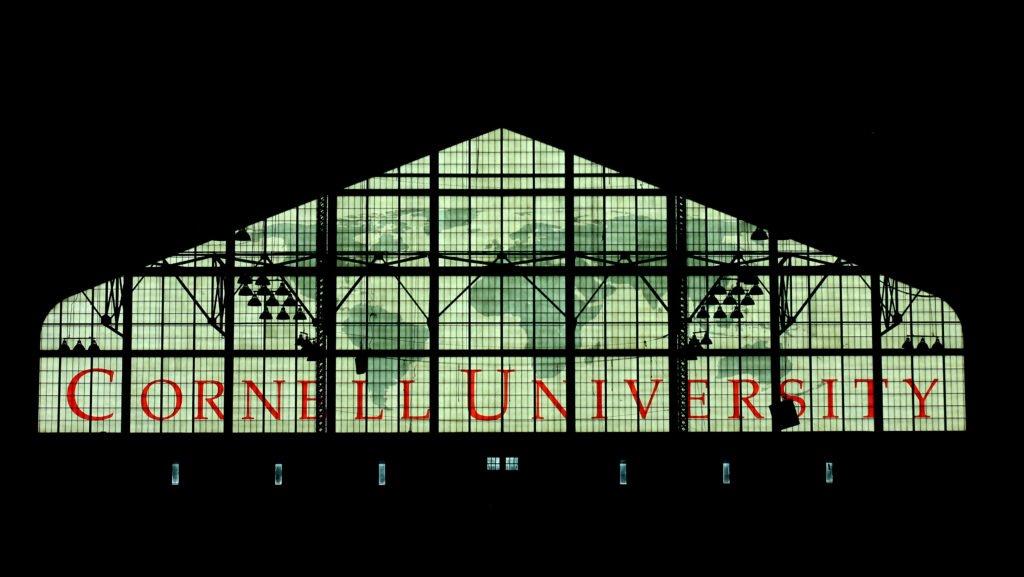
It snowed in Ithaca on May 8, 1977 — a wet, freak spring snow that turned the hill up to Cornell into a slog. Inside Barton Hall, a cavernous brick drill hall built for military drills and final exams, eighty-five hundred people were about to witness a concert that would spend the next four decades being argued over as the single greatest night the Grateful Dead ever played. The tapes that survived it — recorded off the soundboard by an engineer named Betty Cantor-Jackson — would circulate for years as a rumor, then a legend, then, finally, gospel. In 2011 the Library of Congress inducted the recording into its National Recording Registry, the same shelf that holds the moon landing and Louis Armstrong. A college gymnasium in the Finger Lakes had produced a national treasure.
That is what Ithaca does. No city its size on earth has hosted more history per capita, because no city its size has Cornell University and Ithaca College sitting on its hills, each one a machine for putting the biggest names in music in front of nineteen-year-olds. This is Volume 5 of The Greatest Concerts Ever, and after our chapters in Buffalo, Syracuse, Albany, and Rochester, it is the one that breaks the rules — a town of thirty thousand that has out-legended cities ten times its size. Every concert on this list happened. Every date is real, every venue named, every fact checked against the record.
You should know the rooms like characters. Barton Hall is the giant — the brick drill hall where the Dead, Dylan, Springsteen, and Joplin all played to roaring, standing-room student crowds. Bailey Hall, Cornell’s elegant concert auditorium, is the one with the classical pedigree that punk and pop kept crashing. Schoellkopf Field, the football stadium, is where an outdoor show once went so wrong it changed everything. And down the hill in town, The Haunt and the State Theatre are where the future arrived before anyone knew to look. Here are the ten greatest concerts Ithaca ever hosted.
10. Dead & Company — Barton Hall — May 8, 2023
Forty-six years to the day after the most famous concert in the school’s history, the surviving heart of the Grateful Dead came back to the room. On May 8, 2023, Bob Weir, Mickey Hart, and Bill Kreutzmann — playing as Dead & Company — returned to Barton Hall for a sold-out benefit, a deliberate act of remembrance staged on the exact anniversary, in the exact building. It was part homecoming, part pilgrimage, and it closed a circle almost no venue in America could draw: the same stage, the same date, half a century apart. We start the countdown at the end of the story, because in Ithaca the ending points straight back to the beginning.
9. Deep Purple — Schoellkopf Field — the early 1970s
Before Ithaca could become a shrine, it had to be a cautionary tale. When Deep Purple headlined an outdoor show at Schoellkopf Field in the early 1970s, the afternoon fell apart: a storm rolled in, lightning killed the power, and a restless crowd surged the stage and destroyed, among other things, a grand piano. The chaos was bad enough that Cornell effectively shut down major outdoor concerts for years. It is on this list precisely because of what it made necessary — the careful, debt-ridden revival of campus concerts that, a few years later, would put the Grateful Dead in Barton Hall on a snowy night in May. Every legend needs an origin, and Ithaca’s greatest began with a wrecked piano.
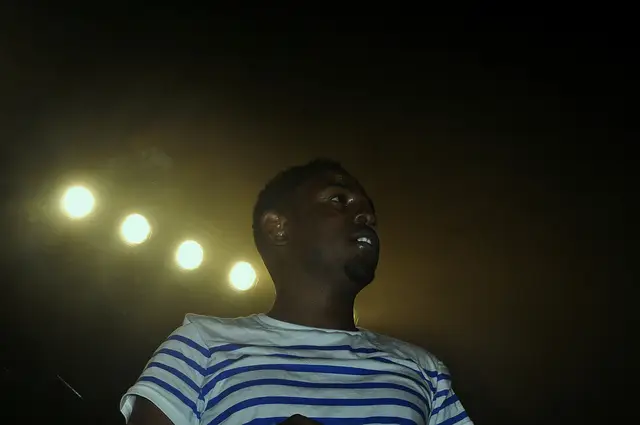
8. Kendrick Lamar — Slope Day — 2013
Every spring, Cornell empties its classrooms onto Libe Slope for Slope Day, a hundred-year-old end-of-year tradition that has quietly become one of the best-booked college festivals in the country. In 2013, the headliner was a twenty-five-year-old from Compton named Kendrick Lamar, touring behind good kid, m.A.A.d city and not yet the Pulitzer-winning colossus he would become. Ithaca caught him on the way up — the same trick it has pulled for a century, putting a generational talent on a hillside stage a year or two before the rest of the world caught on.
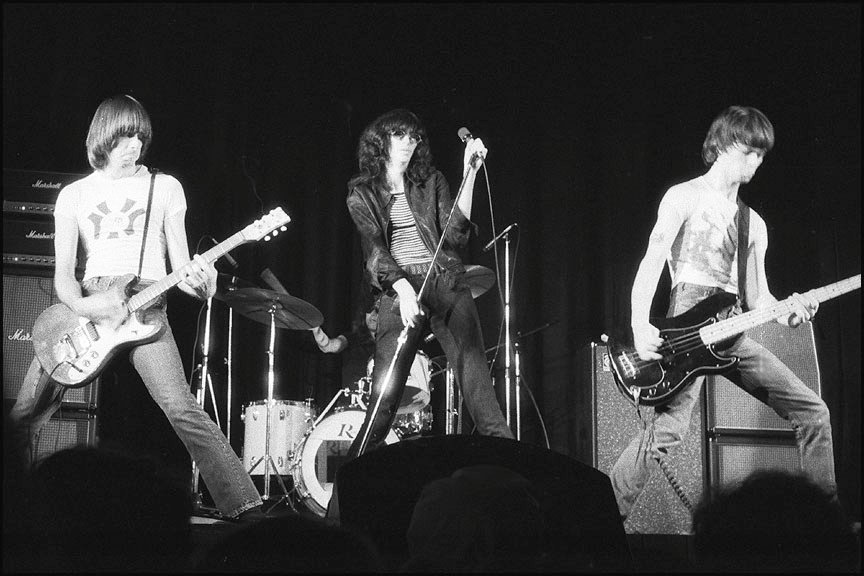
7. Ramones — Bailey Hall — May 4, 1984
It was supposed to be a Slope Day party. When the rain came, the whole thing moved indoors to the genteel confines of Bailey Hall — and so the founding fathers of American punk rock detonated inside Cornell’s stately classical auditorium, the room built for symphonies and string quartets. There is something perfectly Ithaca about the image: Joey Ramone counting off “one-two-three-four” under the same proscenium that had hosted Isaac Stern. The venue never knew what hit it, and neither did the students lucky enough to be shoved indoors by a spring storm.
6. Elton John — Barton Hall — September 26, 1972
By the fall of 1972, Elton John was in the middle of the most staggering hot streak in pop — album after album, hit after hit, at the height of his Honky Château imperial phase. On September 26 he brought it to Barton Hall, a piano man filling a brick drill hall with the songs that were rewriting the decade. It was the sound of an artist at his absolute apex playing a college crowd that would remember it for the rest of their lives — the everyday miracle of the Cornell concert calendar in its golden age.
5. Phish — The Haunt, the State Theatre & Bailey Hall — 1988–1992
This one isn’t a single night. It’s a climb. Before Phish filled arenas and festival fields, they were a Vermont bar band working the Ithaca circuit — and you could watch them grow in real time by the size of the room. First it was The Haunt, the scrappy downtown club where they played to a few hundred people in 1988 and again in 1990. Then came a graduation to the grand old State Theatre of Ithaca in 1991. And finally, before they outgrew the region entirely, Cornell’s Bailey Hall in 1992. No town watched a band become itself more closely than Ithaca watched Phish. This is what a real music town looks like — not just the arrivals, but the apprenticeships.
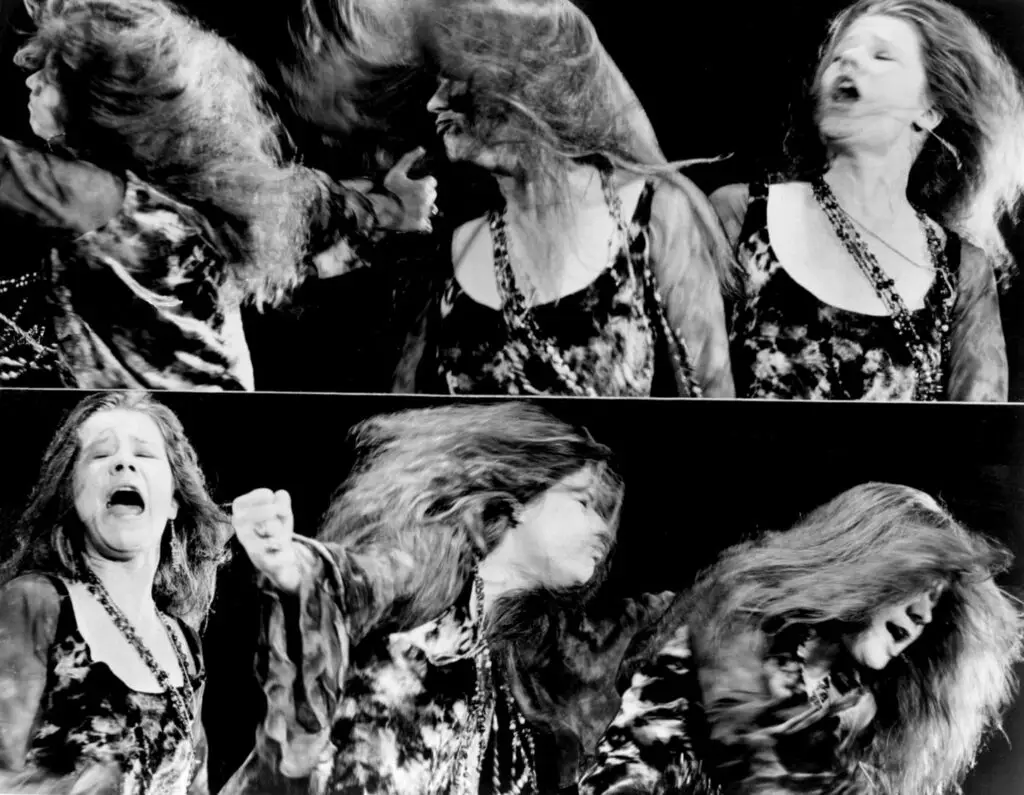
4. Janis Joplin — Barton Hall — May 3, 1969
Cornell’s Spring Weekend, May 3, 1969: Janis Joplin, at the absolute peak of her fame and just months before Woodstock would seal her into myth, tore Barton Hall to pieces. Those who were there describe it the way people always describe Janis — not as a performance but as an event, a woman turning her whole body into a howl. She would be gone in seventeen months. Ithaca got her at full flame, in a brick gym on a spring weekend — the most electric performer of her generation, a year and a half from the end.
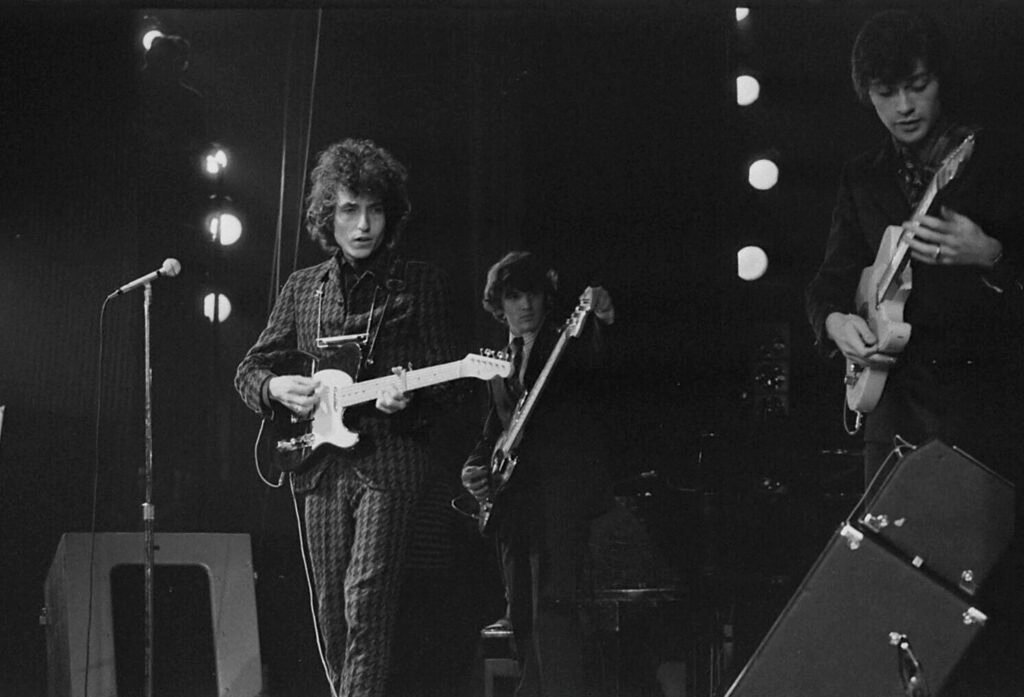
3. Bob Dylan — Barton Hall — November 6, 1965
On November 6, 1965, the most important songwriter alive walked into Barton Hall in the middle of the most controversial year of his life. Bob Dylan had gone electric that summer, splitting the folk world in two, and the tour that followed was a nightly referendum — acoustic set to open, then the full electric band that had purists shouting. He was twenty-four years old and operating at an altitude — Highway 61 Revisited freshly in the world — that few artists ever reach. Ithaca caught him at the exact hinge of the 1960s, when Bob Dylan stopped being a folk singer and became something the culture didn’t yet have a word for.
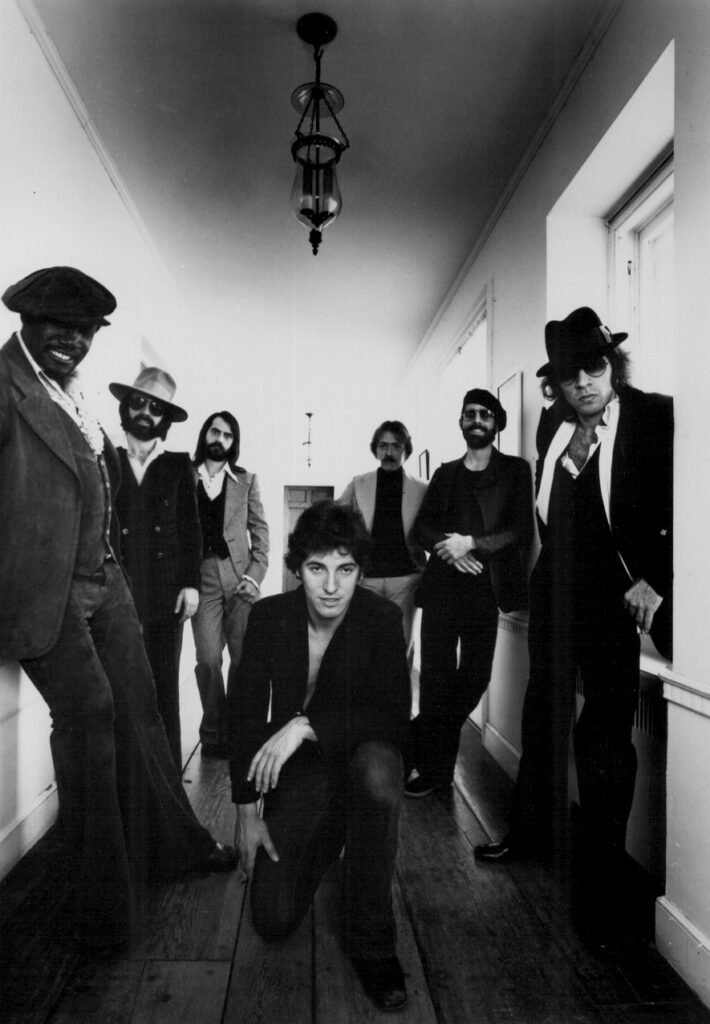
2. Bruce Springsteen — Barton Hall — November 7, 1978
Ask a Cornell alum of a certain age about the greatest show they ever saw at Barton Hall, and if they don’t say the Dead, they say this one. On November 7, 1978, Bruce Springsteen and the E Street Band brought the Darkness on the Edge of Town tour to Ithaca and played the way that tour was famous for playing: past midnight, past exhaustion, past any reasonable definition of what a rock show owed its audience. Four hours of a man treating every song like the last one he’d ever get to sing. It is the concert Cornell tells its children about — the night Springsteen refused to leave the stage, in a brick drill hall, for a crowd that never wanted him to.
1. The Grateful Dead — Barton Hall — May 8, 1977
And then there is the one that outgrew the building, the town, and the band itself. The Grateful Dead’s May 8, 1977 concert at Barton Hall is, by a consensus that has only hardened with time, one of the greatest live performances in the history of American music. The second set is scripture — a “Scarlet Begonias” bleeding into “Fire on the Mountain,” a “Morning Dew” that still stops conversations. The snowstorm outside, the tight muffled acoustics of a sealed brick gym, the pristine soundboard tape that engineer Betty Cantor-Jackson happened to roll: everything conspired to make a recording that circulated for decades as the “holy grail” of Dead tapes before it was ever officially released. When the Library of Congress finally enshrined it in the National Recording Registry in 2011, it made official what Deadheads had known for thirty years. The single most legendary concert in Upstate New York history did not happen in Buffalo or Rochester or Albany. It happened in a college gym in a town of thirty thousand, on a night it snowed in May.
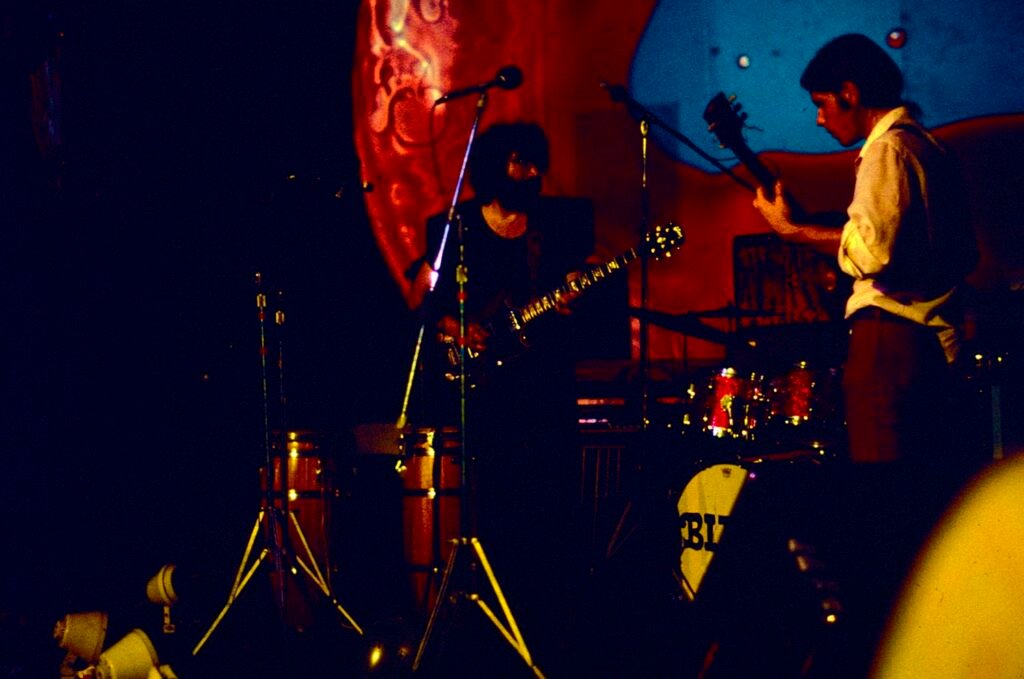
A city that makes its own
Here is the deeper secret of Ithaca: it doesn’t just host music, it incubates it, because a college town is a machine for putting future musicians in the same room at the same age. The clearest proof is X Ambassadors, the rock band that formed right here in Ithaca in 2009 around the brothers Sam and Casey Harris — genuinely homegrown, genuinely huge. But the pattern runs deeper and stranger than one success story. The jazz world still mourns Scott LaFaro, the revolutionary bassist of the Bill Evans Trio, who found his instrument as a student at Ithaca College before dying in a car crash at twenty-five. The Velvet Underground found its heartbeat in Moe Tucker, who had dropped out of Ithaca College and was working an IBM keypunch job when she was recruited to drum for the most influential band the 1960s underground ever produced. And the singular songwriter Johnny Dowd washed up in Ithaca in the early 1970s, ran a furniture-moving business, and simply never left, becoming part of the town’s fabric.
Just up the road in Trumansburg, Donna the Buffalo built a decades-long roots-music career and, in 1991, founded the GrassRoots Festival that still draws twenty thousand people to the Finger Lakes every summer. Ithaca doesn’t produce one kind of musician. It produces the room where musicians are made.
The ones that just missed — and the shows only Ithaca could pull off
Ten slots can’t hold a town this deep. Weather Report and the Mahavishnu Orchestra shared a Barton Hall stage in 1973, two titans of jazz-fusion on one bill. The Black Crowes came through in 1993 at their commercial peak. Bob Dylan returned again and again across the decades, as if the place had a hold on him.
And then there are the institutions no other small town could claim. Slope Day has turned Cornell’s Libe Slope into a spring festival that’s booked Drake, Kanye West, Snoop Dogg, and Chance the Rapper. The State Theatre of Ithaca, a restored 1928 movie palace downtown, has become one of the finest midsize rooms in the region. The GrassRoots Festival in nearby Trumansburg turns four days every summer into a roots-music pilgrimage. The Haunt spent decades as the scrappy incubator where bands like Phish learned their trade. And Bailey Hall — the elegant Cornell auditorium that caught the Ramones — has hosted a century of the world’s greatest classical artists, from Paul Robeson to Luciano Pavarotti. For all its Finger Lakes postcard beauty, Ithaca sits in the Southern Tier — and no town in the region, or arguably the state, has hosted more history per square mile.
We know we left something off. That’s the point. Tell us what we got wrong — your picks help decide our upcoming ranking of the Greatest Concerts in Upstate New York History. Find us on Facebook and Instagram and make your case.
The series so far: Buffalo, Syracuse, Albany, and Rochester. The road rolls on.
Image Credits
Hero artwork: Upstate Concerts. Barton Hall, Cornell — photo by eflon (Flickr), CC BY 2.0. Grateful Dead at the Kinetic Playground, 1969 — photo by Lvaughn7, CC BY-SA 4.0. Bruce Springsteen and the E Street Band, 1977 — Columbia Records, public domain. Bob Dylan, Olympia (Paris), 1966 — photo by Roger Pic, Bibliothèque nationale de France, public domain. Janis Joplin, 1969 — ABC Television, public domain. Ramones, Toronto, 1976 — photo by Plismo, CC BY-SA 3.0. Kendrick Lamar, Sound Academy (Toronto), 2011 — photo by Ohno1992, CC BY-SA 3.0. All via Wikimedia Commons.