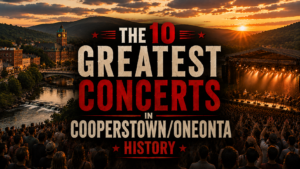
Picture a room that holds six hundred people on a generous night. A low ceiling, a beer-slick floor, a stage barely raised above the crowd, on Central Avenue in Albany. It’s the thirteenth of November, 1981, and the four young Irishmen tuning up under those lights are not yet famous — not really, not anywhere in America. Their second album is barely out. Most of the country has no idea who they are. But they know this room. They’ve played it twice already this year. And tonight, out of every city and every club in a nation they’re still trying to crack, U2 have chosen this one — J.B. Scott’s, Albany, New York — to be the opening night of their first headlining tour of the United States. Hold that picture. Everything on this list bends toward it.
This is the third installment of our series, The Greatest Concerts Ever, in which we take one upstate New York music city at a time and argue out the greatest nights it ever hosted. Buffalo had its chapter. Syracuse had its own. There’s no map here and no marching order — no working east or west, no traveling toward anywhere. Each city stands alone and earns its place on the strength of what actually happened inside its rooms. I’ll admit I arrived at Albany’s case a skeptic. A state-capital town, a government city, more famous for its politics than its downbeats — I expected a thin file. I was wrong. What Albany lacks in hometown legends it more than repays in a stranger and rarer gift: an uncanny knack for catching the biggest acts on earth at the exact moment they were becoming themselves.
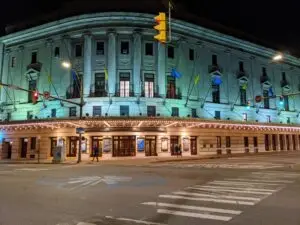
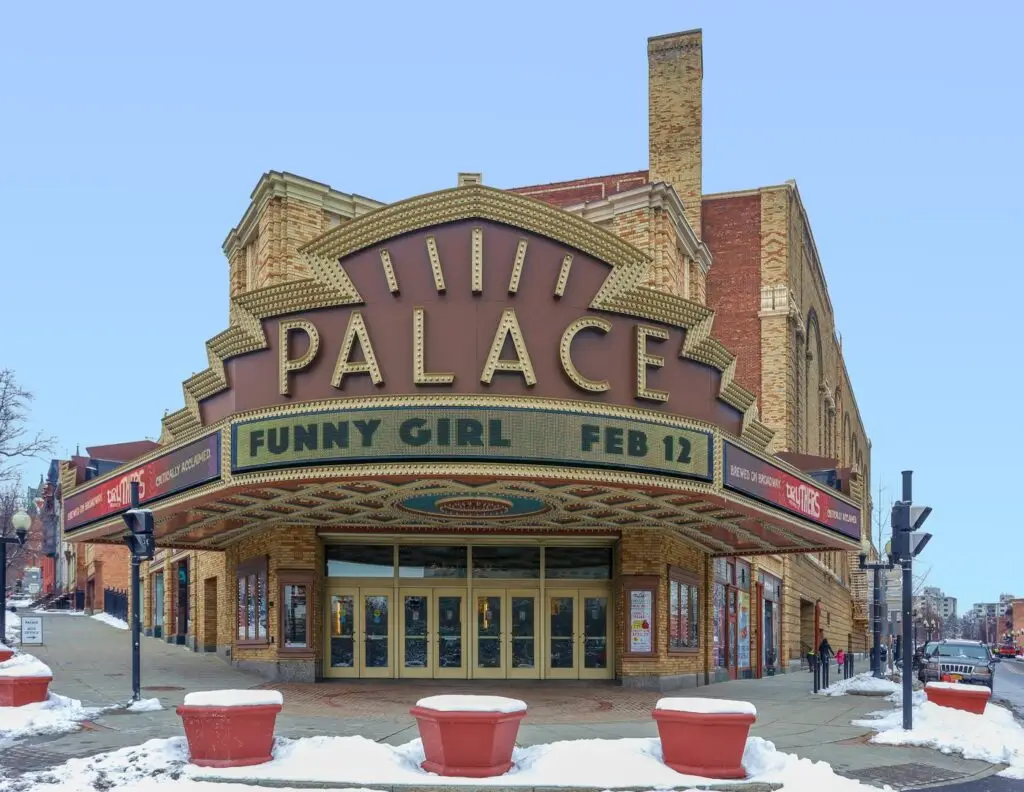
A word on the rules before we count down. Every concert here happened, on the date given, at the venue named — no barroom apocrypha, no “my uncle swears he was there.” And four rooms recur through this story like characters in a novel. J.B. Scott’s, the short-lived downtown club on Central Avenue that burned too bright and too briefly. The Palace Theatre, the gilded 1931 movie palace that became the region’s grand room. RPI’s Houston Field House, the college hockey barn across the river in Troy. And the arena on South Pearl Street that opened in 1990 as the Knickerbocker Arena and now answers to MVP. Read them with affection. They did the heavy lifting.
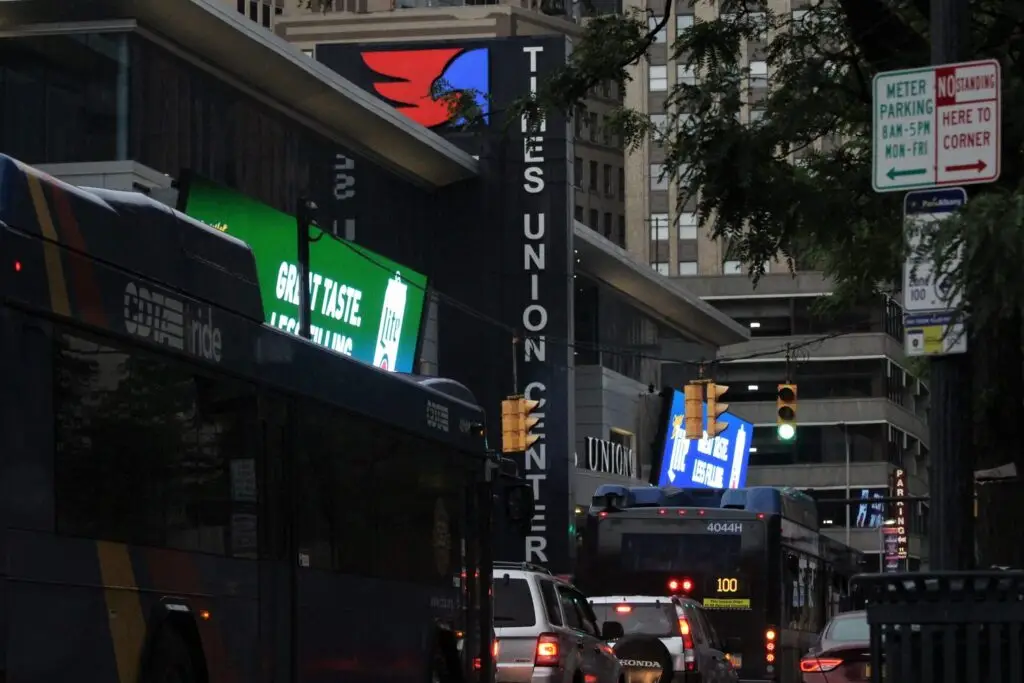
Here, from ten to one, are the greatest concerts in Albany history.
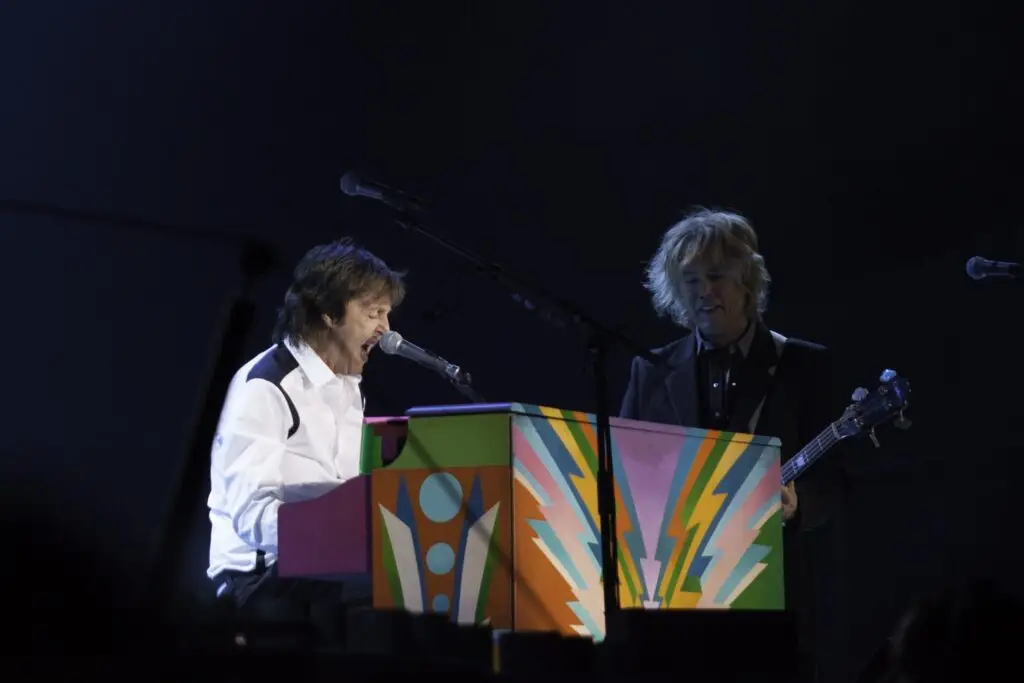
10. Paul McCartney — July 5, 2014, Times Union Center. Yes, we’re opening the countdown with a Beatle, and yes, we’re ranking him tenth. Stay with us — the logic pays off by the end. On July 5, 2014, Paul McCartney could have restarted his Out There tour anywhere in America. He chose Albany. Not a tune-up date, not a soft open: the actual launch of the entire North American leg of the tour, in a downtown Albany arena. A man who has headlined Shea Stadium and a Super Bowl, beginning his American summer on South Pearl Street. It tells you something about this building’s gravity that the most famous living musician on the planet picked it to go first. It won’t be the last time on this list that a legend chose Albany as a starting line.
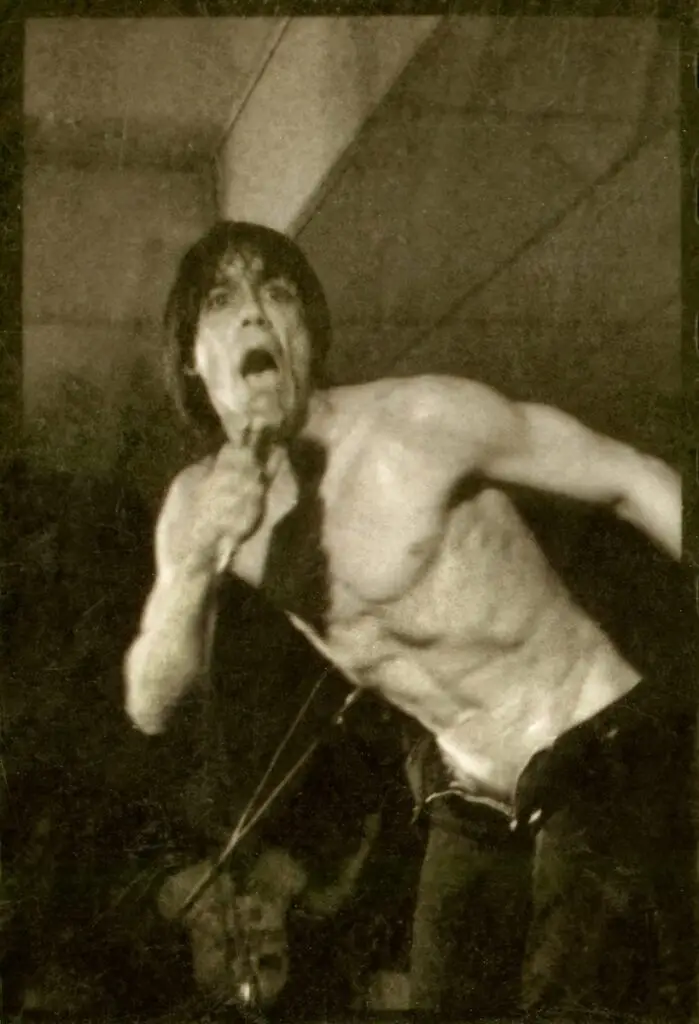
9. Iggy Pop — December 8, 1979, J.B. Scott’s. Before J.B. Scott’s became the club that launched U2, it was already the club that would book anything dangerous. On December 8, 1979 — barely eight months after the place opened its doors — the godfather of punk himself walked onto that little stage. Iggy Pop, in a six-hundred-capacity Albany room, in the club’s first year of existence. The booking is the point. That instinct for the wild, the early, the not-yet-arrived is the entire reason this club matters, and we are nowhere near done with it.
8. Rush — January 23, 1979, Palace Theatre. Some bands pass through a city. Rush practically moved in. On January 23, 1979, the Canadian power trio headlined the Palace with Starz opening — and then came back the next year, and the year after that, and the year after that, headlining the Palace in 1979, 1980, 1981, and 1982. For a four-year stretch at the turn of the decade, as they climbed from cult act to arena titans, the Palace was effectively Rush’s Albany home. Loyalty like that, in both directions, is its own kind of greatness.
7. Garth Brooks — April 10–12, 1997, Pepsi Arena. Here is a number that ought to be framed in the lobby: fifty-one thousand. That’s how many tickets Garth Brooks sold for his three-night stand at the arena — by then rechristened the Pepsi Arena — on April 10, 11, and 12, 1997. And here’s the number that makes it a record: under three hours. Fifty-one thousand tickets, three sold-out nights, gone before lunch — the fastest any event has ever sold at the building. There are louder shows on this list and more historic ones. There is not a more emphatic demonstration of a city’s raw appetite for a night out.
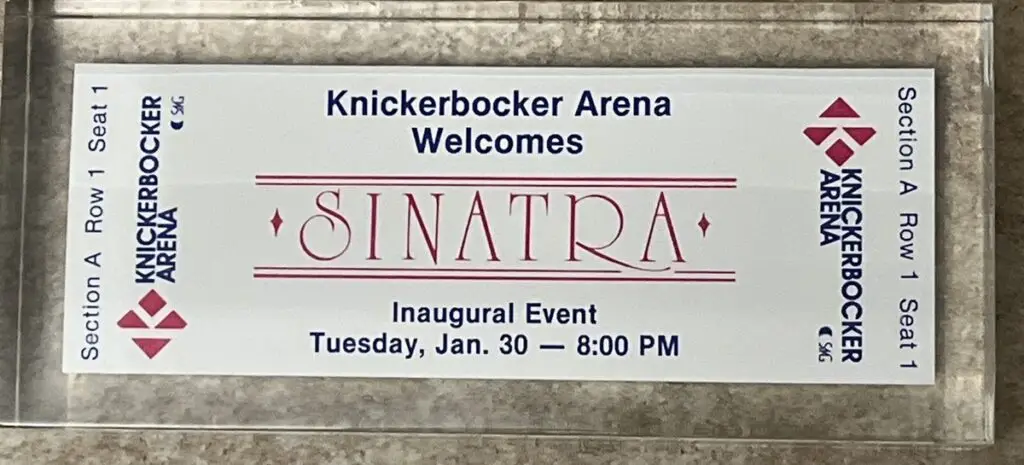
6. Frank Sinatra — January 30, 1990, Knickerbocker Arena. Every building needs a first night, and Albany’s downtown arena got the best one imaginable. On January 30, 1990, the very first performer ever to take the stage in the brand-new Knickerbocker Arena was Frank Sinatra. The Chairman of the Board, christening a hockey-and-basketball barn on South Pearl Street before a single puck was dropped or a single basket scored. It was a statement about what the room intended to be — not a civic gymnasium but a stage worthy of the biggest names alive. Everything the arena would become over the next thirty-five years started with Sinatra cutting that ribbon in a tuxedo.
5. The Grateful Dead — March 24–26, 1990, Knickerbocker Arena. Two months after Sinatra opened the place, the Grateful Dead moved in and made it theirs. From March 24 to 26, 1990, the Dead played the first of what would become a remarkable thirteen shows at this single arena over the next five years — and they thought enough of those three opening nights to press them onto a record. The live album is titled Dozin’ at the Knick, and that’s exactly what it is: the Grateful Dead, in a two-month-old Albany arena, captured for all time with the building’s own nickname on the cover. No band ever loved this room like the Dead did, and the room loved them back. There’s a coda to that romance — a farewell — but it belongs further down the page.
Listen: “Playing in the Band,” recorded live at the Knickerbocker Arena, Albany, in March 1990 — from the official live album Dozin’ at the Knick.
4. The Grateful Dead — May 7, 1978, RPI Field House, Troy. Before the arena, there was the barn. Cross the Hudson into Troy and you reach Rensselaer Polytechnic’s Houston Field House, a college hockey rink that on May 7, 1978, held one of the most treasured Grateful Dead performances the Capital Region ever saw. It sold out in hours. What those ticket-holders got was the Dead at a very specific altitude — the spring of 1978, “Jack Straw” out of the gate, “Scarlet Begonias” melting into “Fire on the Mountain,” the whole band locked in and patient. The tapes survive, cleaned and catalogued and argued over by the faithful to this day. That two upstate rooms — a Troy college gym and an Albany arena — each hold a piece of Grateful Dead history this durable is not a coincidence. It’s a relationship.
3. The Rolling Stones — April 29, 1965, Palace Theatre. Now go back before any arena, before any club, to the night the building itself considers its finest. On April 29, 1965, the Rolling Stones — on their first American tour, still a snarling young blues band with everything in front of them — played the Palace Theatre. The Palace’s own house history calls it, flatly, arguably the most notable concert the theater has ever hosted. Sit with the timing of that. The Stones of early 1965, in a 1931 movie palace in downtown Albany, at the precise hinge where they stopped being someone’s opening act and started being the Rolling Stones. Albany didn’t book a legend that night. It booked five kids and watched the legend arrive in real time.
2. Bruce Springsteen & the E Street Band — February 7, 1977, Palace Theatre. And then there’s the night Albany got to keep forever. On February 7, 1977, Bruce Springsteen and the E Street Band made their Palace Theatre debut — a show drawn from the strange, coiled interregnum between Born to Run and Darkness on the Edge of Town, when a lawsuit had locked Springsteen out of the recording studio and he was pouring every ounce of that frustration onto the stage instead. For decades the night lived only in memory and in bootleg. Then, in 2017, Springsteen’s own archive opened the vault and released the entire concert, officially, under a title that says all of it: Palace Theatre, Albany 1977. There it sits in record collections around the world — Albany’s name, printed across an official Bruce Springsteen live album. A city can host a thousand great concerts. Only a handful ever get their name on the cover of one.
Listen: “The Promise,” recorded at the Palace Theatre, Albany, February 7, 1977 — from Springsteen’s official live album of that night.
A city that makes its own
Most cities on a list like this are hosts — fortunate stops on a touring map. The best of them are also sources, and here I have to be honest with you, because the whole series depends on honesty: Albany’s bench of homegrown stars is thinner than Buffalo’s, thinner than Syracuse’s. It is more cult than marquee. But it is not empty, and what’s on it is worth knowing.
Troy gave the world Nick Brignola, born there in 1936 and raised there, who grew up to become one of the finest baritone saxophonists in jazz — a player of genuine international standing, a Grammy nominee for his 1981 record L.A. Bound. Albany produced Blotto, the gleefully ridiculous new-wave band whose “I Wanna Be a Lifeguard” became one of the era’s early MTV curios, back when the channel was young enough to play anything. Troy claims Super 400, the hard-charging rock trio that has flown the city’s flag since 1996, and Albany claims Sirsy, the road-dog rock duo who have spent years turning two people into the sound of a full band. It’s a real Capital Region lineage. It’s just not a marquee one.
And that — the thin star bench — is exactly why the greatest concert in Albany history is not a homecoming. Albany’s genius was never for producing the legends. It was for catching them: for being the room where the next great band played before you’d ever heard the name. And no room in the city’s history ever did that better than a doomed little club on Central Avenue.
1. U2 — November 13, 1981, J.B. Scott’s. So we come back to where we started. J.B. Scott’s opened in the spring of 1979 and held maybe six hundred people. In a little over three years it put Iggy Pop, the Ramones, the Go-Go’s, the Pretenders, Stevie Ray Vaughan, Pat Benatar, and a stack of others on its stage — a booking sheet that would embarrass clubs ten times its size. But its masterpiece was U2. The band played J.B. Scott’s three times in 1981 alone, and they came to love the place: on one of those visits the club handed Bono a T-shirt with its name across the front, and he liked Albany enough to wear it on camera — that’s a J.B. Scott’s shirt he has on in U2’s 1981 video for “Gloria.” Two decades later, back in town on the Elevation tour, he told the crowd he still had it at home. The affection ran both ways, and it was on the record before the band ever came back to make history. Because on November 13, 1981, U2 used this six-hundred-seat room to launch the opening night of their first headlining tour of the United States. Not a stadium. Not New York or Los Angeles. A little club on Central Avenue in Albany, chosen by a band that would become one of the biggest on earth as the starting line for their American conquest. Barely a year later, in the summer of 1982, a fire tore through J.B. Scott’s and it never reopened. It existed for a blink. But in that blink it caught U2 three times over, put its name on Bono’s chest in an MTV video, and served as the launchpad for a legend. No other city on this list can tell that story. That is the most Albany thing there is — not a hometown hero, but a hole-in-the-wall the future had to pass through first.
Watch: U2’s 1981 video for “Gloria” — the one where Bono wears the J.B. Scott’s T-shirt the Albany club gave him.
The ones that just missed — and the shows only Albany could pull off
A top ten is an act of violence against a city’s memory. So here are the nights we couldn’t quite fit:
- The Grateful Dead’s last stand — June 21–22, 1995, Knickerbocker Arena. The final two shows the Grateful Dead ever played in the state of New York, in the arena that loved them best — some seven weeks before Jerry Garcia’s death ended the band forever. The romance that produced Dozin’ at the Knick ended, fittingly, right here.
- The rest of the J.B. Scott’s roster. The Ramones, the Go-Go’s, the Pretenders, Stevie Ray Vaughan, Pat Benatar, Judas Priest, Thin Lizzy — all of them, in a six-hundred-seat room, in barely three years. A club that small has no business with a guest list that large.
- Mariah Carey at Proctors — 1993. Down the road in Schenectady, the century-old Proctors hosted the taping of Carey’s top-rated NBC Thanksgiving television special — a national spotlight, beamed to the country from a Capital Region stage.
- Bob Dylan’s sermon at the Palace — April 1980. Deep in his born-again gospel period, Dylan brought a show to the Palace that refused the old hits and preached the new gospel instead — one of the most confrontational nights the room ever hosted.
- Aerosmith and Van Halen at the Palace, 1978. Aerosmith blew the roof off the place that March on the Draw the Line tour; a young Van Halen tore through weeks later. The Palace’s hard-rock heyday in a single spring.
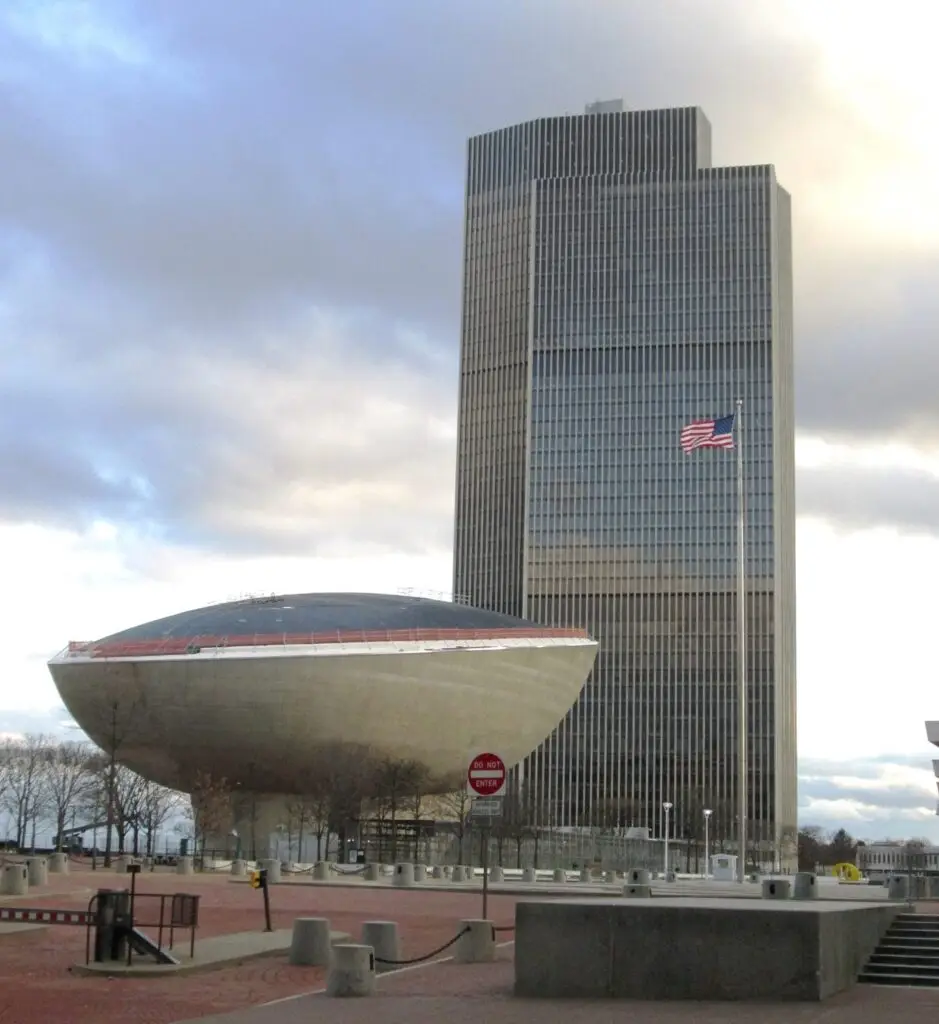
- The free-concert tradition. Alive at Five on the riverfront, running since 1990, and the summer concerts on the Empire State Plaza — the civic, no-ticket-required backbone of Albany’s music calendar, and proof the city’s appetite never depended on an arena.
So that’s our ten, and our almosts. Now tell us we’re wrong — because we know you want to.
What got left off? Where’s your show? Did we underrate the Palace, misjudge the arena, forget the night that genuinely changed your life? Find us on Facebook and Instagram and make your case — and it’s not just for sport. Your picks help decide our upcoming ranking of the Greatest Concerts in Upstate New York History. Buffalo made its argument. Syracuse made its own. Now Albany has made its. Tell us where we went wrong.
The Greatest Concerts Ever is an ongoing Upstate Concerts series ranking the most legendary concerts across upstate New York’s music cities — Buffalo, Syracuse, Albany, and more to come.
🎫 Upcoming Shows in the Capital Region
The legends made history here — now go make your own.
Image credits: Palace Theatre, Albany (Kenneth C. Zirkel, CC BY-SA 4.0); the downtown Albany arena / Times Union Center (Tyler A. McNeil, CC BY-SA 4.0); Iggy Pop, 1980 (Angrylambie, CC BY-SA 3.0); Paul McCartney, 2014 (Jimmy Baikovicius, CC BY-SA 2.0); Empire State Plaza and The Egg (Beyond My Ken, CC BY-SA 4.0) — via Wikimedia Commons. Frank Sinatra inaugural ticket — Knickerbocker Arena, January 30, 1990.