Start with the rain. When you’re talking about Buffalo, you almost have to.
It’s the Fourth of July, 2004. An estimated 60,000 people are wedged into Niagara Square, downtown, the stage built right in the shadow of City Hall, and the sky has opened up the way only a Buffalo sky can. Nobody leaves. They stand in a torrential downpour and wait for two local kids made good to walk out and play for free in their own hometown. That picture — soaked, stubborn, civic, joyful — is the most Buffalo thing I can conjure. We’ll come back to it. Everything on this list is, in some way, leading there.
This is the first installment of a new series we’re calling The Greatest Concerts Ever, and we’ll work our way across the state city by city — Syracuse, Rochester, Albany, and Saratoga all have chapters coming. But Buffalo earns the first word, and it isn’t close. No city in upstate New York wears its concerts the way Buffalo does. The shows here aren’t trivia. They’re landmarks, retold at kitchen tables and in bar booths, the dates burned into memory like family anniversaries.
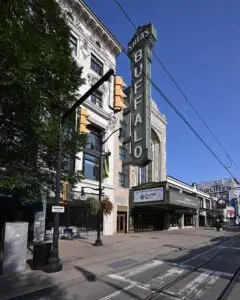
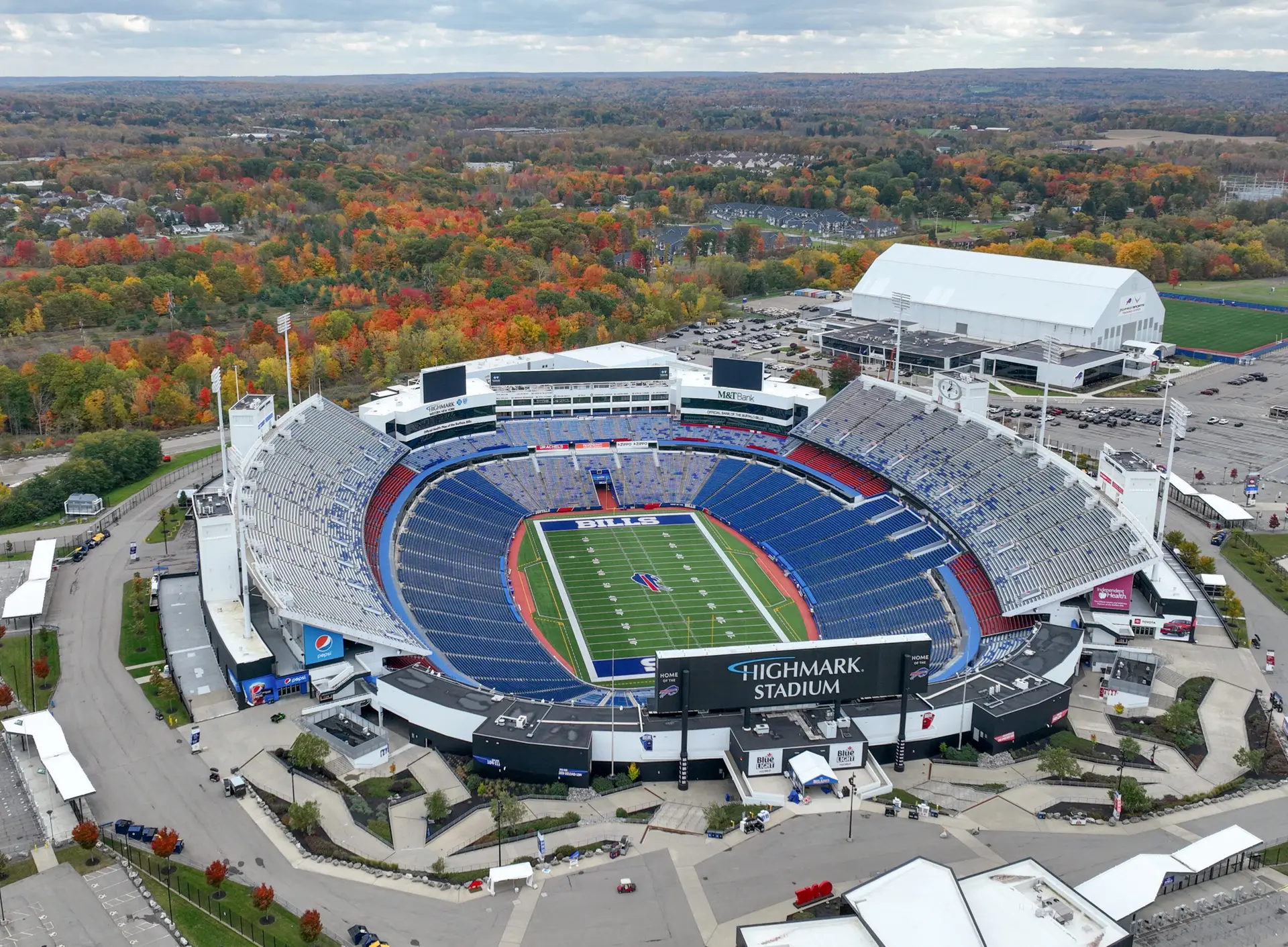
A word on the rules before we count down. Every show here actually happened, on the date listed, at the venue named — no apocrypha, no “I swear my cousin was there.” And three places recur like characters in a novel: Rich Stadium in Orchard Park, the great open-air cathedral of Western New York rock; Buffalo Memorial Auditorium — the Aud, steep-sided and ferocious, torn down in 2009 but never really gone; and the downtown arena now called KeyBank Center. Read them with affection. They did the heavy lifting.
Here, from ten to one, are the greatest concerts in Buffalo history.
10. Bob Dylan, Tom Petty & the Heartbreakers, and the Grateful Dead — July 4, 1986, Rich Stadium. Read that bill again. Dylan, Petty, and the Dead, stacked on one stage on the Fourth of July. There are three-day festivals that don’t assemble that much songwriting. It’s the first entry in what I’ve come to think of as Buffalo’s real civic holiday — not Independence Day exactly, but Rich Stadium on Independence Day, a tradition this list keeps circling back to. The bar was set high here, and the city kept clearing it.
9. Elton John and Billy Joel — July 14, 1994, Rich Stadium. The “Face to Face” tour was a simple, audacious idea: put two of the most accomplished piano men in popular music on one stage and let them trade. Buffalo got it at full strength in the summer of ’94 — two catalogs deep enough to fill a stadium twice over, played by men who knew exactly what those songs were worth. Not a nostalgia revue. A summit meeting, conducted in three-minute pop songs.
8. Queen — November 28, 1978, Buffalo Memorial Auditorium. Freddie Mercury at the Aud, on the Jazz tour, in a building almost accidentally designed to make a frontman feel enormous. The Aud’s notoriously steep sides put the crowd practically on top of the stage, and no performer alive was better equipped to seize that intimacy and inflate it to the rafters. People who were in that room still talk about it. That’s the only review that matters.
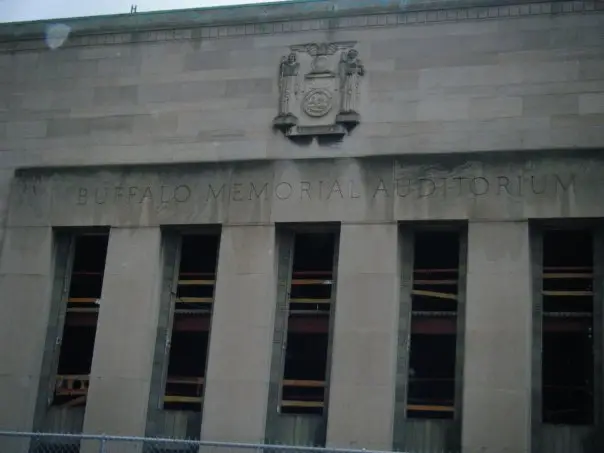
7. AC/DC — September 27, 1978, Buffalo Memorial Auditorium. Same building, same autumn, a completely different voltage. This was AC/DC with Bon Scott still out front — one of his last Buffalo appearances before his death in 1980 — and it survives now as a snapshot of a band and a singer caught at a full sprint. The Aud was built for exactly this: loud, close, no polish, no mercy. If you want to understand why Buffalo genuinely mourned that building when the wrecking ball came, nights like this are the answer.
6. Eric Clapton and The Band — July 6, 1974, Rich Stadium. Every tradition has a first day. This is Buffalo’s. The very first concert ever staged at Rich Stadium, Clapton and The Band christening a football field that would go on to host a half-century of rock history. Without this afternoon, half the entries on this list have no home. It earns its place on origin alone — the cornerstone the rest of the building rests on.
5. Bruce Springsteen & the E Street Band — November 22, 2009, KeyBank Center (then HSBC Arena). Springsteen has played Buffalo plenty, but this night stands alone: the final show of the entire “Working on a Dream” tour, and to mark it he played his debut album, Greetings from Asbury Park, N.J., front to back. A tour ends where it ends, usually by accident of routing. Springsteen chose to close the book here, in Buffalo, with the songs he started his whole career on — the alpha played as the omega. This city has always understood that kind of gesture better than most. It is, after all, a city that knows something about loyalty without reward.
4. Michael Jackson and the Jacksons — August 25–26, 1984, Rich Stadium. Two nights. At the absolute white-hot peak of Thriller, the Victory Tour rolled into Orchard Park and Western New York media reached for the only phrase big enough: “the Concert of the Century in Western New York.” Hyperbole is cheap, but in the summer of 1984 there was no bigger star on the planet, full stop, and Buffalo had him for two nights in a football stadium. Four decades later, the sheer scale of it still reads as faintly unbelievable.
3. The Rolling Stones — August 8, 1975, Rich Stadium. The Stones came to Orchard Park to close their Tour of the Americas ’75 — and then they kept coming back, in 1978, in 1981, in 1997. But this was the debut: the night a stadium barely a year into its concert life landed the biggest band in the world. Draw the line from Clapton christening the place in ’74 to the Stones blessing it in ’75, and you can watch Rich Stadium stop being a gamble and become a destination, right there in the span of twelve months.
2. The Grateful Dead — July 4, 1989, Rich Stadium. Buffalo was a Dead town, full stop. The band played the area roughly a dozen times, including a May 9, 1977 show at the Aud that the faithful still speak of in lowered voices. But the Fourth of July, 1989 is the one that got immortalized — released years later as the official live album and DVD Truckin’ Up to Buffalo. That is the rare validation no critic can hand a city: the band itself deciding that the Buffalo night was the one worth pressing to disc and stamping with the city’s name. The Dead played thousands of shows across thirty years. They named one of them after us.
Watch: the full July 4, 1989 Rich Stadium concert, later released as Truckin’ Up to Buffalo.
And then there’s the rain. But before we get to the rain, you have to understand what Buffalo actually is.
A city that makes its own
Most cities on a list like this are hosts — convenient stops on a map, lucky to be on the route. Buffalo is something rarer. Buffalo is a source.
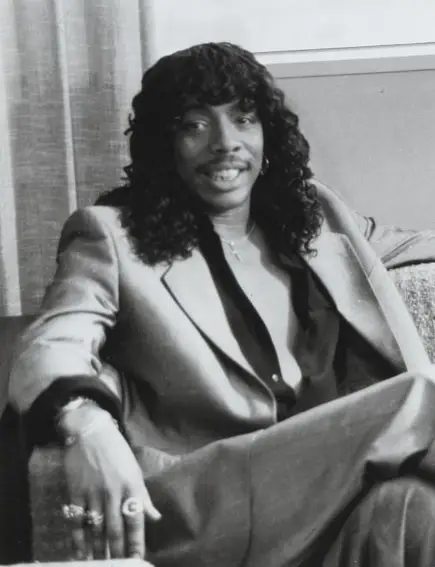
This is the city that gave the world Rick James, born here in 1948, raised in the projects on the East Side, who turned Buffalo grit into “Super Freak” and one of the defining funk catalogs of the era — and who came home to a hero’s welcome, including a celebrated 1982 hometown homecoming, because a Buffalo kid never really stops being a Buffalo kid. It’s the city that produced Grover Washington Jr., born here in 1943, who grew up on the East Side and went on to become one of the architects of modern jazz-funk saxophone. It’s where Spyro Gyra formed in 1974, out of a weekly local gig, and went on to sell out rooms around the world. It’s where bass virtuoso Billy Sheehan sharpened his hands in the Buffalo band Talas before the wider world came calling, and — at the other end of the spectrum entirely — it’s where Cannibal Corpse and Every Time I Die built the kind of ferocious, uncompromising heavy music that could only come out of a city this hard-nosed and this proud.
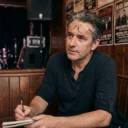
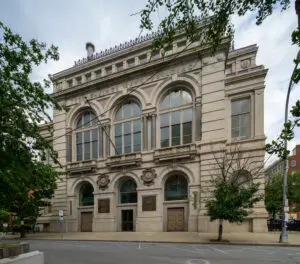
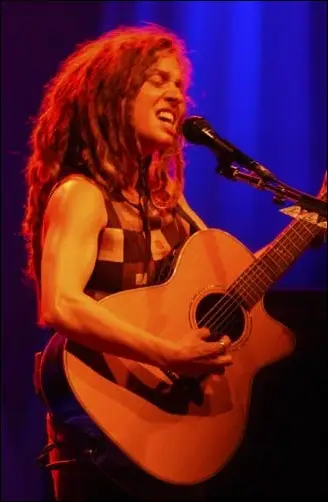
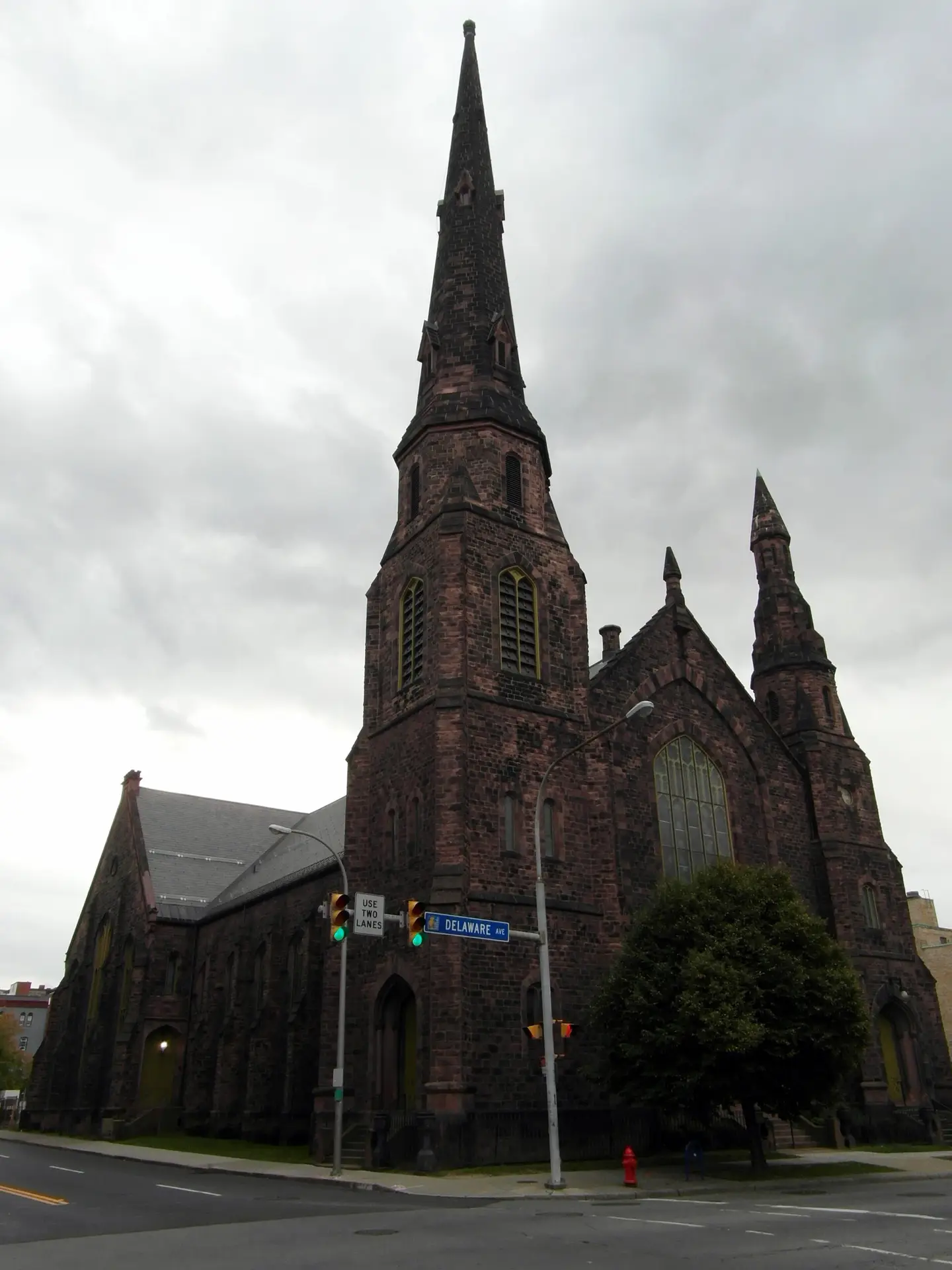
And it’s the city that, in 1970, produced Ani DiFranco — who didn’t just leave and get famous, but came back, founded Righteous Babe Records here, and bought a crumbling 19th-century Gothic church on Delaware Avenue and turned it into a working concert hall. That’s not a metaphor. That’s Buffalo. You don’t wait for someone to build you a stage. You save the church yourself.
So when two kids from Buffalo — John Rzeznik and Robby Takac, who started the Goo Goo Dolls here in 1986 and clawed their way out of the local club scene to genuine, “Iris”-on-every-radio stardom — when those two came home, the city didn’t see celebrities. It saw its own.
Which brings us to the rain.
1. Goo Goo Dolls — July 4, 2004, Niagara Square. It had to be this. Not because it’s the biggest name on the list — it isn’t — but because no show is more Buffalo than this one, and after everything above, you understand why. Two kids from the West Side who’d made it all the way came home and played for free, downtown, in front of City Hall, as part of the Uncle Sam’s Jam weekend. An estimated 60,000 people filled Niagara Square. The sky cleared just long enough for them to take the stage, then opened up again mid-set — and still nobody moved. They filmed it, released it as Live in Buffalo: July 4th, 2004, and in doing so caught something no arena show ever quite gets: an entire city standing in the rain for its own, because it was theirs, and it was free, and there was nowhere else any of them would rather have been. That’s not the greatest band in Buffalo history. It’s the greatest night. In a city that makes its own, the homecoming is always the headline.
Watch: “Iris,” live in Niagara Square, July 4, 2004.
The ones that just missed — and the shows only Buffalo could pull off
A top ten is an act of violence against a city’s memory. So here are the nights we couldn’t quite fit, several of which exist nowhere else on earth but here:
- The Grateful Dead at the Aud — May 9, 1977. Out of the Dead’s roughly dozen Buffalo visits, this Aud night occupies sacred ground for the faithful, a relic of the band’s mythologized spring ’77 run. It missed the ten only because its big brother got a live album.
- Crosby, Stills, Nash & Young at Rich Stadium — August 11, 1974. Their 1974 reunion-tour stop, landing in Orchard Park just a month after Clapton opened the building. The summer Rich Stadium announced itself.
- Rick James comes home — the 1982 homecoming, Buffalo. The funk king, returning to the city that raised him, for the kind of hometown celebration only Buffalo throws — equal parts concert and family reunion. No other city gets to claim this one.
- Ani DiFranco at Asbury Hall. When the woman who saved the building plays the building she saved — the restored Gothic church inside her Babeville complex on Delaware Avenue — it isn’t really a concert. It’s a homecoming with a deed attached. Pure, unrepeatable Buffalo.
- Thursday at the Square. Not one show but a thousand of them: the free downtown summer series that began in 1987 in Lafayette Square and became a civic ritual for decades, a standing weekly argument for living in this city, before it was reborn as Thursday & Main in 2016. Every Buffalonian of a certain age has a Thursday-night story.
- Music Is Art. The free festival Goo Goo Dolls bassist Robby Takac founded in 2003 to put instruments in the hands of the next generation of Buffalo kids — because in this city, the people who get out send the ladder back down.
- The Tragically Hip at Marine Midland Arena — 1996. Canada’s band, an hour’s drive from home, playing to a Buffalo crowd that loved them like their own. A reminder that this is a border city, and the music has always crossed both ways.
So that’s our ten — and our almosts. Now tell us we’re wrong, because we know you want to.
What got left off? Where’s your show? Did we underrate the Aud, blow the Dead ranking, forget the night that genuinely changed your life? Sound off in the comments — and this isn’t arguing for its own sake. Your picks decide our upcoming list of the Greatest Concerts in Upstate New York History. Buffalo just set the bar. Make your case.
The Greatest Concerts Ever is an ongoing Upstate Concerts series ranking the most legendary concerts across upstate New York — Buffalo, Syracuse, Rochester, Albany, Saratoga, and beyond. Next up: we head east.
🎫 Upcoming Shows in Buffalo & Western NY
The legends made history here — now go make your own.
Image credits: Highmark Stadium — Quintin Soloviev (CC BY 4.0); Buffalo Memorial Auditorium — Sam Wanamaker (CC BY 3.0); Rick James, 1984 — public domain; Ani DiFranco — Eric R. Bishoff (CC BY 3.0); Asbury Hall at Babeville — Reading Tom (CC BY 2.0). All via Wikimedia Commons.