For one weekend in August 1996, the ninth-largest city in New York State was a decommissioned Air Force base at the top of the map.
They came up the Northway in a slow river of taillights — 70,000 of them, more than four times the population of surrounding Clinton County — until the runways of the old Plattsburgh Air Force Base, silent barely a year since the Cold War base closed, filled with tents and tie-dye. Stores from the Canadian border south were bought clean out of beer, soda, water, and groceries. And at 3:30 in the morning, most of the crowd still awake, Phish climbed aboard a flatbed truck and let it roll slowly through the campground, playing a thirty-seven-minute improvisation to a crowd that walked, biked, and skateboarded alongside it under the stars.
It was called the Clifford Ball. It was the largest concert in America that year. And it happened here — in a corner of New York most of the state forgets exists until the snow starts.
That is the thing about the North Country. It is remote, it is cold, and it has quietly hosted some of the most improbable, most important nights in the history of American live music. A best-selling live album was recorded in one of its college gymnasiums. A twenty-two-year-old Bob Dylan sang here before most of the country knew his name. The Grateful Dead came exactly once, to the rink where the Miracle on Ice had happened. This is where we prove it.
The rules
A quick word on how this list works, because it is the same promise we have made in every chapter of this series. Every concert below actually happened, on the date we give, at the venue we name. No apocryphal “I heard Hendrix once played here.” No fan-forum legends we could not run down. Where the record is contested, we say so. These are verified nights, ranked. It is the latest stop in The Greatest Concerts Ever, after our chapters in Buffalo, Syracuse, Albany, Rochester, and Ithaca.
And because the North Country is not one town but a whole northern tier — Plattsburgh and Lake Placid, Potsdam and Canton, Watertown and the college towns between — a few venues recur here like characters in a novel. The SUNY Plattsburgh field house. Clarkson’s gymnasiums. And above all the Olympic Center in Lake Placid, a building famous for a hockey game that also, it turns out, threw one heck of a concert calendar. Let’s count down.
10. The Yardbirds — Clarkson College, Potsdam — March 29, 1968
They were six hours late, and it was snowing.
When the Yardbirds finally took a Clarkson stage at half past nine on a Friday night in late March 1968, only a couple hundred students had waited them out. What those students did not know was that they were watching a hinge in rock history. The guitarist was a twenty-four-year-old session ace named Jimmy Page, and this was the band’s final American tour. Within months Page would gather a new lineup, briefly call it the New Yardbirds, and then rename it Led Zeppelin. That night in Potsdam he pulled out a violin bow and drew it across his Telecaster during “White Summer” — the same trick he would soon make famous on “Dazed and Confused.” A future legend, bowing his guitar in a snowstorm, for two hundred people who stuck around. Only in the North Country.
9. Talking Heads — SUNY Plattsburgh — September 30, 1983
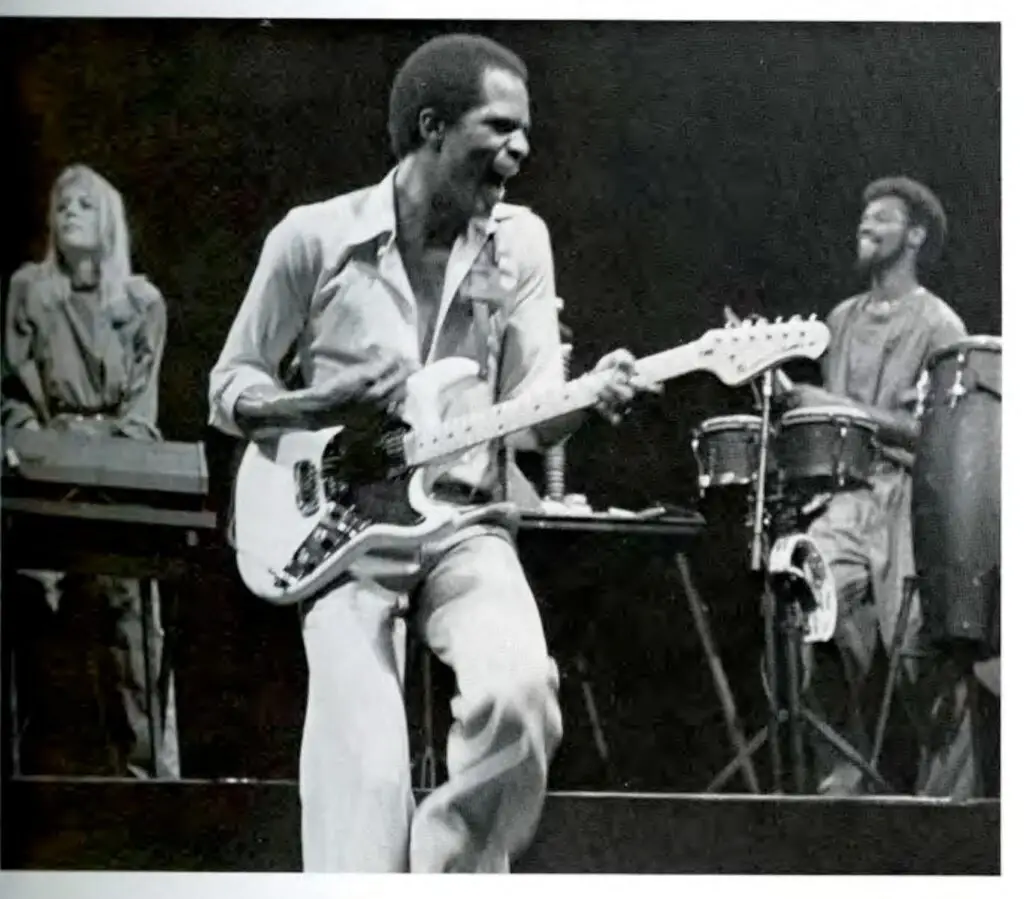
By the fall of 1983, Talking Heads were the most exciting live act in America, touring the Speaking in Tongues show that Jonathan Demme would immortalize as Stop Making Sense. They brought it to the SUNY Plattsburgh field house on September 30, David Byrne opening alone with “Psycho Killer” before the band filled in around him, song by song, exactly as the film would later stage it. For the 3,800 in the house there was a small piece of history: it was the first time the band ever performed “Pull Up the Roots” live — a song they would play only a handful of times ever. The next night they drove to Burlington. Plattsburgh got them first.
8. Kendrick Lamar — Jefferson Community College, Watertown — May 4, 2013
In the spring of 2013, a rapper from Compton was touring colleges on the strength of a debut studio album, good kid, m.A.A.d city, that critics were already calling a classic. His name was Kendrick Lamar, and on May 4 he played Jefferson Community College in Watertown. Five years later he would win a Pulitzer Prize for music — the first artist outside classical or jazz ever to do so. Watertown had him when he was still playing gymnasiums, and it belongs on this list as proof that the North Country’s concert history did not end when the arena-rock era did.
7. Billy Joel — Clarkson University, Potsdam — October 7, 1976
Billy Joel came to Clarkson’s Alumni Memorial Gymnasium in October 1976 as a talented cult act with a modest following and a new record, Turnstiles, that had not sold. He left New York the next year and made The Stranger, and everything changed forever. The Potsdam show sits right on that fault line — the last months before Billy Joel became Billy Joel, playing an engineering-school gym in the north woods. Clarkson, remarkably, made a habit of this: catching enormous talents on the way up. Joel is simply the most famous of them.
6. Chuck Mangione — 1980 Winter Olympics Closing Ceremony, Lake Placid — February 24, 1980
For seventeen days in February 1980, the entire world was watching Lake Placid. And when the Games closed, the soundtrack was homegrown. Chuck Mangione — the Rochester flugelhornist whose “Feels So Good” had made him one of the most recognizable musicians in America — had written the official theme of the Lake Placid Olympics, a soaring instrumental called “Give It All You Got.” He performed it live at the Closing Ceremony inside the Olympic Center as a global television audience watched, and played “Feels So Good” while Dorothy Hamill skated. An upstate musician, scoring the moment upstate stood at the center of the world.
5. Whitney Houston — Olympic Center, Lake Placid — July 8, 1987
Seven years after Chuck Mangione closed the Olympics there, the same Olympic Center hosted a very different kind of phenomenon. On July 8, 1987, Whitney Houston brought her Moment of Truth tour to Lake Placid at the absolute zenith of her powers — her second album had just detonated, minting number-one singles as fast as radio could play them. She sold the building out: eight thousand seats, gone. It remains one of the best-attended concerts in the arena’s history, and it is a necessary reminder that the North Country’s greatest nights were not only for the rock-and-jam crowd. For one July evening, the most famous voice on the planet filled the rink where the hockey team had shocked the Soviets.
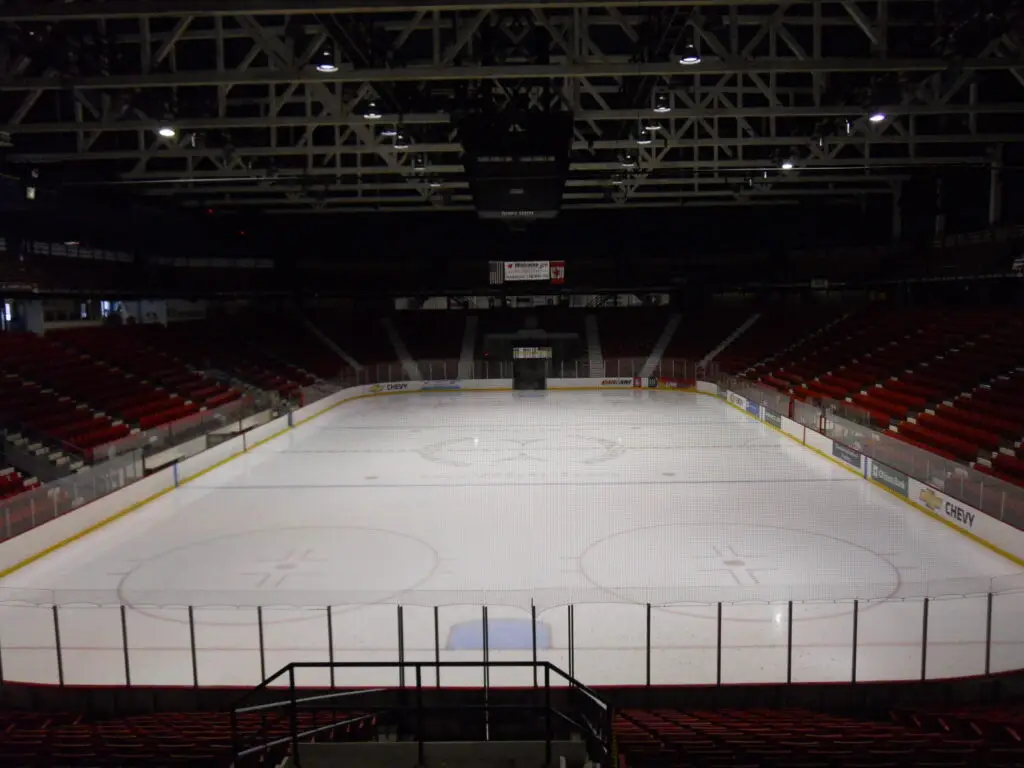
4. Grateful Dead — Olympic Center, Lake Placid — October 17, 1983
The Grateful Dead played Lake Placid exactly once, and their fans have never forgotten it. On October 17, 1983, the band brought its traveling carnival to the Olympic Center — the 1980 Miracle on Ice rink — and the Deadheads, being Deadheads, promptly rechristened the town by covering the “PL” on the Placid signs. For one night it was “Lake Acid.” The setlist has been passed around for forty years; the affection has not faded. Of all the arenas the Dead could have graced with their single North Country appearance, they chose the most famous small-town rink in America. It fits.
3. Bob Dylan — St. Lawrence University, Canton — November 26, 1963
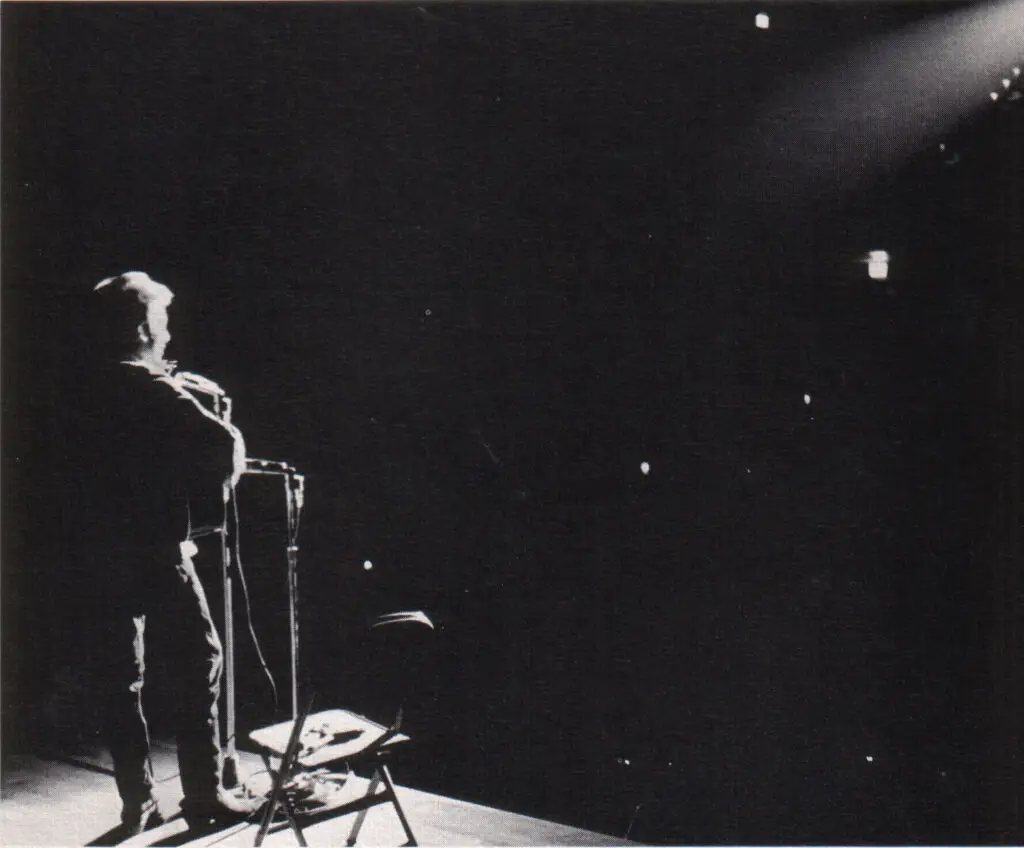
Just weeks before The Times They Are a-Changin’ announced him to the world, Bob Dylan was a twenty-two-year-old folk singer working the college circuit, and on November 26, 1963 — the week the country was still reeling from Dallas — he played St. Lawrence University in Canton. The date is confirmed in Dylan’s own official tour archive; photographs of the night ran in the university’s yearbook. Think about what that means: before he was the voice of a generation, before the electric turn, before the Nobel Prize, Dylan stood on a stage in the far north of New York and sang for a room of college students who had no idea what they were witnessing. That is the whole magic of this exercise, distilled into one night.
2. Peter Frampton — Memorial Hall, SUNY Plattsburgh — November 22, 1975
Here is a fact almost too good to be true: pieces of the best-selling live album in rock history were recorded in a college gymnasium in Plattsburgh, in front of fewer than a thousand people.
On November 22, 1975, Peter Frampton played Memorial Hall at SUNY Plattsburgh — student tickets two dollars, general admission four — with a mobile recording truck idling outside. It was one of only four concerts Frampton’s crew taped for a planned live record. When Frampton Comes Alive! arrived weeks later, it spent ten weeks at number one and became, for a generation, the best-selling live album ever made. And by the account handed down ever since — in the album’s own track credits, in the reference books, and from the fans who were in the room — two of its defining moments were captured that night in Plattsburgh: the tender hit “Baby, I Love Your Way,” and, astonishingly, the fourteen-minute talk-box epic “Do You Feel Like We Do” — the song that, more than any other, made Peter Frampton a superstar. Tens of millions of people own those performances. Most have no idea they’re hearing a concert from the top of New York. You have probably heard it yourself.
1. The Clifford Ball — Phish — Plattsburgh Air Force Base — August 16–17, 1996
And then there is the weekend that turned an abandoned airbase into the ninth-largest city in New York.
By the summer of 1996, Phish were the biggest band in the country you could still somehow have missed — a Vermont quartet who had built, one endless improvisation at a time, the most devoted audience in American music. They decided to throw themselves a party, and they chose the runways of the recently shuttered Plattsburgh Air Force Base, an hour from their Burlington home across Lake Champlain. They called it the Clifford Ball.
Roughly 70,000 people came. Tickets were twenty-five dollars for the whole weekend. It was, by the count of the day, the largest concert in North America that year — and, not incidentally, an economic lifeline worth an estimated tens of millions to a region gutted by the base’s closing. Phish played six full sets over two days. They ran an on-site radio station and staged art installations and sent stunt planes over the crowd. And in the small hours after the first night, they created the moment the whole festival is remembered by: the Flatbed Jam, a thirty-seven-minute instrumental performed from a truck bed as it rolled slowly through the sleeping campground, thousands of fans rising to follow it on foot through the dark.
The Clifford Ball was the first of the destination festivals Phish would become famous for, the template for everything after. It has been enshrined twice on official release, once as a Grammy-nominated DVD box. But no disc captures what it meant: that the biggest, strangest, most joyful gathering in American live music that year happened not in a stadium in a major city but on a windswept flightline at the top of New York. Five years earlier, Phish had played a small SUNY Plattsburgh auditorium to a college crowd. Now they had built a temporary city. There is no better single answer to the question this series keeps asking — what is the greatest concert your corner of New York ever hosted? — than the Clifford Ball.
A region that makes its own
The North Country does not only host greatness; it grows it. Bob Mould, the ferocious guitarist and songwriter behind Hüsker Dü and Sugar and one of the architects of American alternative rock, was born and raised in the farm town of Malone. The Bouchard brothers — Albert and Joe, founding members of Blue Öyster Cult — came up in Watertown and nearby Clayton, turning a family barn into a teenage dance hall before they wrote “(Don’t Fear) The Reaper”; when their old band played Clarkson an hour from home, it was a homecoming.
And then there is the Crane School of Music at SUNY Potsdam, founded in 1886 as the first institution in America devoted to training school music teachers — older than Juilliard, and arguably more influential on how the whole country learned to sing. Crane has sent sopranos Renée Fleming and Stephanie Blythe and Broadway’s Lisa Vroman out into the world, and when Lake Placid needed a chorus and orchestra for its Olympics, Crane supplied them. Even Lana Del Rey spent her childhood up here, raised in Lake Placid before the world knew her name. The North Country makes its own, and then it lets them go.
The ones that just missed — and the shows only the North Country could pull off
No list of ten could hold all of it. In 1922, one of the greatest pianists who ever lived, Sergei Rachmaninoff, performed at the Olympic Theatre in Watertown — a classical credential most cities twice its size cannot claim. In 1998, the Grateful Dead’s tribe pitched its tents at Crete Park in Plattsburgh for the Gathering of the Vibes, the region’s second great jam-nation pilgrimage. For decades, the volunteers of Watertown’s DPAO brought Johnny Cash, Chicago, and Foreigner to the county fairgrounds, one improbable summer at a time. Clarkson and Potsdam quietly booked the jazz gods — Sonny Rollins, Thelonious Monk, Duke Ellington, Dizzy Gillespie, Dave Brubeck. moe. built a winter festival, snoe.down, inside the Olympic venues, letting fans skate while the band played. And in downtown Plattsburgh, the Monopole has poured drinks since 1897 and grown its own jam heroes, the Ominous Seapods, in the back room.
Our favorite near-miss never happened at all. In the spring of 1970, promoters announced a three-day “Woodstock sequel” for the tiny hamlet of Churubusco, with Chuck Berry, Steppenwolf, Sly and the Family Stone, and B.B. King reportedly signed and as many as 200,000 expected. The town passed an emergency ordinance and killed it. The North Country’s biggest festival of 1970 is the one that got away — which somehow feels exactly right for a place this proud, this stubborn, and this full of stories.
We know we left something off. That’s the point. Tell us what we got wrong — your picks help decide our upcoming ranking of the Greatest Concerts in Upstate New York History. Find us on Facebook and Instagram and make your case.
The series so far: Buffalo, Syracuse, Albany, Rochester, and Ithaca. The story continues.
Image Credits
Hero artwork: Upstate Concerts. Bob Dylan at St. Lawrence University, November 26, 1963 — from the 1964 St. Lawrence University yearbook, via Wikimedia Commons (CC BY 2.0). Olympic Center (Herb Brooks Arena), Lake Placid — photo by KevinTR, public domain (CC0), via Wikimedia Commons. Talking Heads at the SUNY Plattsburgh Field House, September 30, 1983 — from The Cardinal, 1984 (SUNY Plattsburgh student yearbook), via the Internet Archive.