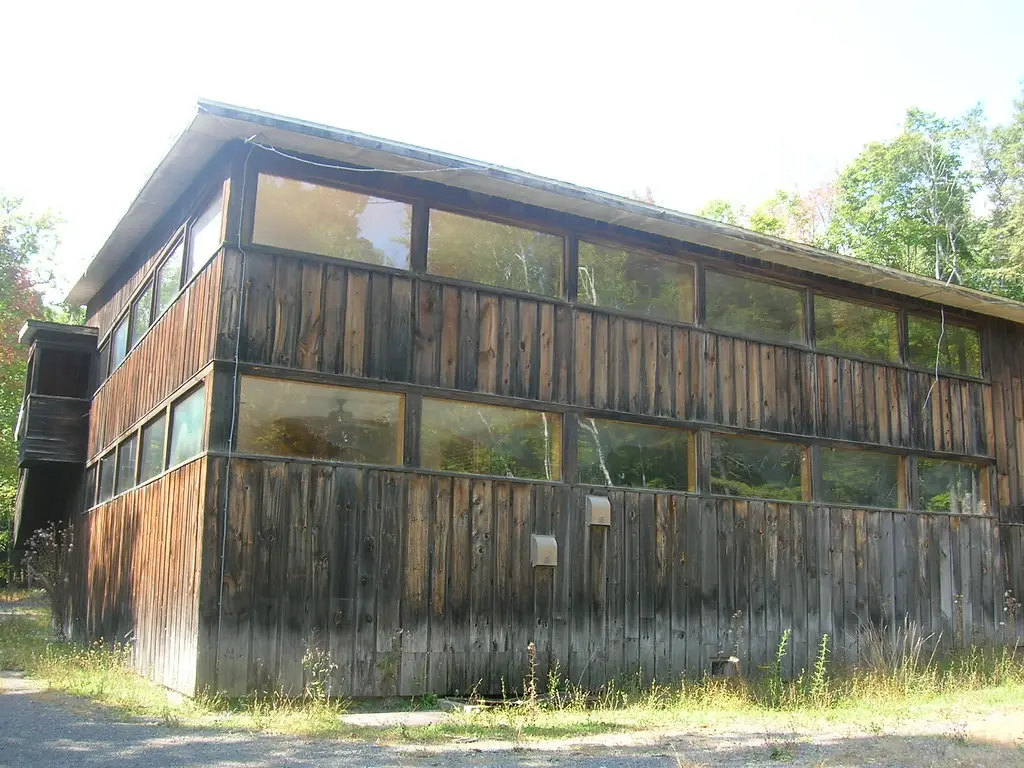
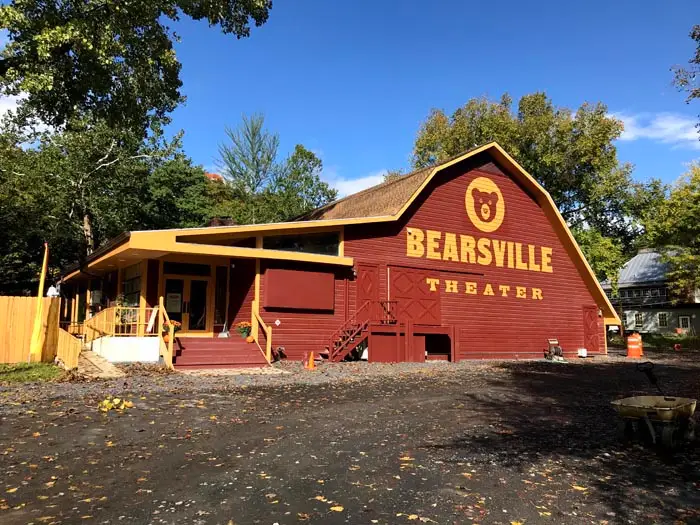
On a clear afternoon in May 2026, you can pull off Route 212 a few miles west of the village of Woodstock, park in a gravel lot beside a low wooden building, and walk into the Bearsville Theater. The room smells faintly of fresh-cut pine and old beer. There’s a stage at one end, a balcony at the other, and a bar that runs along the side. If you happened to wander in on a Sunday in late May, you would have caught the Bearsville Bluegrass Festival — the Catskill Mountain String Band on a holiday-weekend bill, in the room next to a restaurant called Bear Cantina, across a footbridge from a recording studio that, depending on the week, might be tracking somebody you’ve heard of.
It looks like a charming Hudson Valley music venue. It is one. What it does not tell you, anywhere on the wall, is that it is also one of the most important rooms in the history of American rock and roll.
This is where Meat Loaf made Bat Out of Hell. This is where R.E.M. made Green, then came back and made significant portions of Out of Time and Automatic for the People. This is where Jeff Buckley made Grace. This is where Dave Matthews Band made Under the Table and Dreaming and Crash. This is where Natalie Merchant made Tigerlily, Blues Traveler made Four, and the Rolling Stones spent twelve days in the spring of 1978 figuring out how to play their new record live.
And almost nobody who didn’t already know would ever guess. Bearsville is the sleeper-cell counter-history of Woodstock — the studio-side answer to a festival mythology that long ago drifted into legend. While the field at Max Yasgur’s farm sixty miles south was being annotated and curated and turned into a museum at Bethel Woods, the actual sustained creative work — the long, patient labor of making records that would still get played in 2026 — was happening here in the woods, mostly in private, under the quiet hand of one of the most powerful men in twentieth-century music.
His name was Albert Grossman, and Bearsville was his idea.
The Architect of the Scene
Albert Grossman was Bob Dylan’s manager. He was also, at various times, the manager of Peter, Paul and Mary; of Janis Joplin; of The Band; of Odetta; of Gordon Lightfoot; of Richie Havens. If you sketched a map of folk-rock in the 1960s, Grossman’s office sat at roughly the center of it. He was the man who negotiated the room those artists would occupy in the culture, and he was famously, ferociously good at the job.
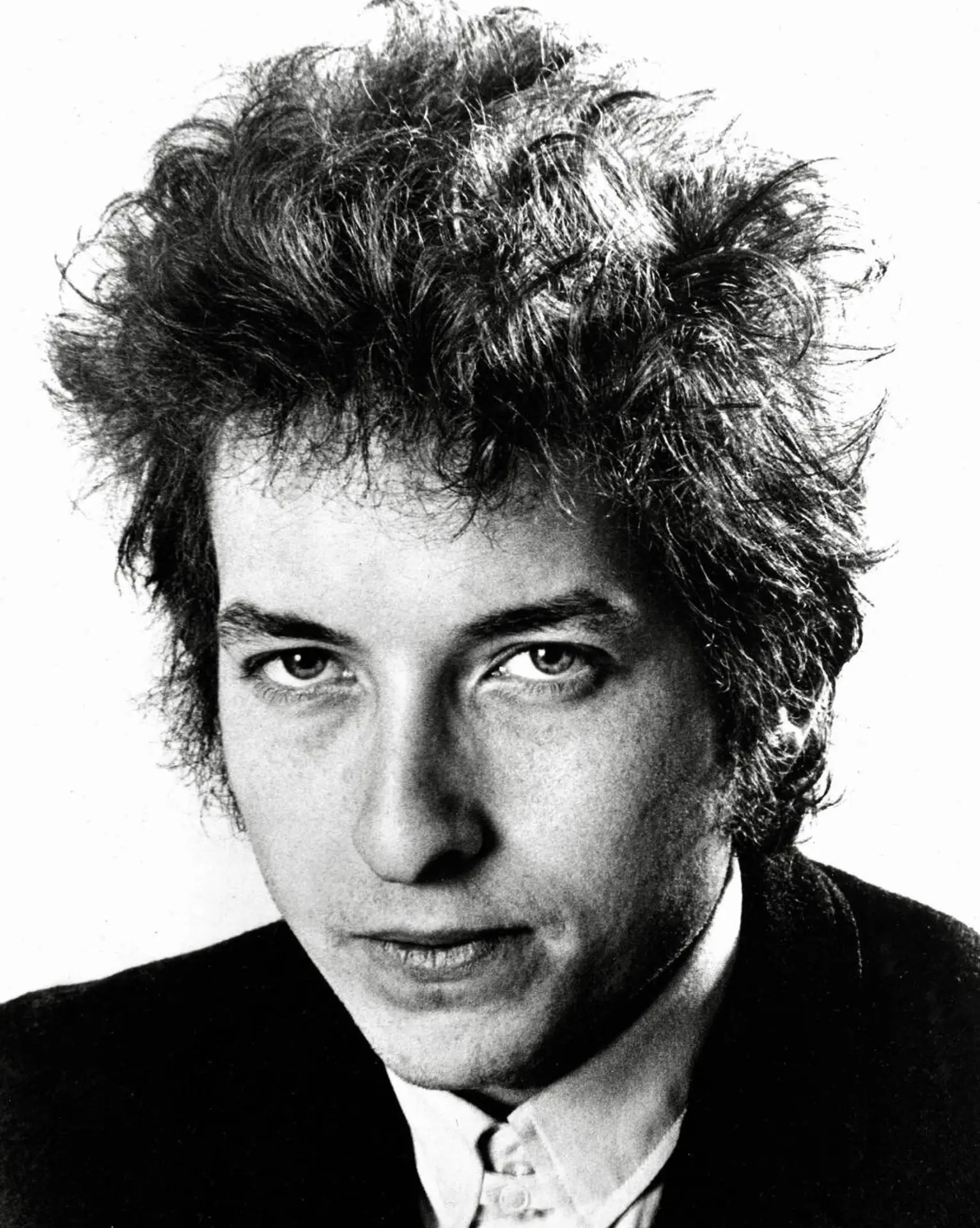
In the early 1960s, when Dylan and the New York folk scene were beginning to outgrow Greenwich Village, Grossman started buying land in the hamlet of Bearsville, just west of the town of Woodstock. He brought Dylan up. He brought The Band up. He envisioned something more ambitious than a country house: a creative compound where his artists could live, eat, rehearse, record, and avoid the worst of the music industry. Studios. A record label. A theater. Restaurants. Housing. The Hudson Valley as alternative to the Manhattan grind.
In 1969 — the same summer the festival bearing the town’s name was happening on a dairy farm in Bethel — Grossman opened Studio B at Bearsville. The architect was Robert Hansen, whose name does not appear on a tour route anywhere in the Hudson Valley but probably should. The room would later be modified by John Storyk of the Walters-Storyk Design Group, who would go on to design or rework hundreds of the most consequential studios on earth, and by the legendary acoustician George Augspurger.
A second, larger room — Studio A — followed: a 2,400-square-foot tracking floor with a 35-foot ceiling, originally intended as a working room for Robbie Robertson and Garth Hudson of The Band. By the early 1970s, Grossman had what he wanted: a residential studio in the woods, world-class on the technical sheet, run by a manager who already represented half the artists you would want to put in front of the microphones.
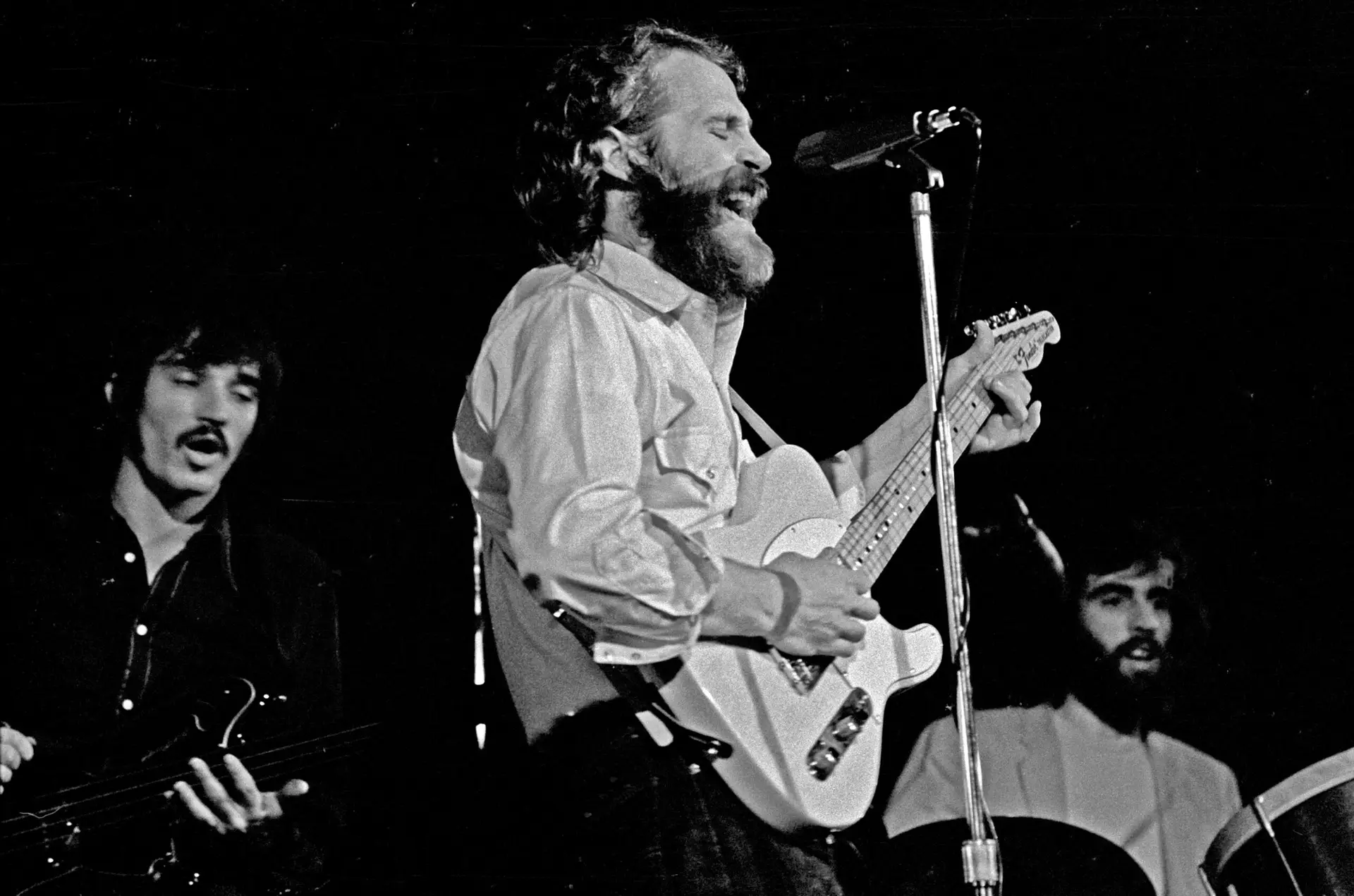
The young man he hired as staff engineer would become, in his own right, one of the more important figures in the room: Todd Rundgren, who recorded his first three solo albums at Bearsville and then spent the next two decades producing other people there. Rundgren is the through-line. If Grossman was the architect of the scene, Rundgren was the contractor — the one who showed up every day and built the records.
The Run
For thirty-five years, the catalog rolls.
The headline act, the one that funded most of what came after, arrived in November 1977. Meat Loaf and Jim Steinman had been working on a record at Bearsville since 1975 — Rundgren producing — and what came out of those sessions was Bat Out of Hell: an operatic, theatrical, completely uncategorizable album that radio programmers initially refused to touch and which has now sold somewhere in the neighborhood of forty-three million copies worldwide. It is one of the best-selling albums of all time, full stop. Almost every one of those copies was made of music tracked in a room in the woods outside Woodstock, New York.
In May and June of 1978, the Rolling Stones rehearsed at Bearsville for twelve days — May 27 through June 8 — preparing for the U.S. tour behind Some Girls. The Stones were the biggest rock band in the world, and they came to a converted barn in the Hudson Valley to figure out how to play “Beast of Burden” in front of stadiums. They could have gone anywhere. They went to Bearsville.
The 1980s brought the Pretenders. Marshall Crenshaw. Suzanne Vega. Joe Jackson. Tesla.
Then, in 1988, R.E.M. arrived to record Green. The sessions lasted long enough that Bearsville became something like a creative second home for the band; significant work on Out of Time (1991) and Automatic for the People (1992) was tracked there too. The British rock historian Barney Hoskyns has called this stretch — three of R.E.M.’s most consequential albums coming out of one studio in upstate New York — “certainly a high-water mark in the studio’s life,” and it is hard to argue. Most rooms get one of an artist’s masterpieces. Bearsville got three.
In late 1993 and early 1994, a 27-year-old singer named Jeff Buckley moved into Bearsville with his band and producer Andy Wallace and made Grace. He would die three years later, before he ever finished a second studio album. Grace has since become one of the most quietly influential records of its decade, the kind of album every serious singer-songwriter under forty has heard at least once. It was made here.
The mid-1990s catalog reads like a separate small museum.
Blues Traveler’s Four (1994), the album that broke the band wide open. Dave Matthews Band’s Under the Table and Dreaming (1994) and Crash (1996), both produced by Steve Lillywhite. Natalie Merchant’s Tigerlily (1995), her first solo record after 10,000 Maniacs and a commercial breakthrough nobody at her label had quite predicted. Phish, Rush, Faith No More, the Branford Marsalis Quartet — all passing through, year after year, working a room that had quietly become one of the country’s most reliable hit factories without ever asking to be famous.
If you ask me what makes a studio important, it is this: the artists who could afford to record anywhere keep choosing the same room. By that test, Bearsville was as important as any room in America for the better part of two decades.
Sally’s Stewardship
In January 1986, Albert Grossman died of a heart attack on a flight to London. He was 59. He had built one of the more remarkable creative ecosystems in American music, and he was, by most accounts, just getting started on what he wanted Bearsville to become.
His widow, Sally Grossman — born Sally Ann Buehler in Manhattan in 1939, married to Albert in 1964, famously photographed in a red jumpsuit on the cover of Dylan’s Bringing It All Back Home — took over. She ran Bearsville Records, the two restaurants, the studios, and the property itself for the next two decades. The room kept working. The R.E.M. albums, the Buckley album, the DMB albums, the Merchant album — all of those were tracked under Sally’s stewardship. She also took her late husband’s long-deferred dream of a working theater on the property and finished it, refurbishing the barn into what became the Bearsville Theater.
But the music industry was changing under her. The 1990s major-label budgets that had supported a residential studio in the woods didn’t survive the early-2000s collapse of the album business. In 2005, the original Studio A and B building was sold; Sally repurposed components of those rooms into a smaller facility called Bearsville at Turtle Creek. By 2007, all of the complex’s properties had been sold off.
Sally Grossman died at her home in Bearsville on the night of March 10–11, 2021. She was 81. The properties she had spent thirty-five years stewarding were, by then, in other hands — and the theater complex, in particular, had been dark for the better part of a decade.
The Lost Decade
If this story ended in 2007, it would still be a great story. Most great American studios have a final chapter that runs roughly the same way: the budgets dry up, the room can’t pay its electric bill, the building gets sold to a developer or simply allowed to rot. The Hit Factory closed. A&M Studios closed. Studio at the Church closed. Of the great residential complexes of the 1970s and ’80s, almost none remain in operation as their original owners imagined them.
For most of the 2010s, that was Bearsville’s story too. The theater was largely dark. The buildings were taking on water. The catalog was a thing you read about on Wikipedia. The road past the property was the same beautiful Hudson Valley road it had always been, but if you turned in there was less and less to see. Locals will tell you it felt like watching the lights go out on a place that had once felt permanent.
This is normally where the history piece ends, with a respectful paragraph about what the room had meant and a wistful sentence about what the property is being turned into now. Condominiums, usually. Or a brewery. Or nothing.
Bearsville got a different ending.
Lizzie Vann
In August 2019, a British entrepreneur named Lizzie Vann purchased the Bearsville Theatre complex for $2.5 million.
Vann was an unlikely buyer. She had founded Organix, a U.K. organic baby-food company, and sold it to the Hero Group in 2008. She held an MBE for Services to Children’s Food. She had not previously owned a music venue. But she had grown up loving the music that came out of Woodstock, and when she came to look at the property she understood what she was looking at. “I knew about the town,” she told Chronogram in 2020, “because The Band and Dylan and all of this other music I’d loved was connected to it.” Her stated ambition was modest and revealing: “We really want Bearsville to be a community, in the true sense of the word.”
What followed was not a cosmetic refurbishment. Over the next several years — much of it through the disruption of the pandemic — Vann poured roughly $6.5 million in renovation work into the complex, on top of the $2.5 million purchase: roof repairs, structural work, mechanical systems, the theater interior, the restaurants, the recording facility, the housing, the surrounding park. Total investment, by the time the project was substantially complete, was somewhere around $9 million.
The complex reopened as Bearsville Center. The theater hosts concerts year-round, programmed in significant part by Peter Shapiro’s DayGlo Presents — Shapiro being the same New York promoter behind Brooklyn Bowl and the Capitol Theatre in Port Chester, which is roughly the right pedigree for the room. The restaurants run. The bar runs. The grounds hosted a Memorial Day weekend Bluegrass Festival in 2026. And — this is the part that should matter most to anyone who cares about the history — the recording studios are working again, operating on the property as a commercial facility called Utopia Studios.
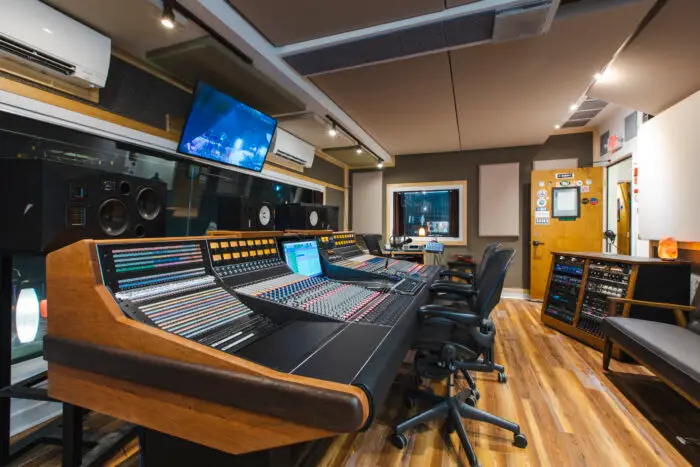
That last sentence took me a long time to get to in writing this piece, because for most of the past two decades it would not have been true. There is a working tracking room on this property right now. Records are being made there. The lineage that runs from Stage Fright through Bat Out of Hell through Grace through Tigerlily is, technically and physically and against every reasonable expectation, unbroken.
On January 20, 2026, Vann announced that she had listed the entire complex for sale at $7.995 million. The reason, in her own words, was not crisis but completion: “My job here is done. The Bearsville Center is in perfect shape, thriving with concerts, housing, dining, and a world-class recording studio.” She is moving on to a redevelopment project at the former Woodstock library and funeral home site, intended to add affordable housing and an in-town park. Tenants — the studio, the restaurants, the bar — are protected on existing leases regardless of who buys.
Whoever buys it next inherits one of the most consequential rooms in American music, fully functional, with a paying-customer infrastructure already wrapped around it. That is not a sentence anyone could have written about Bearsville in 2014.
What It Means Now
Here is the connection across eras that I keep coming back to, and the one I think most rewards the trip if you make it.
The festival in Bethel happened over four days in August 1969. It was extraordinary, and it was also, by its own internal logic, an event — a thing that began and ended and could only really happen once. Most of Upstate New York’s relationship with the 1969 mythology is a relationship with a moment that is over. Bethel Woods, the museum, the hill where Hendrix played the anthem at dawn — these are beautifully maintained sites of memory, and they should be visited, and they are not the same thing as a working music room.
Bearsville opened that same summer. It is still open. It is operating. You can buy a ticket to a concert there next month. You can record an album there next month. The sleeper-cell counter-history of Woodstock turns out to be the part that didn’t end.
If you are putting together a Hudson Valley music day — and you should — the real Woodstock pilgrimage is not the festival site sixty miles south. It is a loop: Bearsville Center for the theater and the studio and lunch at Bear Cantina; Levon Helm Studios on Plochmann Lane in Woodstock proper, where the Midnight Ramble still happens in the room where Music from Big Pink was demoed; and a slow drive past the pink house in Saugerties itself, which is a private home and which you should look at respectfully from the road and leave alone. Three rooms. Six miles, give or take. Sixty years of records.
The festival, with all due respect, is the part of this story everyone already knows. The studio is the part that has been hiding in the woods the whole time. For now, the lights are on. Somebody is tracking right now. And the building is, as of this writing, for sale.
Go listen.
Disclosure: Some links in this article are affiliate links. Upstate Concerts may earn a commission on ticket purchases at no additional cost to you.