There is a stretch of gently sloping farmland in the hamlet of Bethel, in Sullivan County, New York, that has been photographed more than almost any other 37 acres in the country — usually from a helicopter, usually showing a bowl of grass filled with several hundred thousand people who all showed up for the same three days in August 1969. I have stood at the top of that bowl more times than I can count, and it still does something to you. The land remembers. It has to. Nothing else that has ever happened on it has come close to what happened there first.
Today that bowl sits below the Pavilion Stage of Bethel Woods Center for the Arts, a modern amphitheater that opened in 2006 on the same fields where Max Yasgur once milked cows and, for one long weekend, hosted the Woodstock Music and Art Fair instead. Two eras, one piece of ground. This is the story of both.
Max Yasgur’s Farm, August 1969
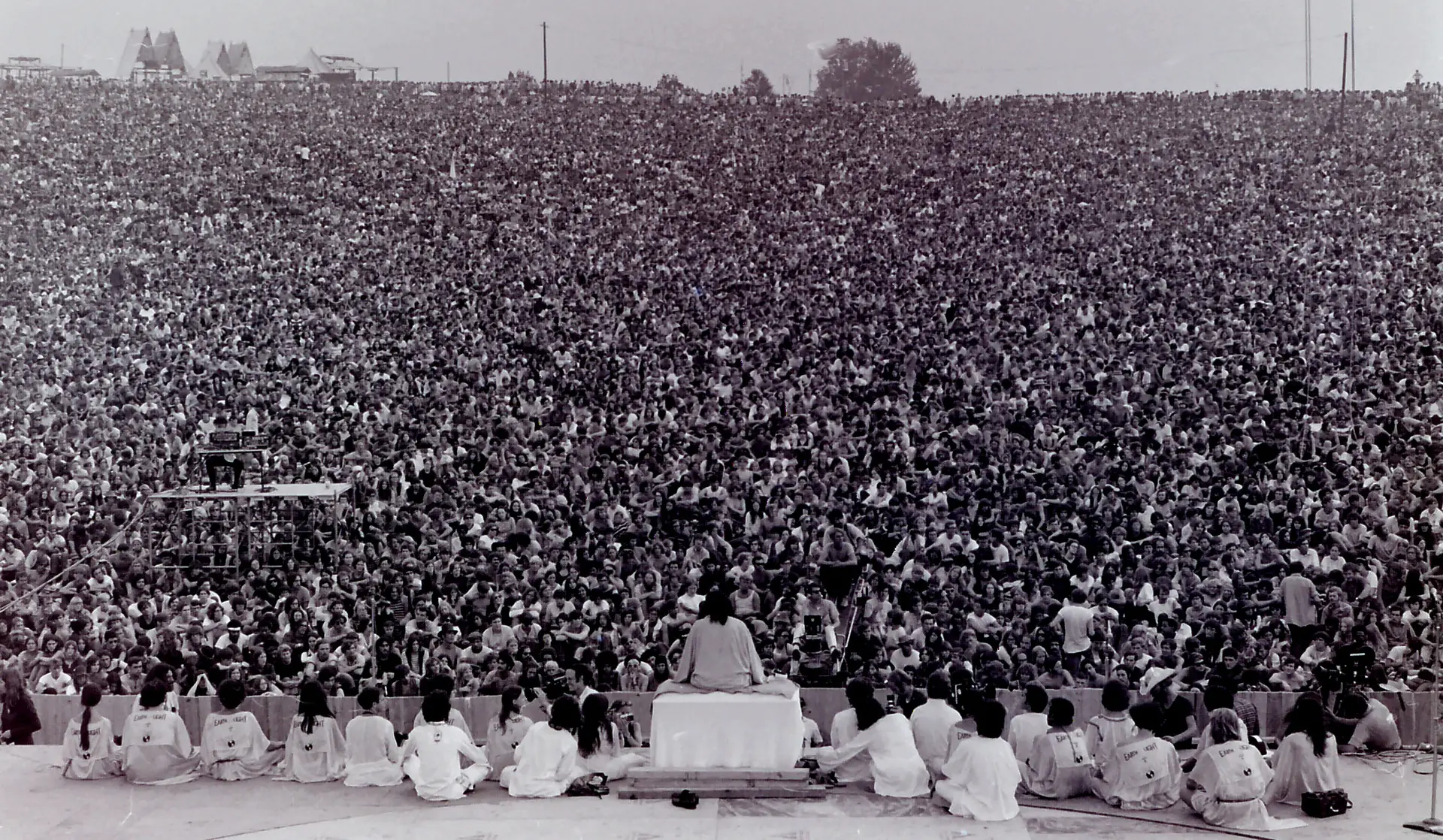
The Woodstock Music and Art Fair ran August 15 through 18, 1969, on Max Yasgur’s dairy farm in Bethel — not the town of Woodstock itself, some 60 miles away, which had already turned the festival down. Somewhere between 400,000 and 500,000 people showed up for a festival permitted for a fraction of that number, turning the Sullivan County countryside into what was, for three days, one of the largest gatherings in American history.
Richie Havens opened the festival — not by design, but because the band originally slated to go first, Sweetwater, got stuck in traffic after police held them up en route to the site. What followed became the defining document of a generation: Santana’s breakout set, delivered, by Carlos Santana’s own later account, while he was riding out mescaline in front of hundreds of thousands of strangers. The Who’s set, interrupted mid-song when Abbie Hoffman grabbed a microphone to make a political statement, only for Pete Townshend to shove him off the stage. Creedence Clearwater Revival playing well past midnight into the small hours of Sunday morning. Janis Joplin, delayed for hours behind schedule, finally taking the stage around 2 a.m. Sunday and closing with “Ball and Chain.” Sly and the Family Stone turning a 4 a.m. slot into one of the most electric performances of the weekend, driving a half-asleep, mud-caked crowd to its feet for “I Want to Take You Higher.”
And then there was Jimi Hendrix, who by rights should have closed the festival Sunday night but instead, thanks to a schedule pushed hours behind by rain, took the stage at 8:30 Monday morning to an audience that had shrunk from an estimated peak of 450,000 down to roughly 30,000 die-hards who simply hadn’t left. What he played that morning — a solo, distorted, incendiary reading of “The Star-Spangled Banner” worked into an extended set — has outlived nearly everyone who was there to hear it live. It is still the single most reproduced piece of music to come out of that weekend, and it happened on the same grass that today sits just below Bethel Woods’ lawn seating.
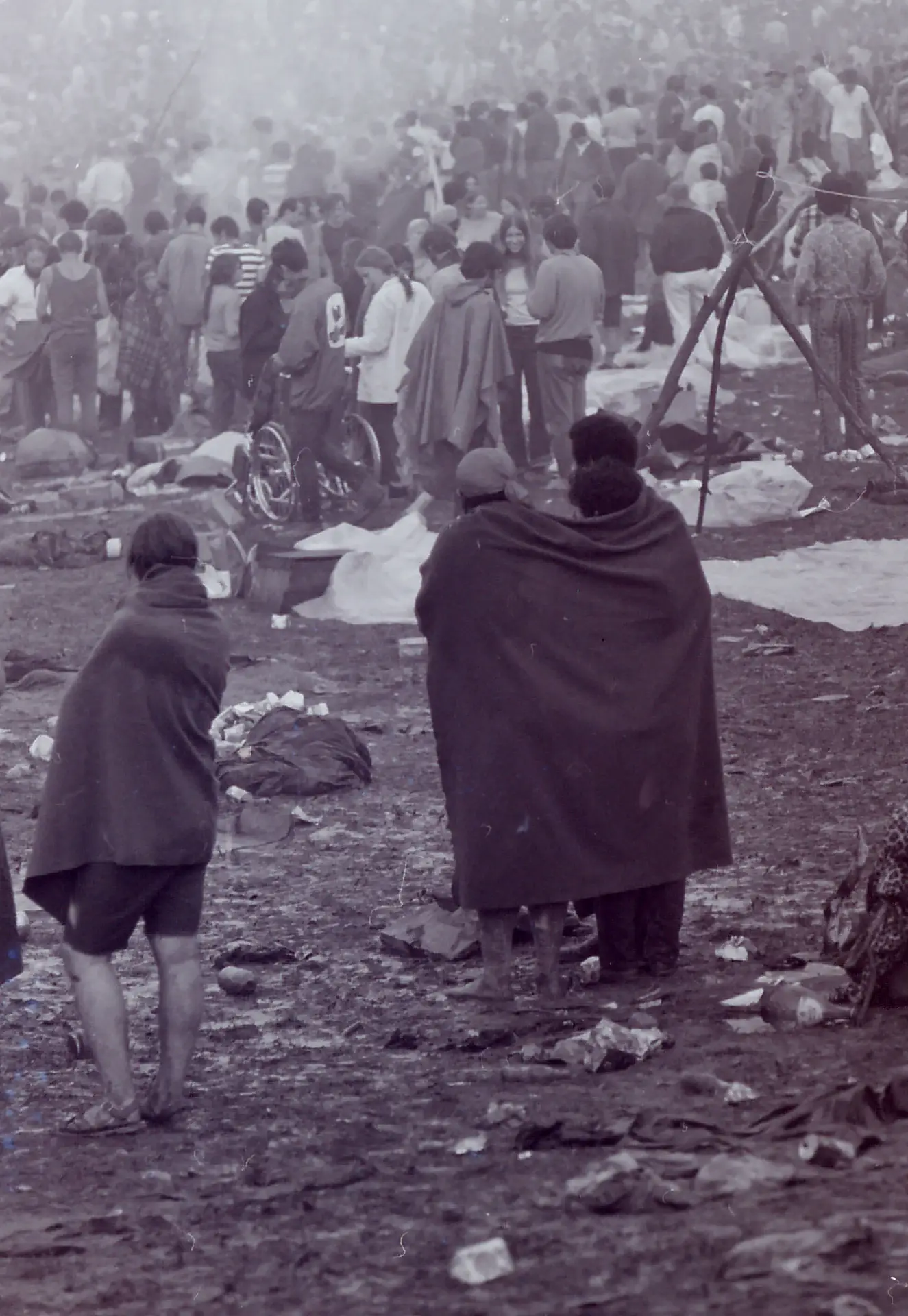
The festival wasn’t without its costs. Rain turned the fields to mud. Roads for miles around locked into gridlock. Three people died over the course of the weekend — two from drug overdoses, and one seventeen-year-old run over by a tractor while sleeping in a nearby hayfield. It was chaotic, undersupplied, and by any promoter’s math, a logistical failure. It was also, unmistakably, something that changed how an entire generation understood what a concert could be.
From Dairy Farm to Amphitheater
For nearly three decades after 1969, the Yasgur land passed through private hands, a pilgrimage site with no official infrastructure — fans would simply pull off the road and walk into the field. A modest monument marking the festival site was installed in 1984, long before anyone had built anything more permanent around it.
That changed because of one man. Alan Gerry, a Sullivan County native who built and sold the cable television company Cablevision Industries, created the nonprofit Gerry Foundation in 1996 with a mission to revitalize the local economy. That same year, the foundation purchased the original 37-acre festival field along with hundreds of surrounding acres, with a long-range plan to build something permanent on the site. Planning began in 2002 with architectural firm DLR Group, construction started in 2004, and on July 4, 2006, the Bethel Woods Center for the Arts opened with a performance by the New York Philharmonic — a $150 million transformation of Yasgur’s old dairy land into a purpose-built performing arts campus.
The symbolism arrived fast. On August 13, 2006, just weeks after opening, Crosby, Stills, Nash & Young played the new Pavilion Stage in front of 16,000 fans — thirty-seven years after their own legendary Woodstock set — and closed their encore with the song “Woodstock” itself. It is hard to imagine a cleaner handoff between what the ground used to be and what it was becoming.
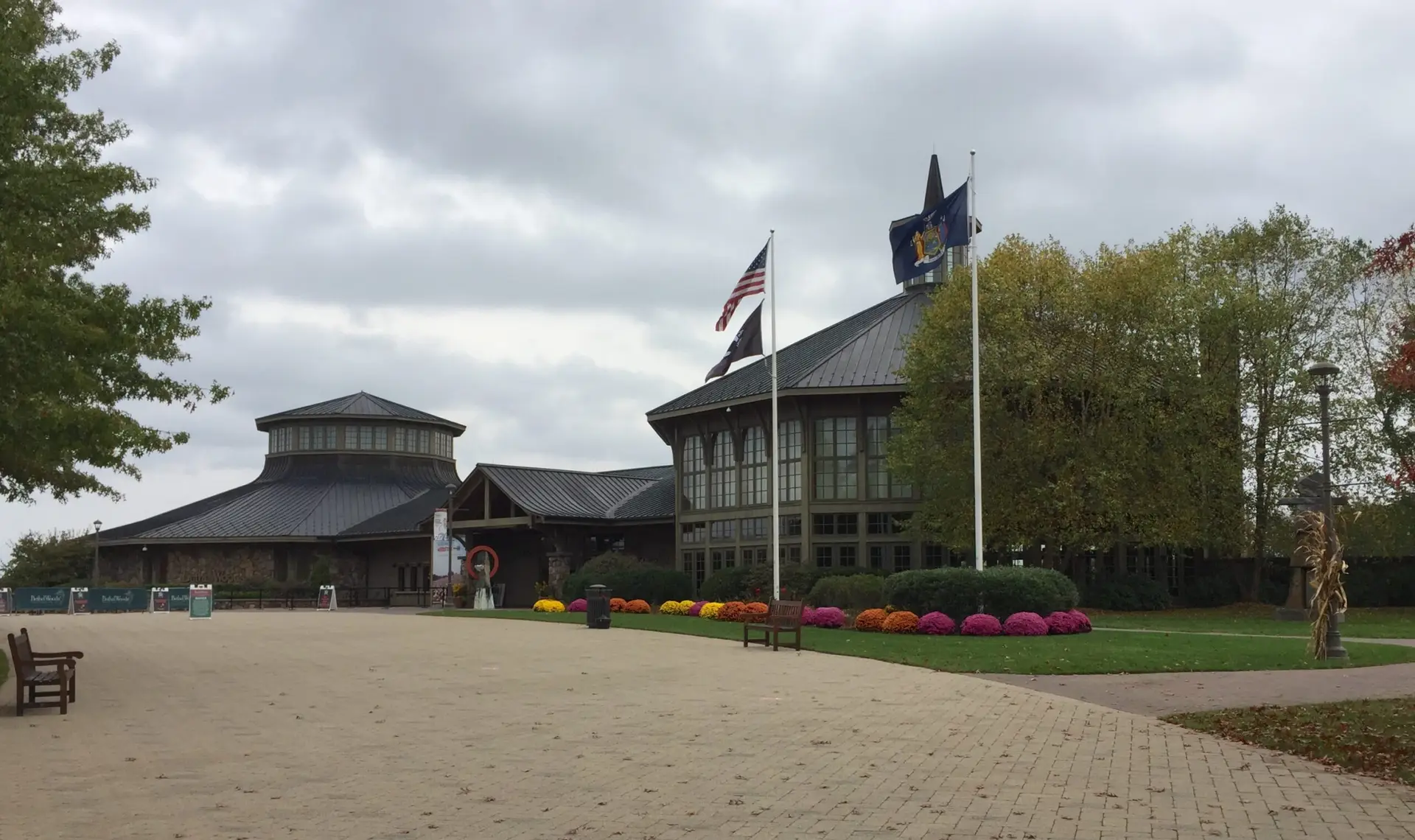
The museum came two years later. The Museum at Bethel Woods opened in June 2008, with permanent exhibits on the 1960s, the festival itself, and the cultural aftershocks of “three days of peace and music.” Today the full campus includes the 4,500-seat covered Pavilion with room for another 10,500 on the lawn, a smaller Terrace Stage, an indoor Event Gallery, and — perhaps most remarkable of all — the original Woodstock Festival Field itself, preserved and still used for gatherings that can hold up to 30,000 people. You can stand on the actual dirt.
Fifty Years Later, Same Field
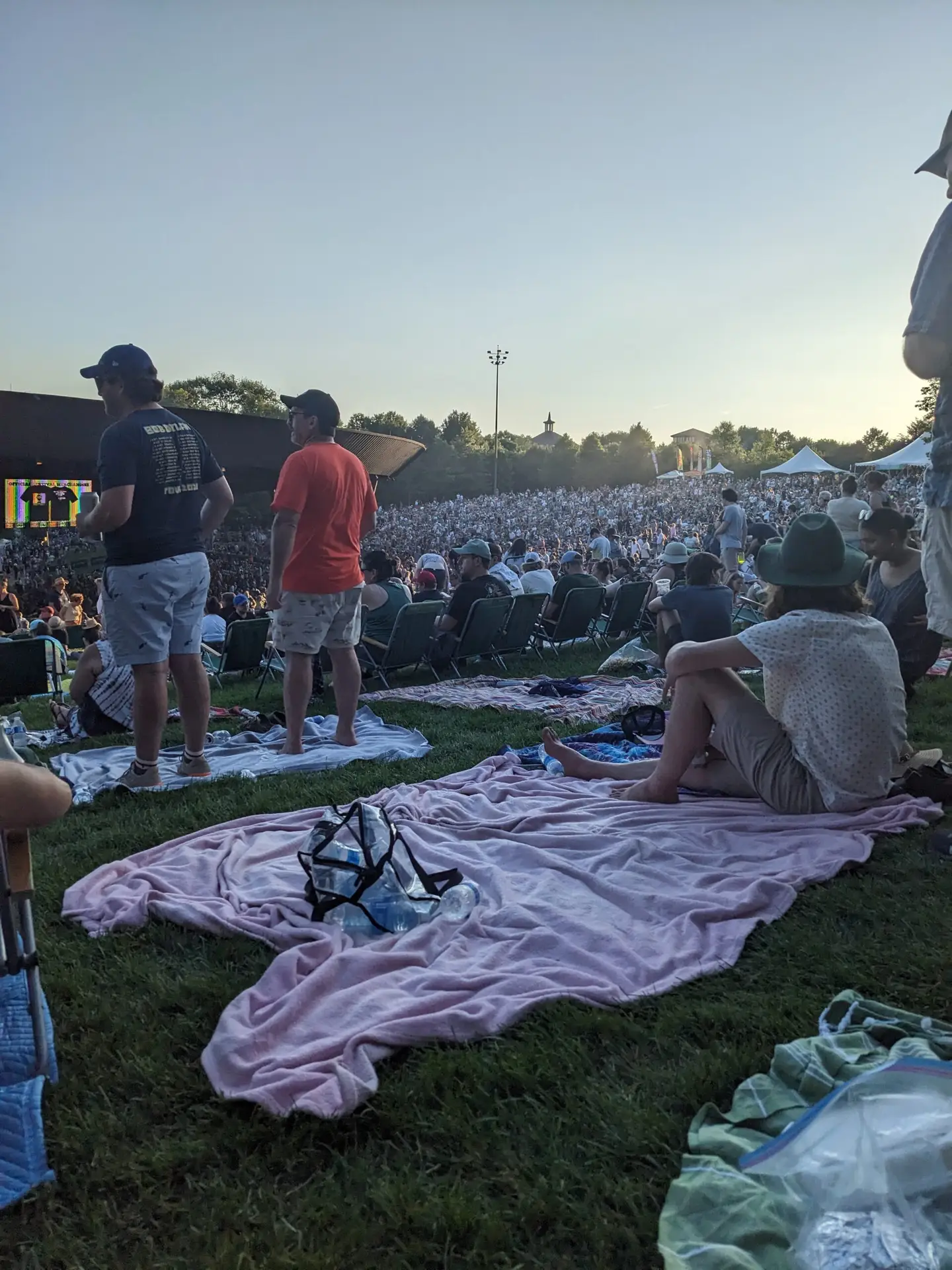
The center marked the 50th anniversary of Woodstock in August 2019 not with a full-scale festival revival, but with a deliberately scaled-back weekend on the original field: a screening of “Woodstock: The Director’s Cut” on August 15, Blood, Sweat & Tears and Edgar Winter opening for Ringo Starr & His All-Starr Band on August 16, Santana and the Doobie Brothers on August 17, and John Fogerty closing the anniversary out on August 18 — joined, notably, by original Woodstock performers returning to the exact ground where they’d first played. It was a quieter, more curated echo of the original chaos, and it worked precisely because it didn’t try to recreate 1969. It let the field do the talking.
That has, in a sense, become the whole premise of Bethel Woods: a working amphitheater that books a full contemporary summer season — Bethel Woods’ upcoming concert calendar runs the full range of touring rock, country, and legacy acts — while never letting anyone forget what came before it. The museum sits a short walk from the Pavilion. The original field is still there, un-paved, un-developed, doing what it has always done: holding people together for a few hours at a time and sending them home changed.
I have interviewed people who were seventeen years old on that hillside in August 1969, and I have stood next to twenty-two-year-olds pulling into the same parking lot for a show fifty-five years later who had no idea they were parking where the mud used to be. Both things are true about that ground at once. That is what makes Bethel Woods unlike any other venue in this region, or maybe in the country: it is not merely built near history. It is built on it, still standing on the exact spot where somebody once decided a farmer’s field could hold half a million people and, improbably, mostly held.
Photo & Video Credits
- Photo: Wikimedia Commons (CC0 / public domain)
- Photo: Mark Goff / Wikimedia Commons (public domain)
- Photo: Mark Goff / Wikimedia Commons (public domain)
- Photo: Sean Barnett / Wikimedia Commons (CC BY-SA 4.0)
- Photo: Artaxerxes / Wikimedia Commons (CC BY 4.0)
- Video: Bethel Woods Center for the Arts (official).