
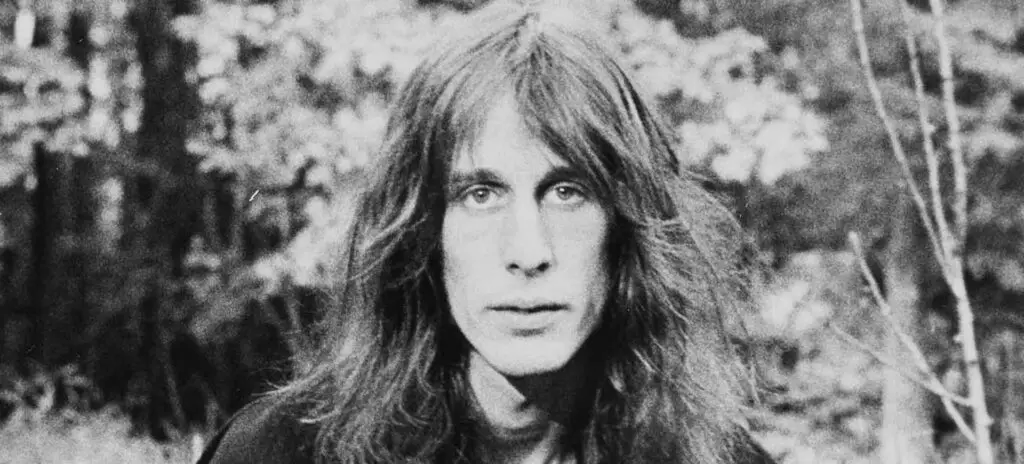
Todd Rundgren is one of the most creatively restless figures in the history of popular music — a singer, songwriter, multi-instrumentalist, producer, and technological pioneer whose work from the Woodstock and Bearsville studios of Upstate New York shaped the sound of the 1970s and beyond. Born June 22, 1948, in Philadelphia, Rundgren arrived in Woodstock in 1969 as a young studio engineer hired by Albert Grossman’s Bearsville Studios, and the region became his creative home for the next two decades. He was inducted into the Rock and Roll Hall of Fame in 2021.
The Bearsville Years
Grossman brought Rundgren to Bearsville as a staff producer and engineer. His talent was immediately evident: he engineered Jesse Winchester’s debut album in 1970, traveled to Canada with Robbie Robertson and Levon Helm to record it, and then engineered the Band’s Stage Fright sessions. Quickly dubbed Bearsville’s “boy wonder,” Rundgren became one of the most sought-after producers in rock music. Over the following decade, he produced some of the most iconic albums in rock history from the Bearsville complex, including Meat Loaf’s Bat Out of Hell (1977) — which has sold over 40 million copies worldwide, making it the one of the best-selling albums of all time and achieving 14x Platinum certification — and the Patti Smith Group’s Wave (1979).
Solo Brilliance and Chart Success
Rundgren’s own recordings were equally ambitious. His 1972 double album Something/Anything?, on which he played virtually every instrument, produced two enduring hits: “I Saw the Light” (No. 16 on the Hot 100) and “Hello It’s Me” (No. 5). His production credits read like a rock encyclopedia: Grand Funk Railroad, Hall & Oates, the New York Dolls, Badfinger, XTC (Skylarking), and the Psychedelic Furs, among dozens of others. With his band Utopia, he explored progressive rock and new wave with equal conviction, releasing 11 albums that ranged from prog epics to synth-pop experiments.
Rundgren was also a technological visionary. He was among the first musicians to embrace computer-generated graphics, interactive media, and online distribution, creating some of the earliest experiments in what would later become the digital music revolution. His 1993 album No World Order was one of the first interactive CDs, allowing listeners to remix tracks in real time.
Woodstock Roots
Rundgren moved to Woodstock full-time around 1975, maintaining his home and studio on Mink Hollow Road through 1985. He kept the property until moving to Hawaii in the mid-1990s. The town of Woodstock presented him with a ceremonial key to the village in recognition of his decades of contributions. His legacy in the Catskills — as both a resident artist and the producer who made Bearsville Studios legendary — is permanent. Few figures have contributed more to both the art and craft of recorded music, and the Woodstock-Bearsville axis was at the center of his most productive and influential years. Rundgren remains an active touring artist and continues to push creative boundaries, just as he has for over five decades.