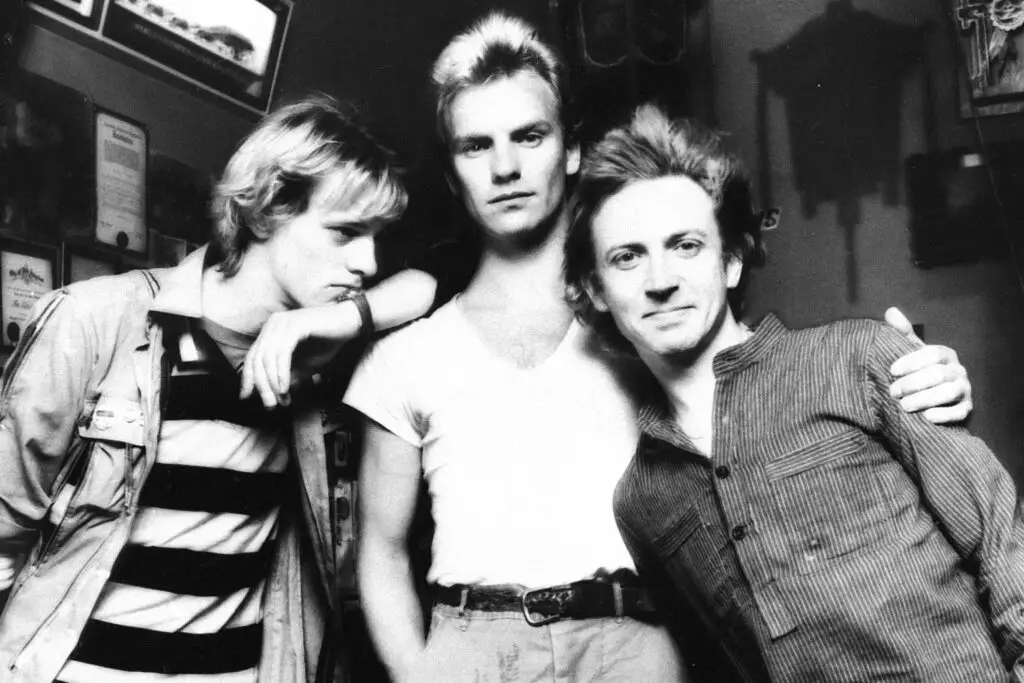
On a freezing October night in 1978, the biggest band the 1980s would produce walked onto a small stage on a Poughkeepsie side street and played to four paying customers. The club was called Frivolous Sal’s Last Chance Saloon, though everyone would soon just call it The Chance. The band was The Police — three unknown Englishmen on the first American tour of their lives — and the take at the door that night was twelve dollars. One of the club’s owners felt so bad watching them load their rented gear back into a rented van that he pressed a twenty into Sting’s hand as they left. Twenty-nine years later, the same three men would end a leg of their reunion tour in front of 55,000 people at Giants Stadium, where a single ticket cost $277. But it started here, in front of four people, in Poughkeepsie.
That is the strange magic of the Mid-Hudson Valley: for sixty years it has been the room where enormous things happened in front of almost nobody — the place where world-conquering careers were rehearsed, launched, tested, and sometimes merely survived. This is Volume 6 of The Greatest Concerts Ever. After our chapters in Buffalo, Syracuse, Albany, Rochester, and Ithaca, we cross the Hudson to a stretch of river valley that has hosted more legends per capita than a region this size has any right to. Every concert on this list happened. Every date is real, every venue named, every fact checked against the record.
You should know the rooms like characters, because they recur. The Chance is the heart of the whole story — a 1912 theater on Crannell Street that became a rock club in 1970 and, for fifty-three years, hosted The Police, David Bowie, the Ramones, and virtually the entire hardcore and metal underground before it finally closed its doors in 2023. The Mid-Hudson Civic Center — the three-thousand-seat arena that opened downtown in 1976 — is the big room, the one that pulled KISS and Metallica and Springsteen off the interstate. And up in the college towns, the gymnasiums of SUNY New Paltz are where the 1960s arrived on a weeknight. Here are the ten greatest concerts the Mid-Hudson ever hosted.
10. Hatebreed — The Chance — October 29, 2023
Every great venue eventually plays its last song, and The Chance played its last on a Sunday night in the fall of 2023. The Connecticut metalcore band Hatebreed — a group that had treated the club as a second home for two decades — brought the curtain down on fifty-three years of Poughkeepsie rock history in a sold-out, sweat-soaked farewell. It is not on this list because it was the best show musically; it is here because of what it closed. When the lights came up that night, a room that had hosted Muddy Waters, Pete Seeger, Bob Dylan, and a soon-to-be-famous English trio went dark. We start the countdown at the ending, because you cannot understand the Mid-Hudson’s music history without understanding that The Chance was its beating heart — and that it is now silent.
9. Rush — Mid-Hudson Civic Center — April 21, 1977
When the Civic Center opened in downtown Poughkeepsie in 1976, it gave the region something it had never had: a real arena, a place where the touring machine of 1970s rock could actually stop. Rush was one of the first great beneficiaries. On April 21, 1977, riding the momentum of 2112 and the live album All the World’s a Stage, the Canadian power trio played the first of what would become four shows at the venue, with Max Webster and Angel in support. They liked the room enough to come back that November — this time with a young AC/DC opening for them. For a generation of Dutchess County teenagers, the Civic Center was where arena rock finally came home.
8. Ramones (with Blondie) — Sal’s Last Chance Saloon — September 14, 1976
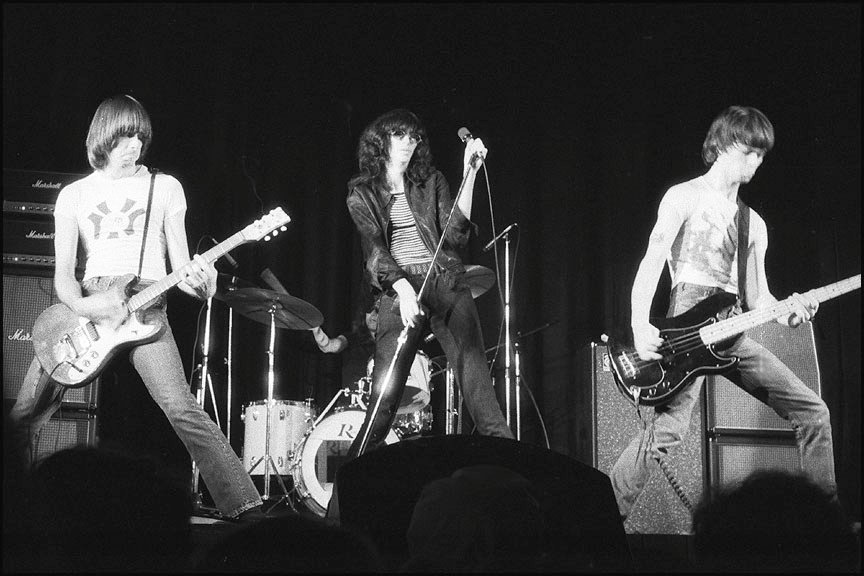
Before it was The Chance, it was Sal’s — and in the club’s earliest days as a rock room, it booked a bill that reads today like a museum exhibit of American punk. On September 14, 1976, the Ramones headlined, with Blondie opening: two of the most important bands ever to come out of the New York underground, both still years from fame, sharing one small Poughkeepsie stage on a September night. The Ramones would return again and again — drummer Marky Ramone played his very first show with the band at this venue in 1978 — but that 1976 double bill, buzzsaw punk and future new-wave royalty under one roof, is the night that announced what this little club was going to be.
7. Phish — The Chance — 1989–1991
This one isn’t a single night; it’s a climb you could watch in real time. Before Phish filled arenas and summered in festival fields, they were a Vermont bar band grinding out the club circuit — and The Chance was one of their proving grounds. Between October 1989 and May 1991 they played the room five times, a stretch of shows that captures a band figuring itself out in public. The December 8, 1990 date was billed, with typical Phish whimsy, as a “Not Fade Away Party.” No Mid-Hudson venue watched a future phenomenon apprentice more closely. That’s what a real music town does: it doesn’t just host the arrivals, it hosts the education.
6. Bruce Springsteen & the E Street Band — Mid-Hudson Civic Center — March 14, 1977
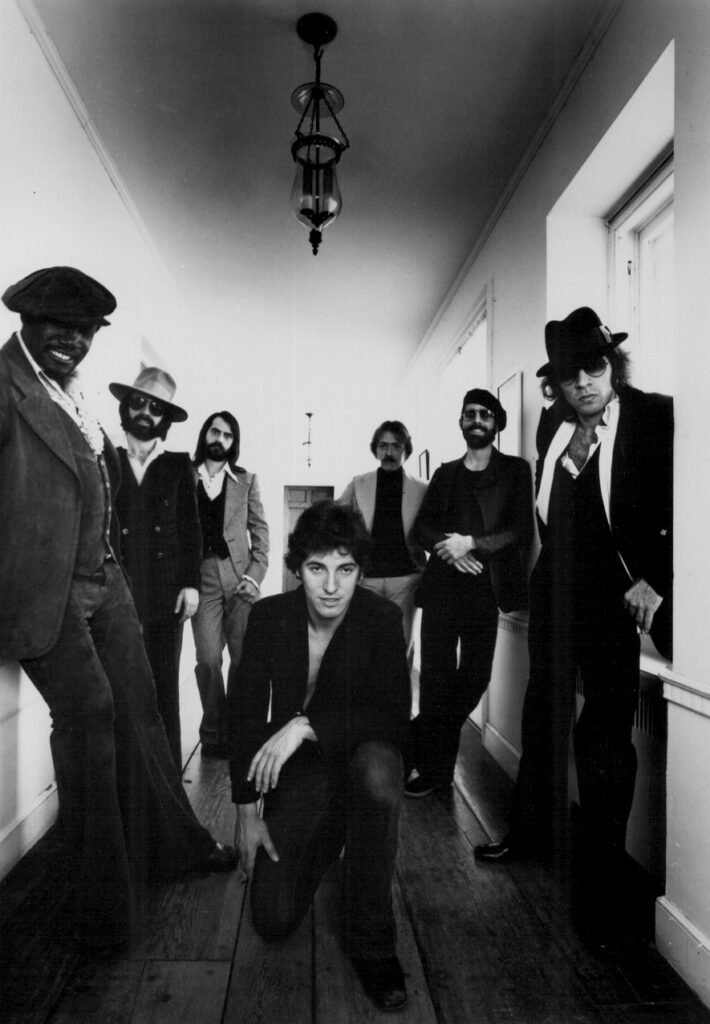
By the spring of 1977, Bruce Springsteen was famous and broke at the same time. Born to Run had made him a star in 1975, but a bruising legal war with his former manager, Mike Appel, had frozen him out of the recording studio for the better part of two years. So he toured — hard — through rooms like the Mid-Hudson Civic Center, where he landed on March 14, 1977. These “lawsuit tour” shows are treasured by collectors precisely because of the era they capture: an artist at the height of his powers and the depth of his troubles, pouring everything into the live show because it was the only place he was allowed to. Poughkeepsie caught him in that white-knuckle in-between, a year before Darkness on the Edge of Town would set him free.
5. The Who — Elting Gym, SUNY New Paltz — November 13, 1969
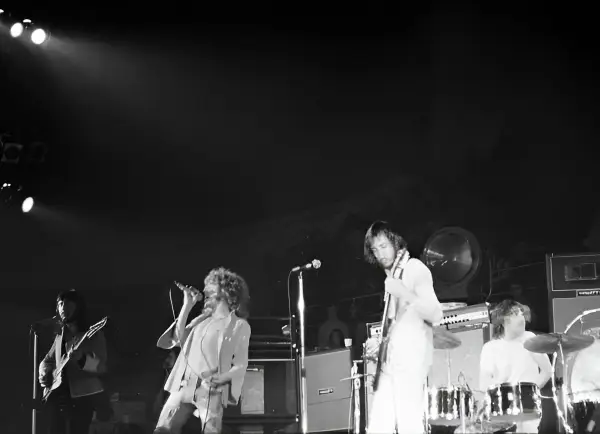
Three months after Woodstock turned them into gods, The Who came to a college gymnasium in New Paltz. On November 13, 1969, at the peak of the Tommy era, Pete Townshend, Roger Daltrey, John Entwistle, and Keith Moon opened with “Heaven and Hell” and tore through some twenty-seven songs for a crowd of students who could hardly believe their luck. That a band that size, in that year, would play a SUNY gym is a testament to a peculiarly Mid-Hudson institution: the student-run campus concert, where for a couple of decades the biggest names in rock kept turning up in small rooms full of nineteen-year-olds. Half a century later, the people who were there still talk about it.
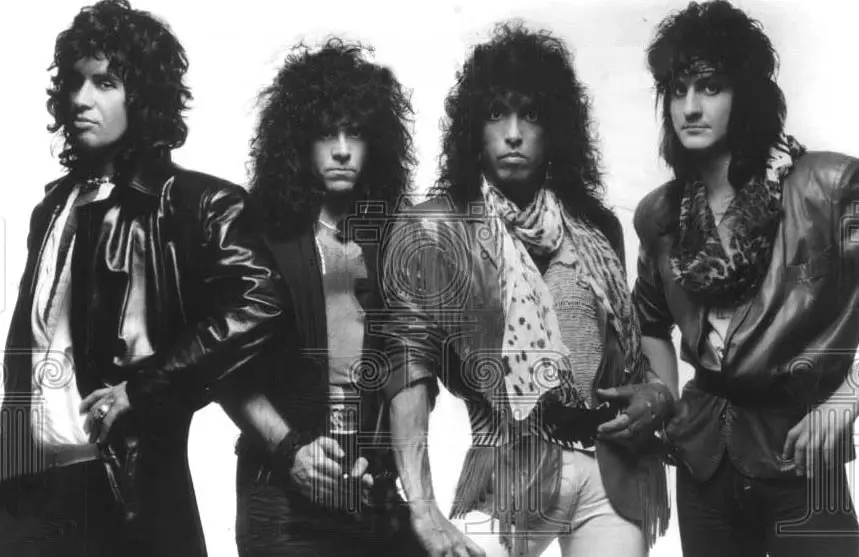
4. KISS — Mid-Hudson Civic Center — November 28, 1984
Some concerts matter because of the music; a few matter because of the footnote. KISS came to Poughkeepsie on November 28, 1984, on the Animalize World Tour, and the night became a genuine piece of rock trivia: it is one of only three shows — and one of just two full performances — that guitarist Mark St. John ever played with the band before a crippling illness forced him out and Bruce Kulick took his place. Decades later KISS made the Poughkeepsie soundboard tape an official release, the only clean document of St. John’s brief, strange tenure. A career that lasted barely a month left its clearest fingerprint on a stage in Dutchess County.
3. David Bowie — The Chance — August 19, 2003
Of all the improbable nights The Chance ever hosted, none was more improbable than this. On August 19, 2003, David Bowie — one of the most famous artists on earth — chose the roughly 400-capacity Poughkeepsie club for an intimate, members-only warm-up show, previewing songs from his forthcoming Reality album before the arena tour that would follow. Tickets went to his BowieNet online-fan-club members. For one August night, a legend who could have sold out Madison Square Garden ten times over stood on a small stage on Crannell Street, close enough to touch, and played the new record for a few hundred disbelieving fans. It remains the crown jewel of The Chance’s astonishing guest book.
2. Metallica — Mid-Hudson Civic Center — November 28, 1986
Metallica arrived in Poughkeepsie on November 28, 1986, carrying a fresh wound. Two months earlier, their bassist Cliff Burton had been killed when the band’s tour bus overturned in Sweden. The Master of Puppets tour resumed anyway, with a twenty-three-year-old named Jason Newsted stepping into an impossible role — and the Civic Center show is one of the earliest documents of that raw, grief-stricken new lineup finding its footing. The performance was so good, and the moment so historic, that Metallica themselves would later release it as an official live album named for the room: Live at Mid-Hudson Civic Center, Poughkeepsie, NY — November 28, 1986. A band playing through the worst year of its life, immortalized on a Poughkeepsie stage.
1. The Police — Frivolous Sal’s Last Chance Saloon — October 23, 1978
And then there is the show that outgrew every other. On October 23, 1978, on the first American tour of their careers, The Police drove to Poughkeepsie in a rented van, set up rented gear, and played to four paying customers. Four. The take at the door was twelve dollars, and it was so cold and so empty that one of the club’s owners slipped Sting a twenty out of pity as the band packed up. It should have been the most forgettable night imaginable. Instead it became Hudson Valley scripture — the show that everyone would later claim to have attended, the perfect parable of a legend caught at the exact instant before the world knew. It was from this very stage that “Roxanne” first reached American radio, premiering on nearby WPDH and beginning the slow climb that would turn three unknowns into one of the defining bands of their age. The greatest concert in Mid-Hudson history was not the most attended or the most expensive. It was three Englishmen and four strangers, in a freezing Poughkeepsie bar, on a night that shouldn’t have mattered and turned out to matter most of all.
A city that makes its own
The Mid-Hudson doesn’t only host music; it grows it, and it keeps it. Its most towering figure never had a pop hit at all. Pete Seeger — the folk singer, banjo evangelist, and conscience of American music — moved to Beacon in the early 1950s, into a two-room log cabin he built by hand at the base of Mount Beacon, and lived there for the rest of his life, sixty-two years in all. It was from that Beacon hillside that he launched the Hudson River Sloop Clearwater in 1969 and the environmental festival that still bears its spirit, marrying music to the cleanup of the river he could see from his window. And it was Seeger, fittingly, who helped open the Mid-Hudson Civic Center in 1976 — christening the region’s grandest new stage a few miles from the home he’d built with his own hands. No one embodied the idea of a local musician more completely, or more nobly.
The region keeps producing, too. The Poughkeepsie scene has sent out a steady stream of bands — the pop-punk of We Are the In Crowd and Matchbook Romance, the arena-sized alt-rock of Against the Current — proof that the clubs which raised Phish never stopped raising new ones. And in one of rock’s odder footnotes, Carolyn “Mountain Girl” Garcia — born in Poughkeepsie, raised in Hyde Park — grew up to become a Merry Prankster and, eventually, the wife of the Grateful Dead’s Jerry Garcia. The valley has a way of turning up at the center of the story.
The ones that just missed — and the shows only the Mid-Hudson could pull off
Ten slots can’t hold a region this deep. Frank Zappa brought his virtuoso circus to the Civic Center in February 1988. Slayer, Motörhead, and Overkill shared one gloriously punishing thrash bill there in November 1988, and the following spring the entire MTV Headbangers Ball tour chose Poughkeepsie for its final night. Stevie Ray Vaughan lit up a SUNY New Paltz gym in 1984; the arena welcomed everyone from Willie Nelson to David Gilmour.
And then there are the institutions no other small region could claim. Bob Dylan has used the stage of Poughkeepsie’s Bardavon 1869 Opera House — the oldest continuously operating theater in New York State — not to perform, but to work, secretly rehearsing there in 2006 as he built the material for his Grammy-winning Modern Times; his crew has done the same at the Bardavon’s sister theater, Kingston’s Ulster Performing Arts Center. The Towne Crier Cafe, now in Beacon, has run for more than fifty years as one of the great American folk listening rooms. The student-booked Spring Weekend tradition at SUNY New Paltz once dragged The Who, Jefferson Airplane, and Frank Zappa to a campus in the shadow of the Shawangunks. And in a nod to the entertainment history that runs alongside the music, Poughkeepsie’s Bananas Comedy Club is where a young Jimmy Fallon won the contest that launched his entire career. For all the postcard beauty of the Hudson Valley, this is a region that doesn’t just draw legends. It keeps a few of its own.
We know we left something off. That’s the point. Tell us what we got wrong — your picks help decide our upcoming ranking of the Greatest Concerts in Upstate New York History. Find us on Facebook and Instagram and make your case.
The series so far: Buffalo, Syracuse, Albany, Rochester, and Ithaca. The story continues.
Image Credits
Hero artwork: Upstate Concerts. The Police, 1979 — A&M Records publicity photo, public domain. Ramones, Toronto, 1976 — photo by Plismo, CC BY-SA 3.0. David Bowie, Tinley Park, IL, 2002 — photo by Adam Bielawski, CC BY-SA 3.0. The Who, Charlotte, NC, 1971 — photo by Hunter-Desportes, CC BY 2.0. KISS, 1984 — Polygram Records publicity photo, public domain. Bruce Springsteen and the E Street Band, 1977 — Columbia Records, public domain. All via Wikimedia Commons.