On the last Thursday in June of 1985, the traffic on the Northway stopped moving.
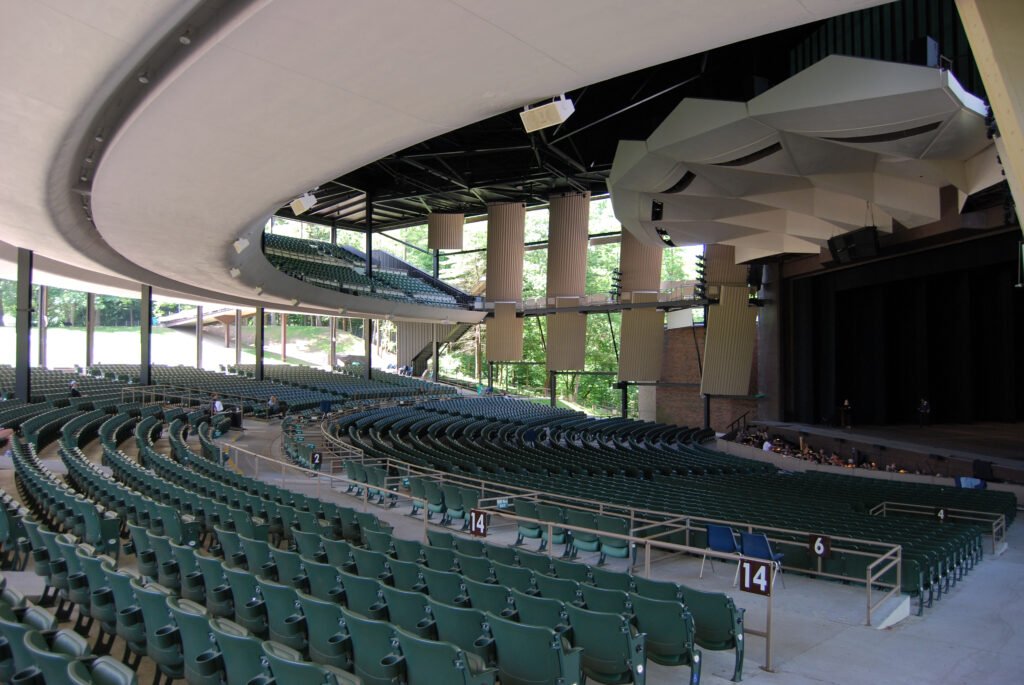
It stopped because 40,231 people were trying to reach the same lawn at the same time — the largest crowd the Saratoga Performing Arts Center had ever held, or has held since. They came for the Grateful Dead, and they came in numbers the little spa city could not absorb: cars abandoned on the shoulder, kids streaming through the pines, the amphitheater and its vast sloping lawn filled long before the band took the stage. It was so much, so fast, so far beyond what anyone had planned for, that SPAC would not book the Dead again for three years. The venue essentially had to recover from them.
That is the paradox of Saratoga Springs. For a few weeks every summer, a town of fewer than thirty thousand people — better known for thoroughbred racing and mineral springs — becomes one of the most important concert destinations in the Northeast. A world-class amphitheater rises out of a state park. A folk coffeehouse barely bigger than a living room has hosted the most famous songwriter alive. And a harness track on the edge of town once held a U2 stadium spectacle. This is the story of the greatest concerts Saratoga ever staged. This is where we prove it.
The rules
The same promise we have made in every chapter of this series holds here. Every concert below actually happened, on the date we give, at the venue we name. No apocryphal “somebody’s uncle saw Hendrix at the racetrack.” No fan-forum legend we could not run down. Where the record is contested — and in Saratoga it sometimes is — we say so plainly. These are verified nights, ranked.
And because Saratoga’s music history runs through a handful of rooms, a few of them recur below like characters. There is SPAC — the Saratoga Performing Arts Center, opened in 1966 as the summer home of the Philadelphia Orchestra and, improbably, a jam-band cathedral by the 1980s. There is Caffè Lena, the oldest continuously operating folk coffeehouse in the United States. And there is the campus of Skidmore College, which once hosted a free afternoon concert that nobody who was there has ever forgotten. Let’s count down.
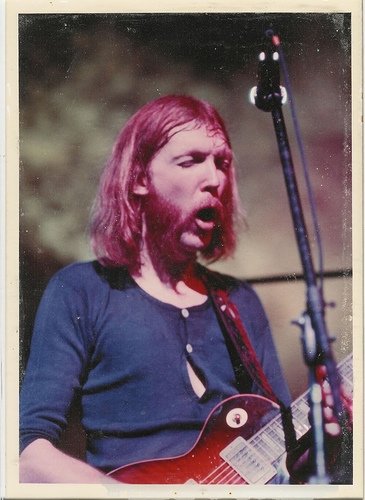
10. The Allman Brothers Band — Skidmore College, Saratoga Springs — May 15, 1971
They were still becoming legends, and they played for free.
On a spring Saturday in 1971, the Allman Brothers Band set up on the Skidmore College campus and played a free afternoon concert for a couple thousand students — “Statesboro Blues,” “In Memory of Elizabeth Reed,” “Dreams.” What makes the date extraordinary is what had not happened yet. At Fillmore East, the double live album that would enshrine this exact lineup as one of the greatest live bands in American history, had been recorded that March but was not yet released. Duane Allman, the incandescent slide guitarist at the center of it all, had less than five months to live. For one warm afternoon in Saratoga, students sat on the grass in front of a band on the cusp of immortality and did not know it. Photographs from that day, long thought lost, resurfaced only recently. Only in Saratoga.
9. Lollapalooza — SPAC — August 4, 1992
By the summer of 1992, Lollapalooza was the traveling capital of a cultural revolution, and on August 4 it detonated at SPAC. The bill was a snapshot of the exact moment alternative music swallowed the mainstream: Pearl Jam, Red Hot Chili Peppers, Soundgarden, Ministry, Ice Cube, the Jesus and Mary Chain. Some twenty-five thousand people packed the amphitheater and its lawn for ten hours, and the day turned genuinely wild — more than forty arrests, dozens of seats torn out of the ground. SPAC had never seen anything like it, and afterward it swore it never would again: the venue banned Lollapalooza from returning. (The festival would come back to Saratoga two years later, but it would have to play the harness track instead — a story we will get to.) It was the single most chaotic day in SPAC’s non-classical history, and one of its most legendary.
8. Whitney Houston — SPAC — September 2, 1987
Here is a fact most of the millions who witnessed it never knew: when Whitney Houston, at the absolute peak of her powers in 1987, performed “I Wanna Dance with Somebody” for the MTV Video Music Awards, she was standing on the SPAC stage. Both that nationally broadcast performance and the official music video for “Didn’t We Almost Have It All” were filmed at Saratoga on September 2, 1987, during her record-shattering Whitney tour. Which means that when the VMAs aired days later, millions of viewers across the country watched Whitney Houston command an audience — without any idea they were looking at a state park in upstate New York. Saratoga’s greatest nights were never only for the rock crowd. Sometimes the most famous voice on the planet simply showed up and sang.
7. Pink Floyd — SPAC — June 17, 1973
The Dark Side of the Moon had just gone to number one in America when Pink Floyd opened the second leg of their 1973 U.S. tour at SPAC on June 17. Think about the timing. The best-selling, most enduring album of the band’s career — an album that would eventually spend more than nine hundred weeks on the Billboard chart — was brand new, ascendant, everywhere, and one of the first American audiences to hear it performed in full after it topped the chart was the crowd on the SPAC lawn. Floyd played the whole of Dark Side that night, the quadraphonic sound washing around the amphitheater. It was a landmark album at its exact moment of arrival, and Saratoga got an opening-night view.
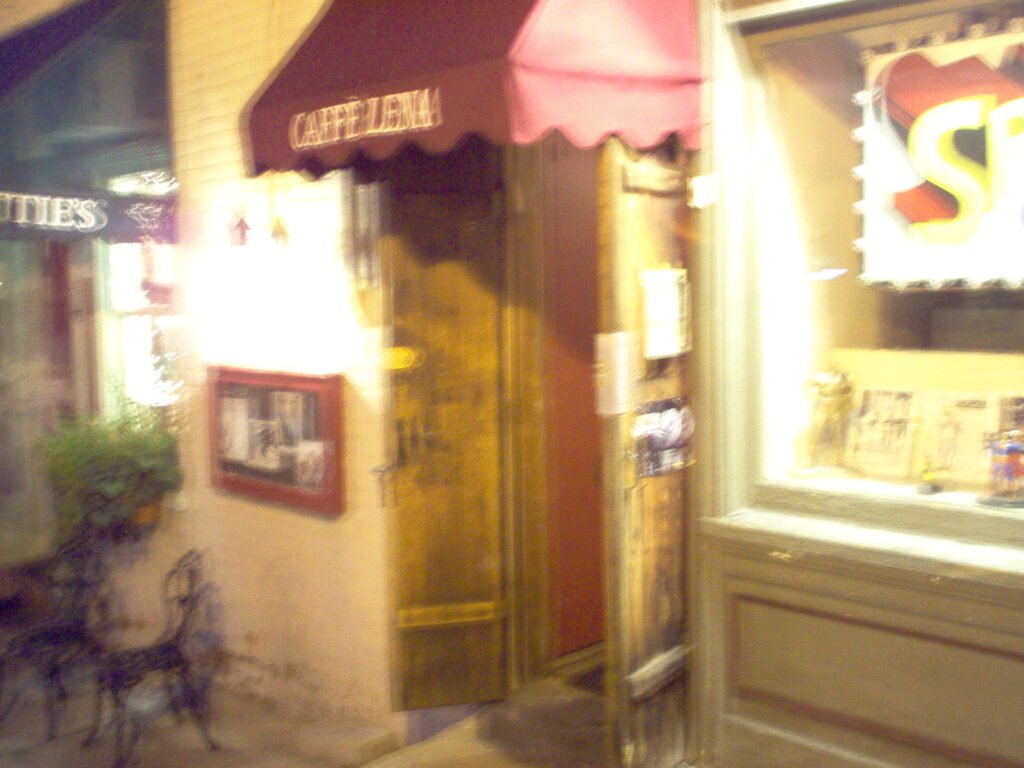
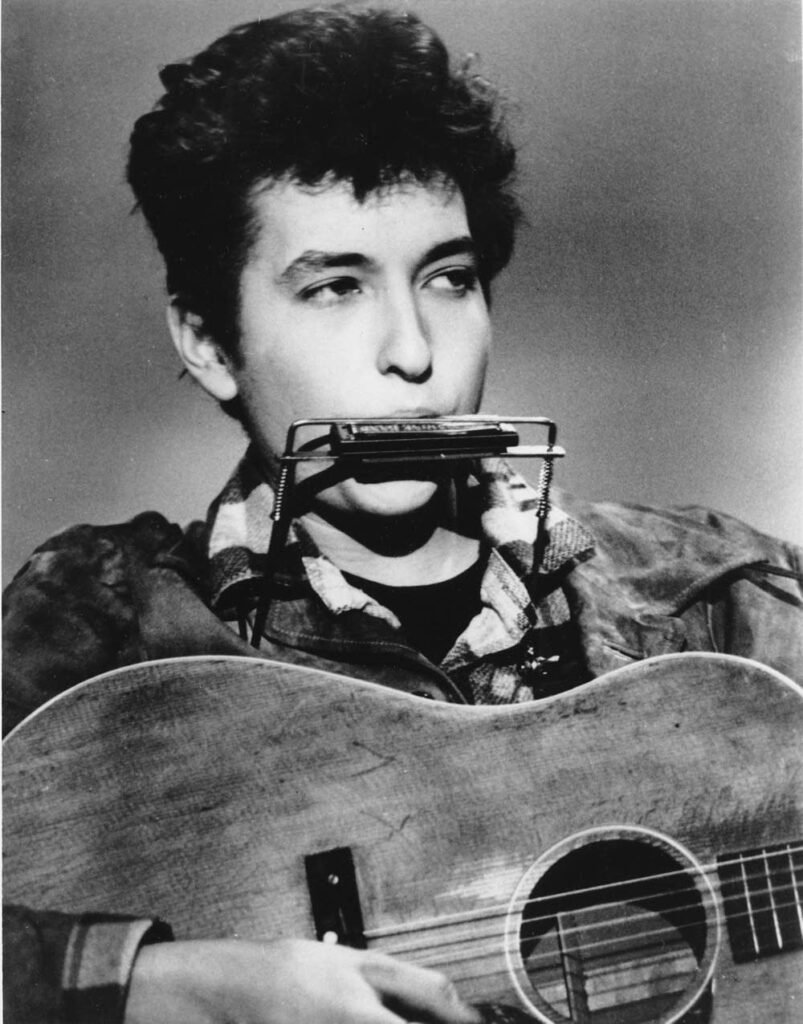
6. Bob Dylan — Caffè Lena, Saratoga Springs — 1961–62
Not every legendary concert is a triumph. Some are legendary precisely because of how ordinary they seemed at the time.
When a twenty-year-old Bob Dylan made his out-of-town debut at Caffè Lena in July 1961 — only months after arriving in New York, still unknown to nearly everyone — most of the small crowd simply talked over him. By the accounts since preserved in Dylan’s biographies and the coffeehouse’s own oral history, the room was so indifferent that Bill Spencer, Lena’s husband, climbed onto the stage and told the audience, in so many words, that they would regret ignoring this kid for the rest of their lives. Lena Spencer herself needed no convincing: she loved what she heard, and invited the unknown singer back. He returned that January of 1962, weeks before his debut album introduced him to the world. Caffè Lena today calls Dylan its most famous performer, and it is right to. But the better truth is the one from that first night — the future voice of a generation played a Saratoga folk room, got roundly ignored, and the woman who ran the place booked him again anyway, on nothing but her own ear. That ear is the whole point of this place.
5. Phish — SPAC — July 27, 2025
Some bands play a venue. Phish adopted one. Since their first Saratoga appearance in 1992 — opening for Santana, years before they could headline anything this size — Phish have returned to SPAC again and again, until the amphitheater became something close to a second home; they have now played it more than two dozen times. The high-water mark came on the final night of their three-concert run in July 2025, a performance the band cared enough about to release, officially, as a live album — Live in Saratoga Springs 2025. Phish.net’s obsessive community of fans rates that July 27 concert among the very best of the band’s entire touring life. In a career built on a thousand nights, the one they and their fans point to as a peak happened on the SPAC lawn. Saratoga earned that.
4. The Who — SPAC — August 2, 1971
Two years after Tommy and just weeks before Who’s Next, the Who came to Saratoga on August 2, 1971, and set a record that stood as proof of the venue’s pull. The crowd — 33,652 by the venue’s count — was the largest SPAC had ever drawn to that point, shattering the previous mark. Pete Townshend windmilling through “Won’t Get Fooled Again” before most of America had heard it; Keith Moon detonating behind him; Roger Daltrey’s voice filling a natural amphitheater in the Adirondack foothills. The Who played SPAC exactly once. They made it count, and Saratoga has measured its rock crowds against that night ever since.
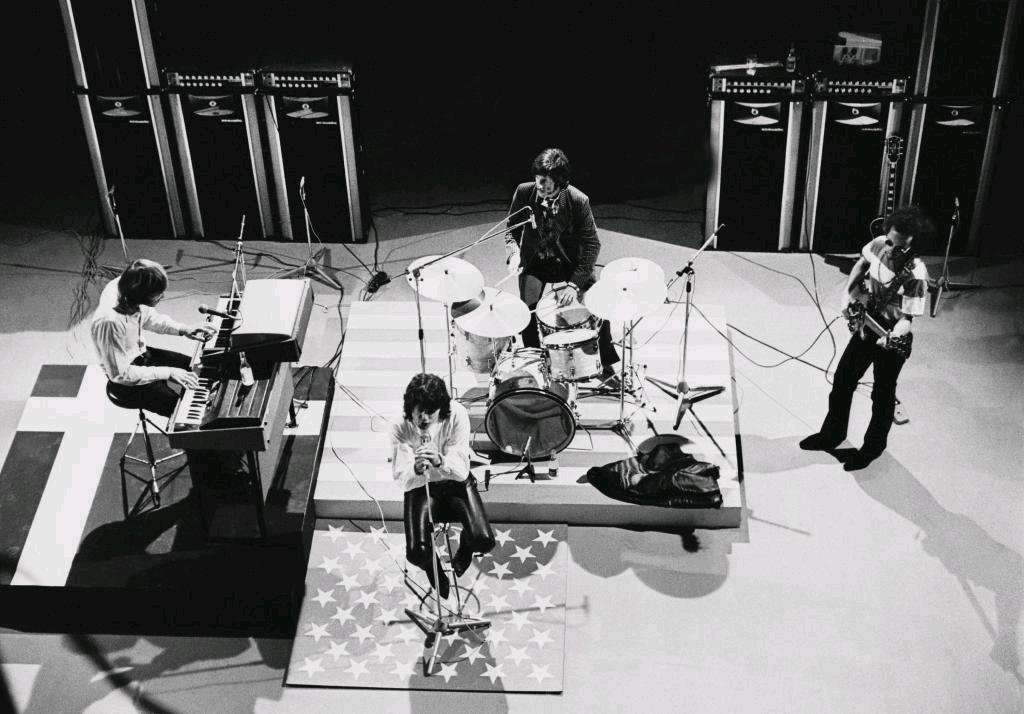
3. The Doors — SPAC — September 1, 1968
The very first major rock band to play SPAC was the Doors, and they left a piece of themselves on film.
On September 1, 1968 — with the amphitheater barely two years old and still thought of as a home for orchestras and ballet — the Doors brought roughly twelve thousand people to their feet in the pines. It was the last performance filmed for Feast of Friends, the documentary the band was making about itself, and the footage of Jim Morrison at Saratoga became part of that record. This was the Doors at their combustible height, before the troubles that would define Morrison’s final years, playing the concert that opened SPAC’s amphitheater to rock and roll for good. Every act further up this list followed a door the Doors pushed open.
2. Dave Matthews Band — SPAC — 1994 to 2025
No artist has ever belonged to a venue the way Dave Matthews Band belongs to SPAC.
It began quietly. On September 3, 1994, a still-rising DMB played a short set as part of the traveling HORDE Festival — nine songs, closing with “Typical Situation” from an album, Under the Table and Dreaming, that had not even been released yet. Nobody could have known it was the first note of the deepest artist-venue relationship in Saratoga history. Over the next three decades, Dave Matthews Band came back, and back, and back — until the summer of 2025, when they played their forty-ninth and fiftieth concerts at SPAC on consecutive July nights, thirty years almost to the month after the HORDE debut. Fifty concerts. No other performer, in any genre, has bonded to this amphitheater like that. For a generation of fans across the Northeast, “SPAC in the summer” and “Dave” became the same sentence. That is not a single great concert; it is fifty of them, and a tradition that made the venue what it is.
1. The Grateful Dead — SPAC — June 27, 1985
And then there is the night that overwhelmed the town.
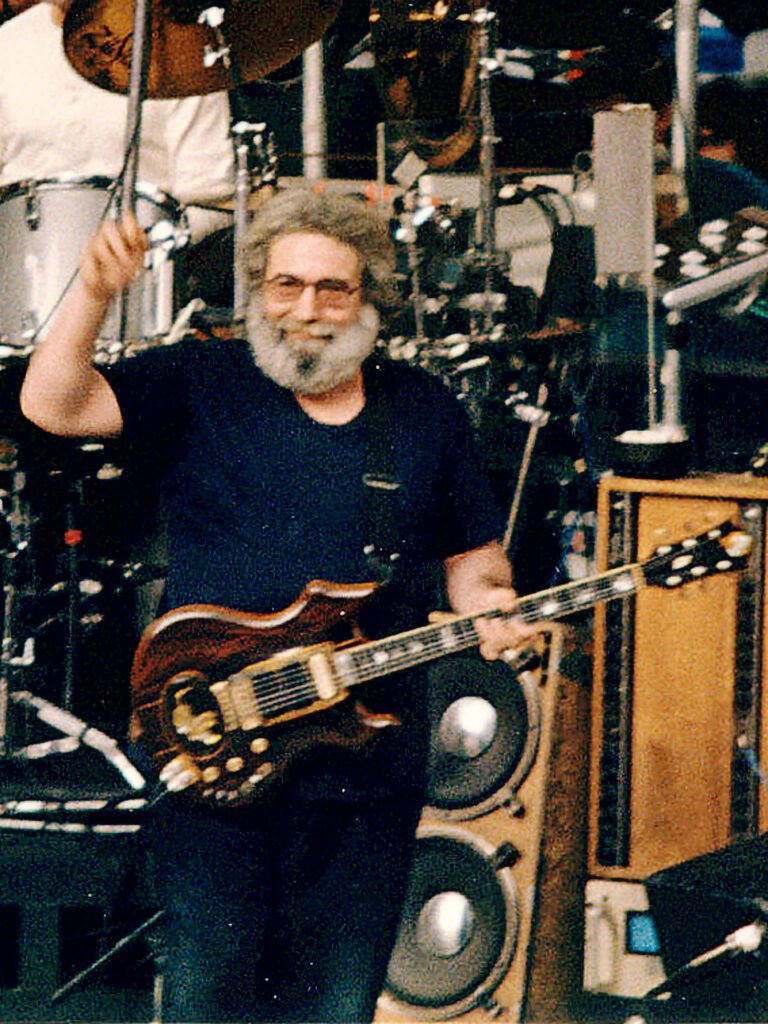
By the summer of 1985, the Grateful Dead were less a band than a migration — a traveling nation of Deadheads who followed the group from city to city, turning parking lots into marketplaces and arenas into congregations. On June 27, that migration arrived in Saratoga Springs, and the numbers broke the place. Forty thousand, two hundred and thirty-one people — some counts run higher still — poured into SPAC, the largest crowd in the venue’s history before or since. The Northway backed up for miles. Cars were left where they stopped. The amphitheater and its enormous lawn disappeared under bodies.
It was, by any measure Saratoga keeps, the biggest concert the city has ever hosted. And it was so far beyond the venue’s capacity to manage that SPAC did not invite the Dead back for three years — a self-imposed exile from the most popular touring act in America, because a single night had simply been too much. The tapes from that concert still circulate among the faithful; the stories have only grown. There is no better answer to the question this series keeps asking — what is the single greatest concert your corner of New York ever hosted? — than the day the Grateful Dead brought Saratoga to a standstill, and the town spent three years catching its breath.
A city that makes its own
Saratoga does not only host greatness; it grows and keeps it. The clearest proof is Caffè Lena itself — opened by Lena Spencer in 1960 and still running today, the oldest continuously operating folk coffeehouse in the country, a room that gave a stage to the folk revival when almost nowhere else would and never stopped. Its walls are a map of American folk music, and it remains, more than sixty years on, a working venue rather than a museum.
Saratoga’s own contribution to the touring life is The Figgs, the power-pop band formed by Saratoga Springs High School classmates in 1987. They have made more than a dozen albums, backed the great British songwriter Graham Parker for decades, and were inducted into the region’s music hall of fame — a genuinely rare thing for a small city to produce and hold onto. And looming over all of it is SPAC’s founding purpose, easy to forget beneath the rock history: the amphitheater was built in 1966 as the summer home of the Philadelphia Orchestra and became the first permanent summer home any ballet company — the New York City Ballet — ever had. A town this size is not supposed to carry a world-class orchestra, a legendary folk room, and a jam-band shrine at once. Saratoga does.
The secret history of Saratoga Raceway
Here is the story we promised you, and it is a strange and wonderful one. Everyone knows Saratoga for its horses. Almost no one remembers that the harness track on the edge of town — Saratoga Raceway, not the famous thoroughbred course — spent a stretch of years hosting some of the biggest tours on earth.
In 1989, Bon Jovi brought the New Jersey Syndicate tour to the raceway, with a young Skid Row opening. Three years later came the whopper: on August 18, 1992, U2 rolled the entire Zoo TV “Outside Broadcast” production into the harness track — the same stadium spectacle they had just staged at Yankee Stadium and RFK, hauled to Saratoga Springs. The stage ran 248 feet wide, a catwalk stretched some 150 feet into the crowd, and eleven Trabant cars — the little East German relics the band used as symbols of a fallen Iron Curtain — hung suspended overhead. A local stagehand who worked the load-in later remembered it as unlike anything Saratoga’s crews had ever handled. More than thirty thousand people came, with Primus opening. And in 1994, Lollapalooza finished the tale it started at SPAC: two years after the amphitheater banned it, the festival returned to Saratoga — exiled to the raceway — with Smashing Pumpkins, the Beastie Boys, and George Clinton’s P-Funk. A harness track, three of the biggest tours of an era. Only in Saratoga.
The ones that just missed
No list of ten can hold all of it. In 1978, the promoter George Wein — the man who built the Newport Jazz Festival — launched a jazz festival at SPAC that survives to this day as one of the longest-running of its kind anywhere. That same era, backstage at SPAC in 1977, Jackson Browne recorded “Rosie” for Running on Empty, meaning a track on one of the most beloved live albums of the 1970s was literally captured in a Saratoga dressing room. Caffè Lena’s folk lineage runs on: Arlo Guthrie and the Freedom Singers passed through in 1963, months before the March on Washington; a nineteen-year-old Ani DiFranco played there in 1991; Pete Seeger returned again and again. And in 1967, Harry Belafonte became the very first non-classical performer SPAC ever booked, cracking open a stage built for symphonies.
One Saratoga legend, though, deserves a correction more than a coronation. The local story goes that Don McLean wrote “American Pie” at Caffè Lena, or on a napkin at a nearby bar. It makes a lovely plaque, but it isn’t true — McLean himself has said, repeatedly and on the record, that he wrote the song in Cold Spring and Philadelphia, not Saratoga. What is true is better than the myth: Caffè Lena was McLean’s formative home stage, the room where he became the performer who could write something like “American Pie” at all. In Saratoga, even the tall tales come with a real story underneath.
🎫 Upcoming Shows in Saratoga Springs
The legends made history here — now go make your own.
Image credits
- The Doors, 1968 — photo: Jan Persson, Public Domain via Wikimedia Commons.
- Jerry Garcia, Grateful Dead, 1987 — photo: Mark L. Knowles, CC BY-SA 3.0 via Wikimedia Commons.
- Bob Dylan, 1963 — photo: Public Domain (AP) via Wikimedia Commons.
- Duane Allman, June 1971 — photo: EddieBerman (Flickr), CC BY 2.0 via Wikimedia Commons.
- Caffè Lena storefront — photo: JB82, CC BY 1.0 via Wikimedia Commons.
- Saratoga Performing Arts Center interior — photo: UpstateNYer, CC BY-SA 3.0 via Wikimedia Commons.
- U2, Zoo TV Tour, Foxborough, Aug. 20, 1992 — photo: Jeff Topping, CC BY-SA 4.0 via Wikimedia Commons.
What did we get wrong? Which Saratoga night belongs on this list that we left off? Tell us on Facebook and Instagram — your picks help decide our upcoming ranking of the greatest concerts in all of Upstate New York.
This is the latest chapter in The Greatest Concerts Ever, Upstate Concerts’ city-by-city search for the most legendary nights in New York live-music history. Catch up on the rest of the series: Buffalo, Syracuse, Albany, Rochester, Ithaca, Poughkeepsie, and the North Country.